Marketing Operations in 2027: Who Runs the System When Part of the Team Is AI
Every marketing team has one person who knows where everything is. She knows why the lead form has a hidden field called “source_final_v2.” She knows which of the three CRM pipelines is the real one. She is the only person alive who remembers the password to the old webinar tool, and she is, frankly, underpaid.
That person does marketing operations, whether or not her title says so.
For years, marketing operations was the plumbing. Important, invisible and only noticed when it leaked. Now the plumbing is getting crowded. AI agents are drafting emails, scoring leads, pulling reports and updating the website, and every one of them needs access, instructions and someone to check its work.
Somewhere, a leadership team has concluded that this means fewer people are needed to run marketing. (In my experience it means the person who knows the passwords is now also managing a small fleet of robots, and nobody has told her yet.)
So it’s worth asking plainly: what is marketing operations in 2027, and who runs the system when part of the team is AI?
This guide covers what marketing operations is, what it owns, how AI changes the job, and how to set it up for a small B2B team.
What Is Marketing Operations?
Marketing operations is the part of marketing that makes the rest of it work. It owns the systems, data, processes and measurement behind every campaign, so the team can plan, launch, track and report without starting from scratch each time.
If strategy decides where marketing is going and the creative team makes the work, marketing operations builds and runs the road. In a small company, that might be one person a few hours a week. In a larger one, by contrast, it’s a team.
What Marketing Operations Owns
The scope varies by company, but most marketing operations roles cover five areas.
| Area | What It Includes |
|---|---|
| Systems | The CRM, marketing automation, website forms, analytics and the connections between them |
| Data | Clean contact records, lead sources, lifecycle stages, and rules for who gets which lead |
| Process | How campaigns go from brief to launch, who approves what, and the handoff to sales |
| Measurement | Dashboards, the weekly and monthly reports, and the definitions behind every number |
| Budget and tools | What the team pays for, what it actually uses, and what to cancel |
For a fuller view of where marketing operations sits among the other roles, our field guide to the types of marketing professionals walks through each one.
Why Marketing Operations Matters More With AI
AI agents are only as good as the system they plug into. An agent that writes follow-up emails needs clean contact data. One that reports on pipeline needs agreed definitions. And one that updates the website needs permission rules, so it can draft without publishing.
In other words, the things marketing operations has always owned (data, process, access, measurement) are exactly what AI needs to work. As a result, teams that skip that groundwork get faster mess: the same messy data, acted on at machine speed.
Therefore, marketing operations is the natural home for running the AI side of the team.
How the Job Changes in 2027
The work doesn’t disappear. Instead, it shifts from doing the tasks to designing and checking how they get done.
| Before AI Agents | In 2027 |
|---|---|
| Builds the report every Monday | Checks the report an AI analyst built, and fixes the source when a number is wrong |
| Cleans the CRM by hand each quarter | Writes the data rules an agent follows every day |
| Sets up each campaign in the automation tool | Sets up the templates and approval steps that agents and people both use |
| Manages the tool stack | Manages the tools and the agents: what each can access, read, draft or publish |
| Answers “where did this lead come from?” | Makes sure every agent tags its work, so the answer is always in the data |
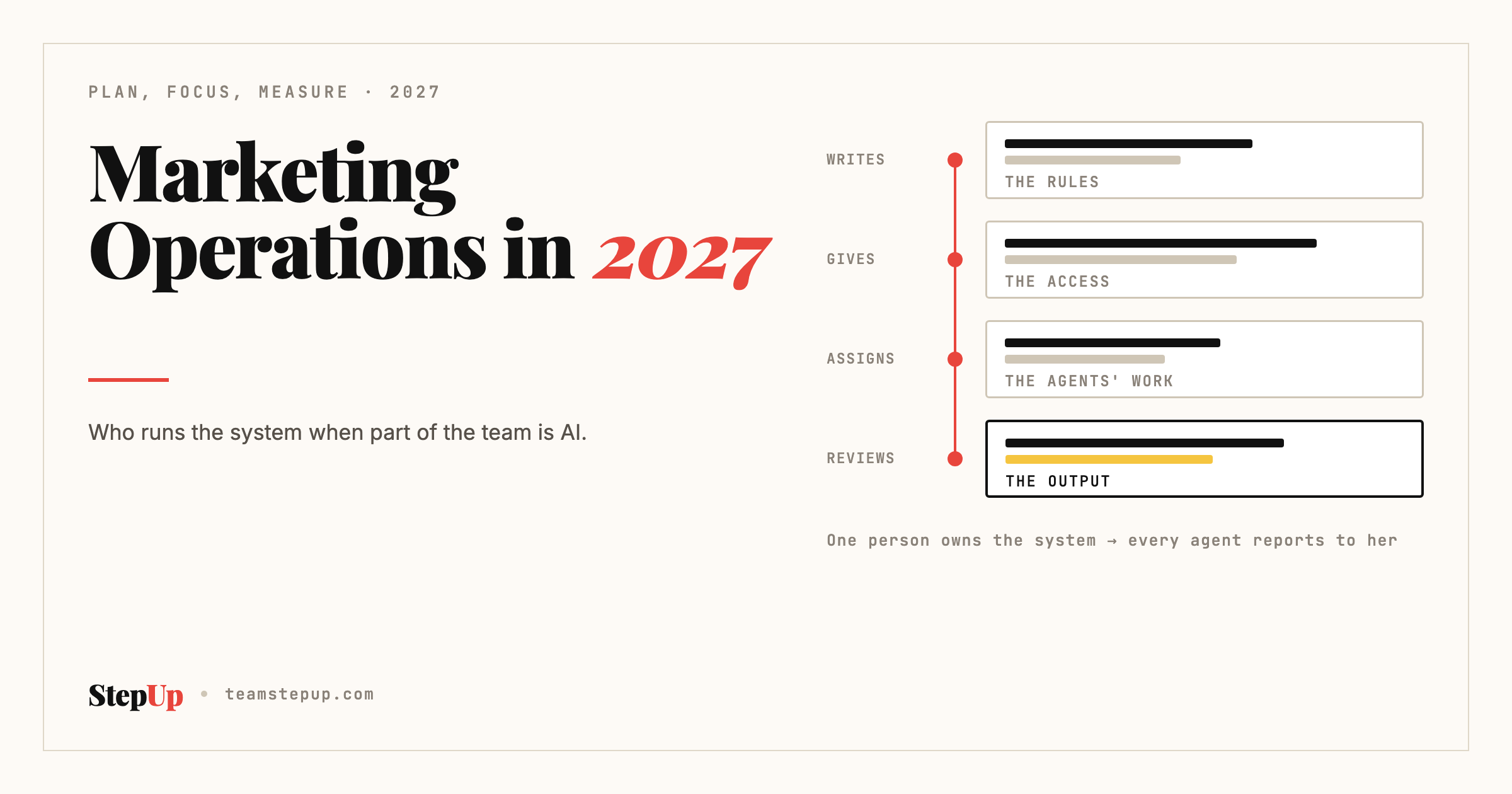
The common thread: marketing operations becomes the person who writes the rules, gives out the access and checks the output. The agents do more of the clicking.
Who Runs the System When Part of the Team Is AI
In the teams we work with, one person owns the marketing system end to end, and every AI agent that touches it reports to her. That person can be a dedicated marketing operations manager, or the head of marketing in a very small team. Still, what matters is that the role is named.
Her job, week to week:
- Assigns the work. Decides what each agent works on, based on the plan.
- Writes the instructions. Each agent has a short written job description: what it does, what it needs, what it can’t do.
- Controls access. Each agent gets only the access its job needs. Most can read and draft. Publishing and sending stay with a person.
- Checks the output. Reviews a sample of every agent’s work each week, and checks reports against their source.
- Turns mistakes into rules. When an agent gets something wrong, she fixes the draft and adds a line to its instructions so it doesn’t happen again.
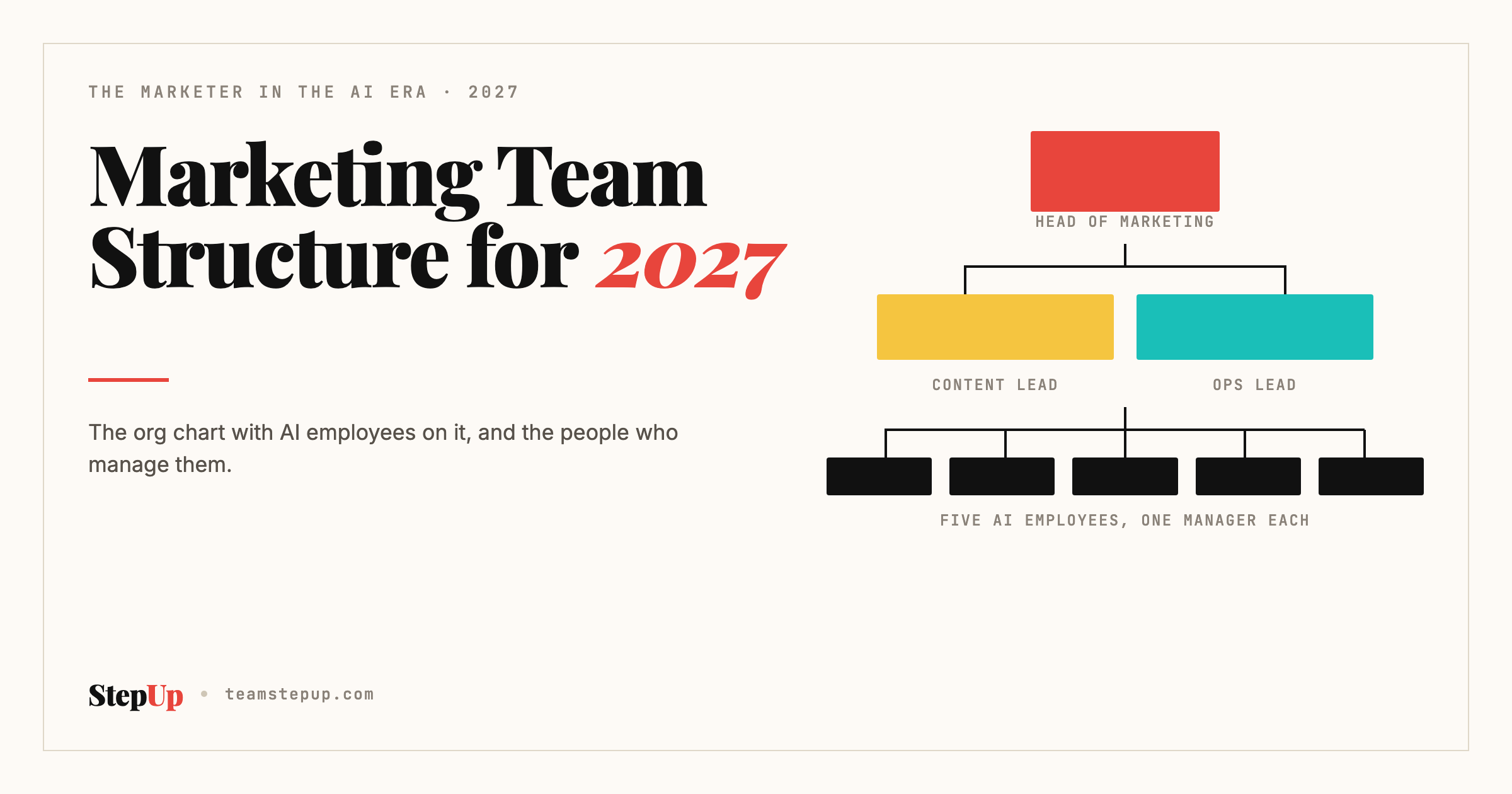
We describe the full set-up in our guide to marketing team structure for 2027, including who reports to whom.
Skills a Marketing Operations Manager Needs Now
The classic skills still apply: knowing the CRM inside out, building clean processes, reading data. Three more have become essential.
Writing Clear Instructions
An agent works from what it’s told. The ability to write a short, precise brief, with examples of good and bad output, is now a core operations skill.
Spotting Wrong Output Fast
AI makes mistakes confidently. A good operations lead can scan a report or a list and see the number that doesn’t fit before it reaches the CEO.
Thinking in Permissions
Who can read, who can draft, who can publish. As the number of agents grows, this becomes one of the most important decisions in the department, and one of the easiest to get wrong.
Setting Up Marketing Operations in a Small B2B Team
You don’t need a big team to run marketing operations well. Here is a simple starting point.
1. Name the Owner
One person owns the system. In a team of one or two, that’s usually the head of marketing, with a few hours a week set aside for it.
2. Write Down the Definitions
What counts as a lead, a qualified lead and a customer. Where each lead source is tagged. Otherwise, every report is an argument. Our guide to MQL vs. SQL covers the lead definitions.
3. Fix the Data Before Adding Agents
Remove duplicates, tag lead sources and agree the stages. It’s the least exciting week of the year, and it makes everything after it work.
4. Map the Access
For every tool and every agent, write down whether it reads, drafts or publishes. Keep publishing with a person.
5. Automate the Weekly Report First
The weekly numbers are the easiest, safest first job for an AI agent, because every number can be checked against its source. Our guide to B2B marketing KPIs lists which numbers to include.
6. Review Every Month
Once a month, look at what the agents did, what went wrong, what rules changed, and which tools nobody used. Cancel the unused ones. Someone has to.
Frequently Asked Questions
What is marketing operations?
Marketing operations is the part of marketing that owns the systems, data, processes and measurement behind every campaign. It makes sure the team can plan, launch, track and report reliably, and connects marketing’s work to sales and revenue.
What does a marketing operations manager do?
A marketing operations manager runs the marketing tools and CRM, keeps the data clean, sets up the processes campaigns follow, builds the reports and dashboards, and manages the tool budget. In teams that use AI agents, she also assigns their work, controls their access and checks their output.
How is AI changing marketing operations?
AI agents now handle many repetitive operations tasks, such as building reports, cleaning data and setting up campaigns. The marketing operations role shifts toward writing the rules agents follow, deciding what each agent can access, and checking their work.
Does a small marketing team need marketing operations?
Yes, even if it isn’t a full-time role. A small team needs one named owner for the CRM, the data definitions, the reports and the access rules, especially before adding AI agents.
What is the difference between marketing operations and revenue operations?
Marketing operations focuses on marketing’s systems, data and measurement. Revenue operations covers marketing, sales and customer success together, with shared data and processes across the whole path to revenue. Many small companies combine both in one role.
The Passwords, Revisited
The person who knows where everything is still runs the system in 2027. The difference is that now it’s in writing: the definitions, the access map, the rules each agent follows.
That makes her job easier to explain, easier to hand over, and much harder to replace.
She should probably get a raise. And someone should finally delete “source_final_v2.”
Not sure your marketing system is ready for AI agents? The free AI-Readiness Self-Audit shows where you stand.
Want to know where your marketing stands against the market? The AI-Readiness Audit is a short call that looks at your marketing and pinpoints exactly where the gap is — and what it is worth to close first. You leave with a clear picture, even if we never work together.