What Is an AI Employee? What It Does, What It Can’t, and Who Manages It
The first time someone told me they’d “hired an AI employee,” I pictured a robot in a lanyard, sitting in the Monday meeting, nodding at the right moments and silently judging everyone’s slides.
What they meant was a chatbot with a name.
That’s most of the confusion in one sentence. The phrase “AI employee” now covers everything from a genuinely useful agent with a job, instructions and a manager, to a subscription with a cheerful avatar and a pricing page that says “replace three hires for $49 a month.” (If only. Three hires would at least argue with you about the strategy.)
It’s hard to know what you’re buying.
And the people trying to work it out are usually the same small marketing team that is already running the website, the trade show and the CEO’s LinkedIn. They don’t need a philosophy of digital labor. They need to know what this thing does on a Tuesday, what it can’t do, and whose job it is to check its work.
So here is a plain answer to the question everyone is searching: what is an AI employee?
This guide covers the definition, how an AI employee differs from a tool or a chatbot, five AI employees a B2B marketing team can use, what they can’t do, and who should manage them.
What Is an AI Employee?
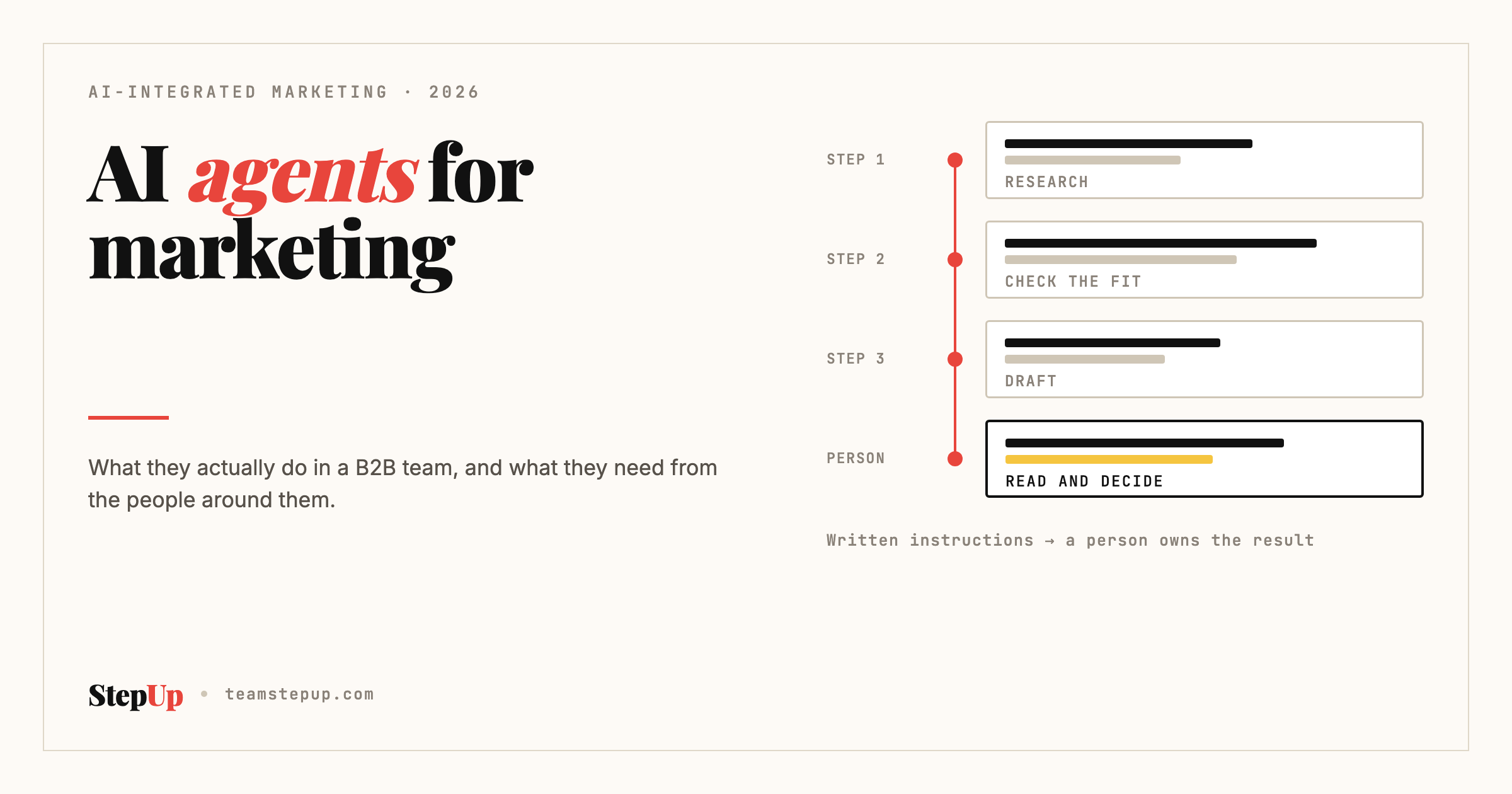
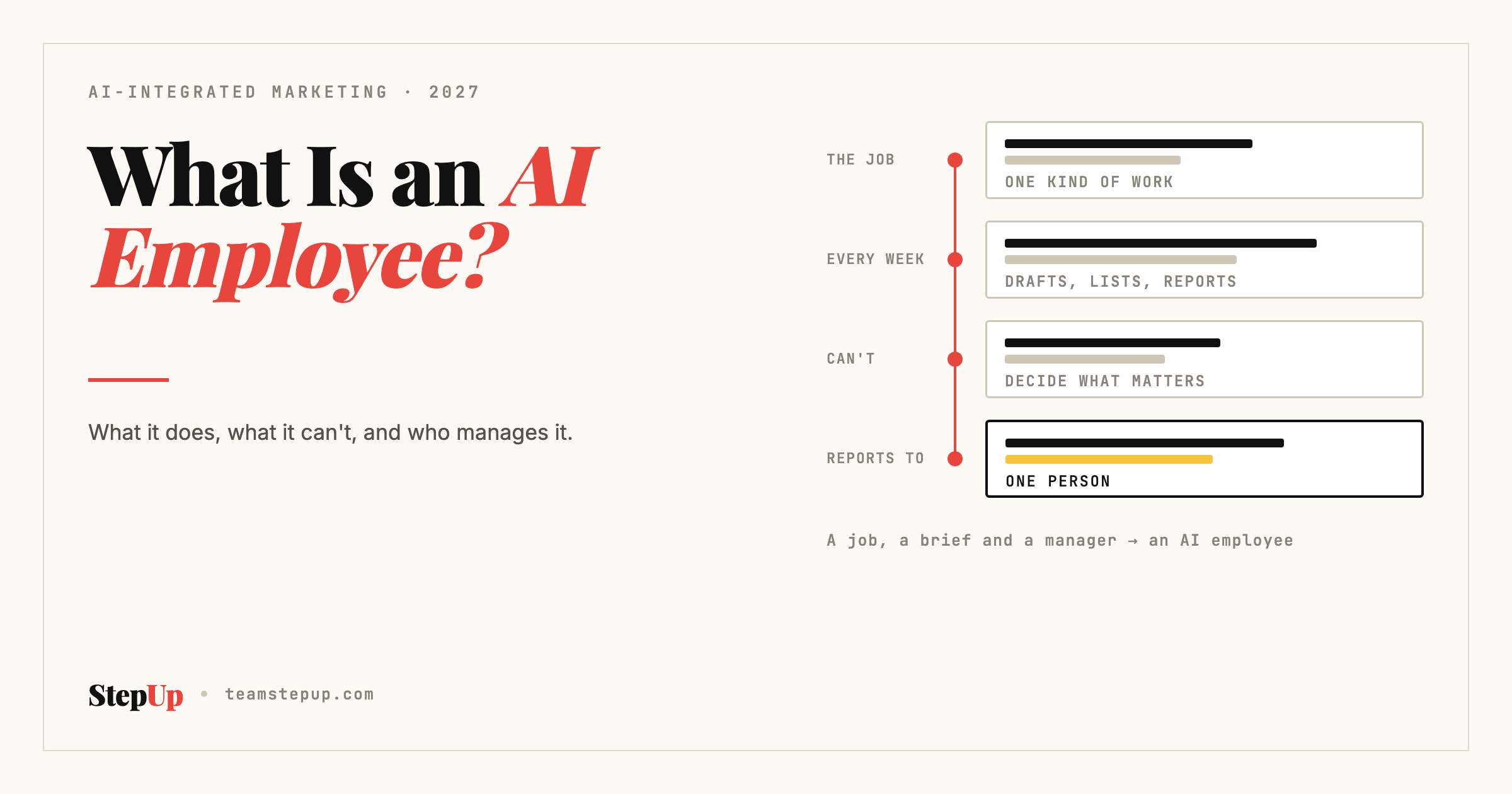
An AI employee is an AI agent with one defined job, written instructions, access to the tools that job needs, and a person who reviews its work. It does a recurring piece of work, week after week, the way a junior team member would, within limits you set.
Four parts make it an employee rather than a tool:
- A job. One kind of work, described in a sentence.
- Instructions. A short written job description: what it does, what it needs, what it can’t do.
- Access. Only the systems its job needs, usually to read and draft, rarely to publish.
- A manager. One named person who assigns its work and checks the output.
Take away the manager and you have a tool someone forgot to put away. Similarly, take away the instructions and you have a chatbot that has to be briefed from scratch every time.
AI Employee vs. AI Tool vs. Chatbot
The three terms get mixed up constantly. Here’s how they differ in practice.
| Chatbot | AI Tool | AI Employee | |
|---|---|---|---|
| What it is | A conversation you start | A feature that does one task when asked | An agent with a recurring job |
| Knows your business | Only what you paste in | Little or nothing | Works from your brand files every time |
| Works on its own schedule | No | No | Yes, within its instructions |
| Has a manager | No | No | Yes, one named person |
| Example | Asking for ten blog ideas | A button that rewrites a headline | An analyst that builds the Monday report and checks every number |
In short, the difference is the job description and the manager, not the technology underneath.
Five AI Employees for a B2B Marketing Team
These are the five jobs that cover most of a B2B marketing team’s recurring work. Each one has a clear “hire first if” signal.
The Market Researcher
Every week: tracks what your top competitors changed, keeps your ideal customer profile current, and turns sales call notes into the questions buyers actually ask. Needs from you: who your best customers are, and access to sales notes or the CRM. Can’t: talk to customers for you, or decide which market to go after. Hire first if: you’re not sure why you win or lose deals.
The Content Writer
Every week: drafts blogs, LinkedIn posts and the newsletter from your brand files, and turns one strong piece into five smaller ones. Needs from you: your message written down, your voice guide and your opinions. Can’t: have your opinions, or know what happened in yesterday’s sales call unless you tell it. Hire first if: you know what to say and never have time to write it.
The Search Specialist
Every week: reads Search Console, fixes page titles, descriptions and links, and shapes content so Google and AI answers can quote it. Needs from you: Search Console access and a person who approves changes to the site. Can’t: make Google move faster, or earn links from other sites on its own. Hire first if: your website has good content that nobody finds.
The Outreach Rep
Every week: builds lists of the right companies and people, drafts first messages and follow-ups, and flags who replied. Needs from you: your ideal customer profile, an approved message, and someone who sends and signs off. Can’t: build the relationship or close the deal. Hire first if: sales has no time to start new conversations.
The Analyst
Every week: writes a one-page report on what changed and why, and checks every number against its source. Needs from you: access to analytics, the CRM and ad accounts, and the goals you agreed. Can’t: decide what matters. Hire first if: you can’t tell your CEO what marketing did last month.
The real value comes once the five work together as a department, rather than as five separate tools. That’s the difference between buying an agent and running a team. For how they fit around the people on the team, see our guide to marketing team structure for 2027.
What an AI Employee Can’t Do
This is the part vendor pages tend to skip. An AI employee can’t:
- Decide what matters. It works on what it’s given, so choosing the priority is a person’s job.
- Know what it wasn’t told. If the plan changed in Tuesday’s meeting, it doesn’t know until someone updates its instructions.
- Tell a true claim from a confident one. In fact, it can write a convincing sentence with nothing behind it. Every claim needs a check.
- Build trust. Customers, sales and leadership trust people. An AI employee can prepare the conversation, not have it.
- Take responsibility. When something goes wrong, a person answers for it.
None of this makes AI employees less useful. Instead, it tells you where the person has to stay in the loop.
Who Manages an AI Employee?
Every AI employee needs one named manager, usually the person whose work it supports. The content lead manages the content writer. The person who owns the website manages the search specialist. However, on a team of one, that’s the same person for all of them.
The manager’s job is short but non-negotiable:
- Assigns the work each week, from the plan.
- Reviews the output before anything goes out.
- Updates the instructions when the agent gets something wrong, so the mistake doesn’t come back.
- Owns the result, the same way she would for a junior hire.
Two managers for one AI employee is a bad idea. In practice, it means nobody checks the work.
How to Set Up Your First AI Employee
Pick the Job That Eats the Most Hours
Look at last month. Which recurring task took the most time and followed a clear standard? That’s your first hire.
Write the Job Description
One page: the job in one sentence, what it does every week, what it needs from you, what it can’t do, who it reports to.
Give It Your Brand Files
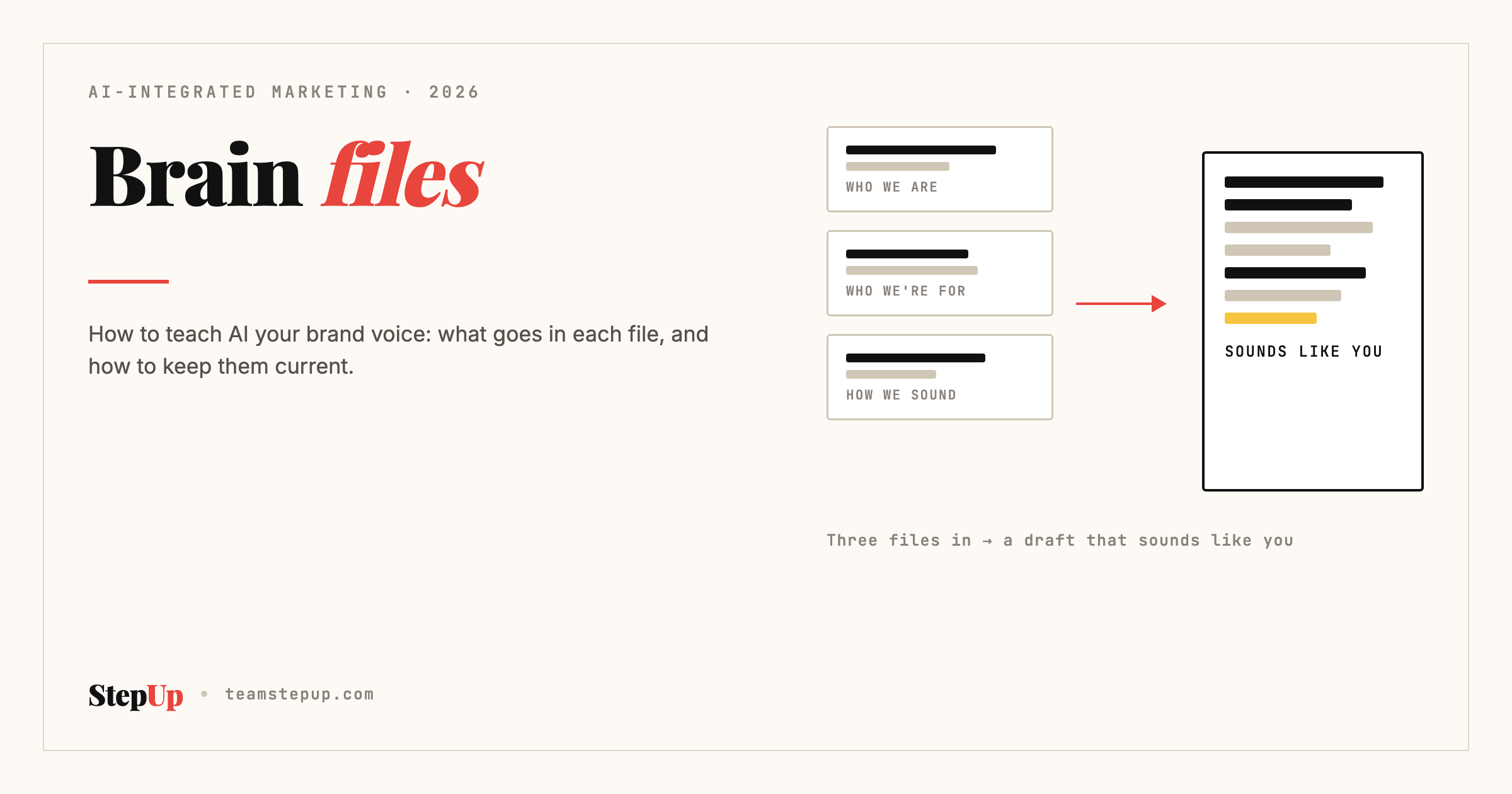
Your positioning, audience, voice and the words you never use. Without them, every AI employee sounds like every other company’s, because it has nothing else to go on. Our guide to brain files shows how to write them.
Set the Access
Read and draft, in most cases. Also, keep publishing and sending with a person.
Give Each Job Its Own Conversation
Run each AI employee’s work in its own chat or project, with one goal. Short conversations with a clear goal stay accurate, and they’re easy to come back to a week later.
Review Every Week for a Month
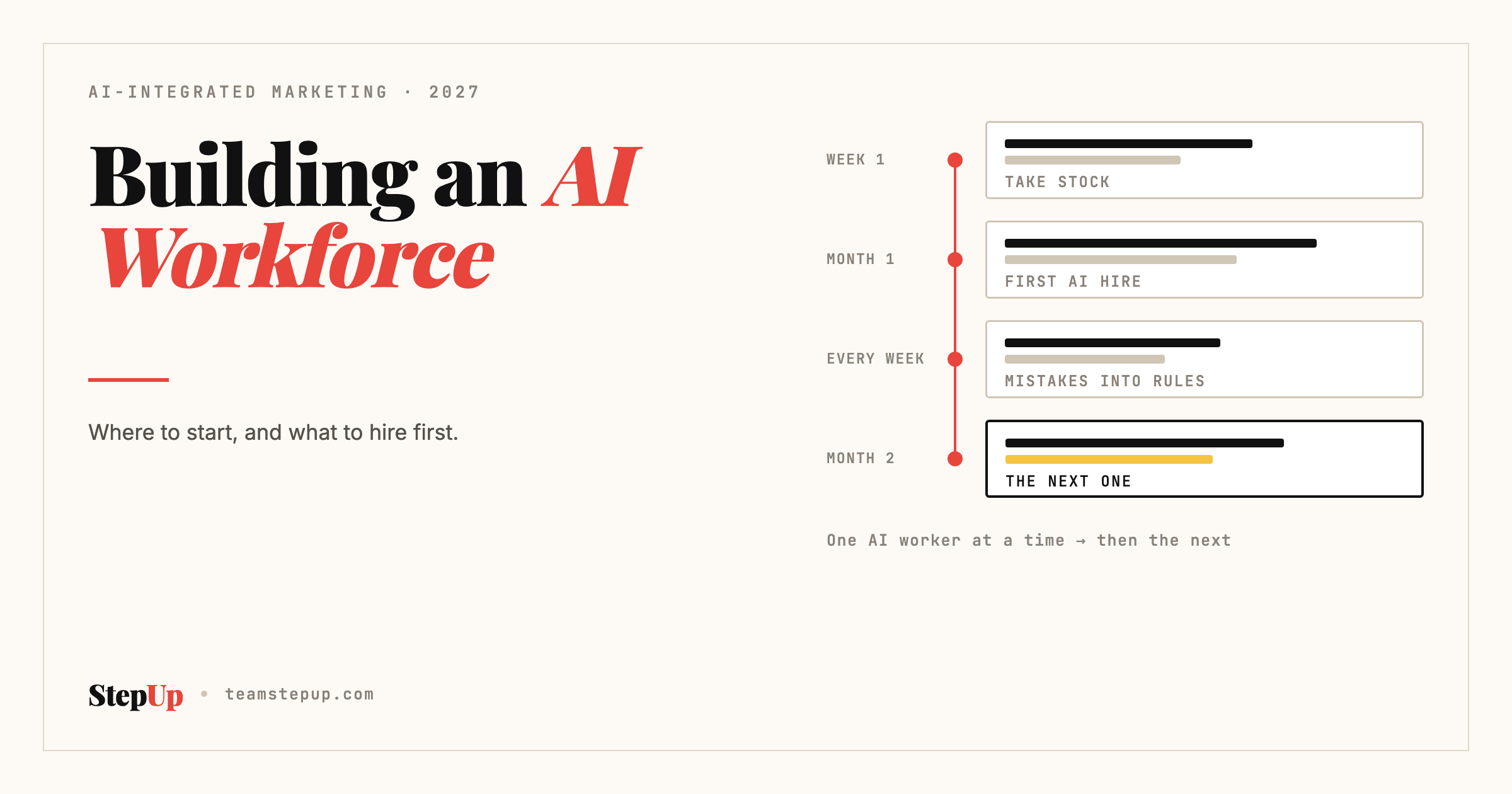
Check the work, note what went wrong, and add a rule to the instructions each time. After a month, compare hours saved and quality against before. Then decide whether to keep it, change its job, or add the next one.
Frequently Asked Questions
What is an AI employee?
An AI employee is an AI agent with one defined job, written instructions, access to the tools that job needs, and a person who reviews its work. It does recurring work, such as drafting content or building reports, within limits set by its manager.
What is an AI marketing employee?
An AI marketing employee is an AI agent that handles one recurring marketing job, such as market research, content drafting, search upkeep, outreach drafts or reporting. It works from the company’s brand files and reports to a named person on the marketing team.
Can an AI employee replace a human employee?
An AI employee can take over recurring tasks that follow a clear standard, which can reduce the hours a team spends on them. It can’t decide priorities, build relationships, judge whether a claim is true, or take responsibility, so it works alongside people rather than replacing them.
How do you create an AI employee?
Pick the recurring task that takes the most time, write a one-page job description, give the agent your brand files, set its access to read and draft only, and name one person to review its work every week for the first month.
Who should manage an AI employee?
One named person, usually the team member whose work it supports. That person assigns its work, reviews its output, updates its instructions when it makes mistakes, and owns the result.
Back to the Lanyard
There’s no robot in the Monday meeting. There’s a short document that says what the AI employee does, a person who checks its work, and a list of rules that grows every time it gets something wrong.
Less cinematic. Much more useful.
And nobody has to worry about it judging their slides.
Which AI employee should your team hire first? The free AI-Readiness Self-Audit shows whether you’re ready.
Want to know where your marketing stands against the market? The AI-Readiness Audit is a short call that looks at your marketing and pinpoints exactly where the gap is — and what it is worth to close first. You leave with a clear picture, even if we never work together.