Claude Code for Marketers: How We Use It Without Being Developers
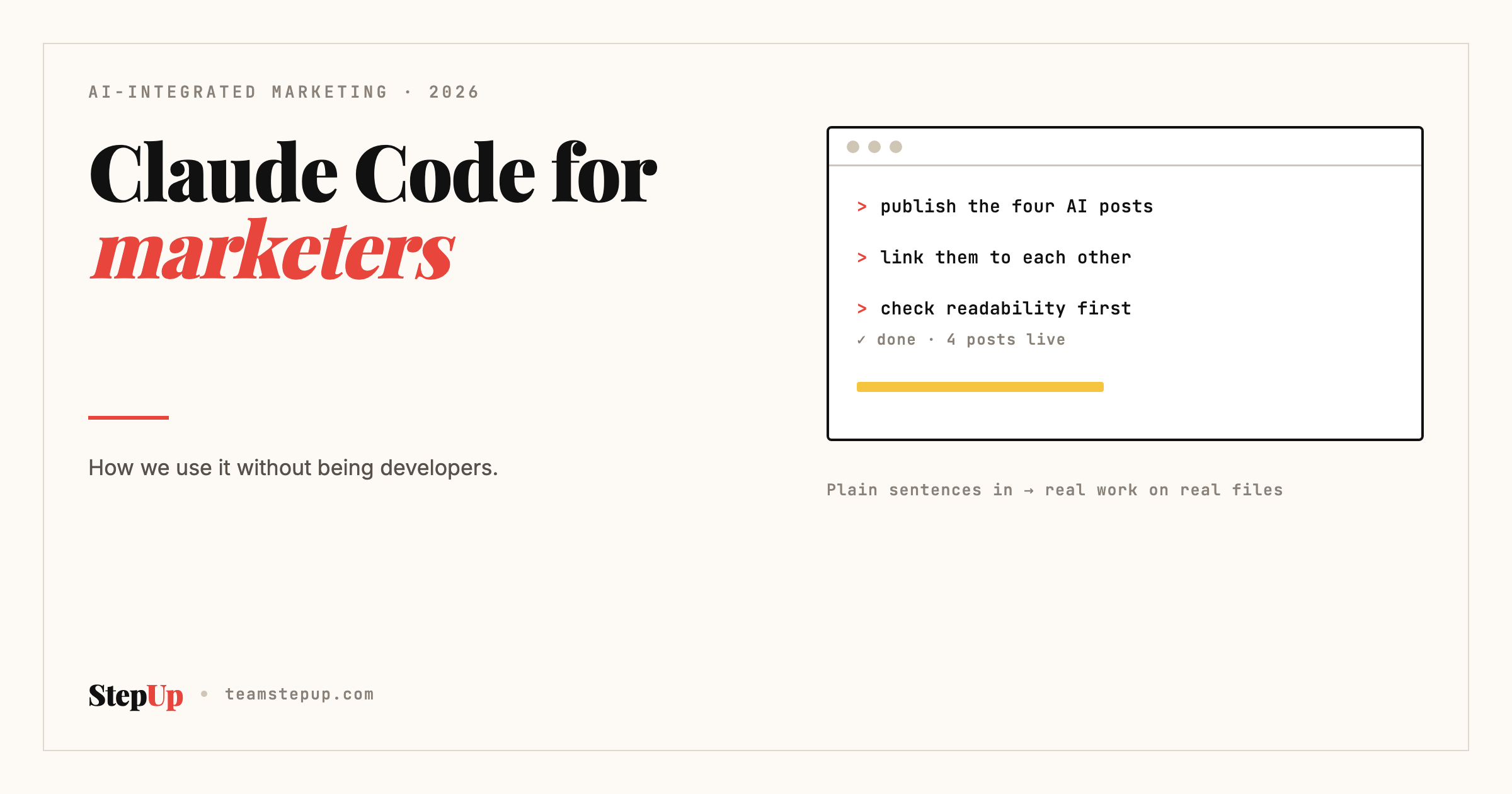
The name puts most marketers off. Claude Code sounds like something for software engineers, and at first glance it looks like one: a plain window where you type instructions instead of clicking buttons.
We are marketers, not engineers. We rebuilt our website with Claude Code, and it now runs our blog publishing, our search research and a good part of our weekly planning.
The skill it asks for turns out to be a marketing skill. It is the same one a good brief requires: knowing exactly what you want and saying it clearly. This article explains what Claude Code is, what we actually use it for, and how a marketer can start without learning to program.
What is Claude Code?
Claude Code is a version of Claude that works directly with the files and tools on your computer, rather than only in a chat window.
In ordinary Claude, you paste something in and get an answer back. In Claude Code, you point it at a folder, and it can read what is there, create and edit files, run tools, connect to services like your website or analytics, and carry out a task with many steps from start to finish.
So the practical difference is this. Chat is where you think and write. Claude Code is where work gets done across many files and systems at once.
You do not need to write code to use it. You describe the job in plain language. Claude Code works out the steps, shows you what it plans to do and asks before doing anything significant.
Why a marketer would use it
Much of marketing work is not writing. It is moving information between systems, checking things at scale and repeating the same steps across dozens of pages. That is exactly where chat tools run out of room and Claude Code keeps going.
A few examples of the difference:
- Chat can improve one blog post. Claude Code can check eighty posts for missing descriptions and fix them.
- Chat can explain how to read a Search Console report. Claude Code, by contrast, can pull the report, find the pages people see but do not click, and draft a fix for each.
- Chat can draft a web page, while Claude Code can build it inside your site.
How we use Claude Code in our marketing
Rebuilding the website
Our website was rebuilt with Claude Code in four days, working inside WordPress rather than replacing it. Before any building started, we wrote down our positioning, audience and voice in detail. That document did more to protect the result than any technical decision. The full story is in how we built our website in 4 days with AI.
Publishing and refreshing blog posts
Our blog runs through a set of Claude Code tools. It converts a finished draft into web-ready format, checks readability against the rules our site uses, adds internal links, builds a cover image in our style and publishes the post. A person approves every draft before it goes live. The difference is that nobody spends an afternoon copying and pasting.
Search research
Claude Code pulls our Search Console and SEMrush data directly. It finds the searches we are close to ranking for, the pages Google shows but nobody clicks, and the pages that compete with each other. Then it drafts a recommendation for each. We decide which ones to act on.
Planning the week
Each week’s plan lives in a simple written file. Every time we open our work, Claude Code reads it first, so it knows what the week is for before we ask it anything. It also stops it from suggesting work nobody agreed to.
Morning briefings
A scheduled task reads the calendar each morning and emails a short brief with the day’s meetings and the week’s goals. It runs whether or not anyone has opened a computer.
What Claude Code does not do for you
It does not decide what matters. It will happily build a page nobody needs or optimize a post nobody reads. Priorities stay with people.
It does not know your market. Everything it knows about your company, it learns from what you write down. Without that, it produces competent, generic work.
It does not remove the need to check. It explains what it did and why, but a person should still look at the result, especially before anything goes live or reaches a customer.
How a marketer can start with Claude Code
- Start with one folder. Put your brand files, your customer profile and your current plan in it. This is the information Claude Code will work from.
- Pick one repetitive job. For example, checking all your blog posts for outdated years in the title, or pulling last month’s search numbers into a summary.
- Describe the job in plain words. What you want, what good looks like and what it should not touch.
- Read its plan before saying yes. Claude Code explains what it intends to do. That is your chance to correct it.
- Check the result. Look at the output yourself the first few times, even if it looks right.
- Write down what you learned. When it gets something wrong, add a rule to your files so it does not happen again.
If you have not set up Claude for writing yet, start there first. Claude for marketing covers Projects and brain files, and Claude skills for marketing explains how to save your methods for repeat jobs.
Frequently asked questions
Can marketers use Claude Code without coding?
Yes. You describe the task in plain language, and Claude Code works out the steps. It helps to be comfortable with folders and files, but you do not need to write code. The most useful skill is giving clear, specific instructions.
What is Claude Code used for in marketing?
Marketing teams use it for work that spans many files or systems: updating many blog posts at once, building or editing website pages, pulling data from tools like Search Console or SEMrush, preparing content for publishing and automating repeat reports.
What is the difference between Claude and Claude Code?
Claude in a chat window is best for thinking, writing and editing individual pieces. Claude Code works directly with files and tools, so it can carry out multi-step jobs, such as auditing eighty blog posts or publishing to a website.
Is Claude Code safe to use on a live website?
It asks before making significant changes and explains what it plans to do. Even so, it is sensible to back up anything you change, test on one page first, and check the live result yourself. We back up every page before changing it.
Do I need Claude Code, or is Claude chat enough?
For writing and editing, Claude chat with Projects is usually enough. Claude Code becomes worth it when your work involves many files, data from several tools or changes to your website.
The plain window still looks like it belongs to an engineer.
Ours mostly holds sentences like “publish the four AI posts together and link them to each other.”
Want to know where your marketing stands against the market? The AI-Readiness Audit is a short call that looks at your marketing and pinpoints exactly where the gap is — and what it is worth to close first. You leave with a clear picture, even if we never work together.