AI Agents for Marketing: What They Actually Do in a B2B Team
The word “agent” has been stretched to cover almost anything with AI in it. Chatbots, writing tools, email schedulers and full software platforms all claim it.
For a marketing leader, that makes a simple question surprisingly hard to answer. What does an AI agent actually do in a marketing team, and what does it need from the people around it?
We run a good part of our own marketing with AI agents. This is what they do well, where they fall short, and how to run them so the work is worth keeping.
What is an AI agent in marketing?
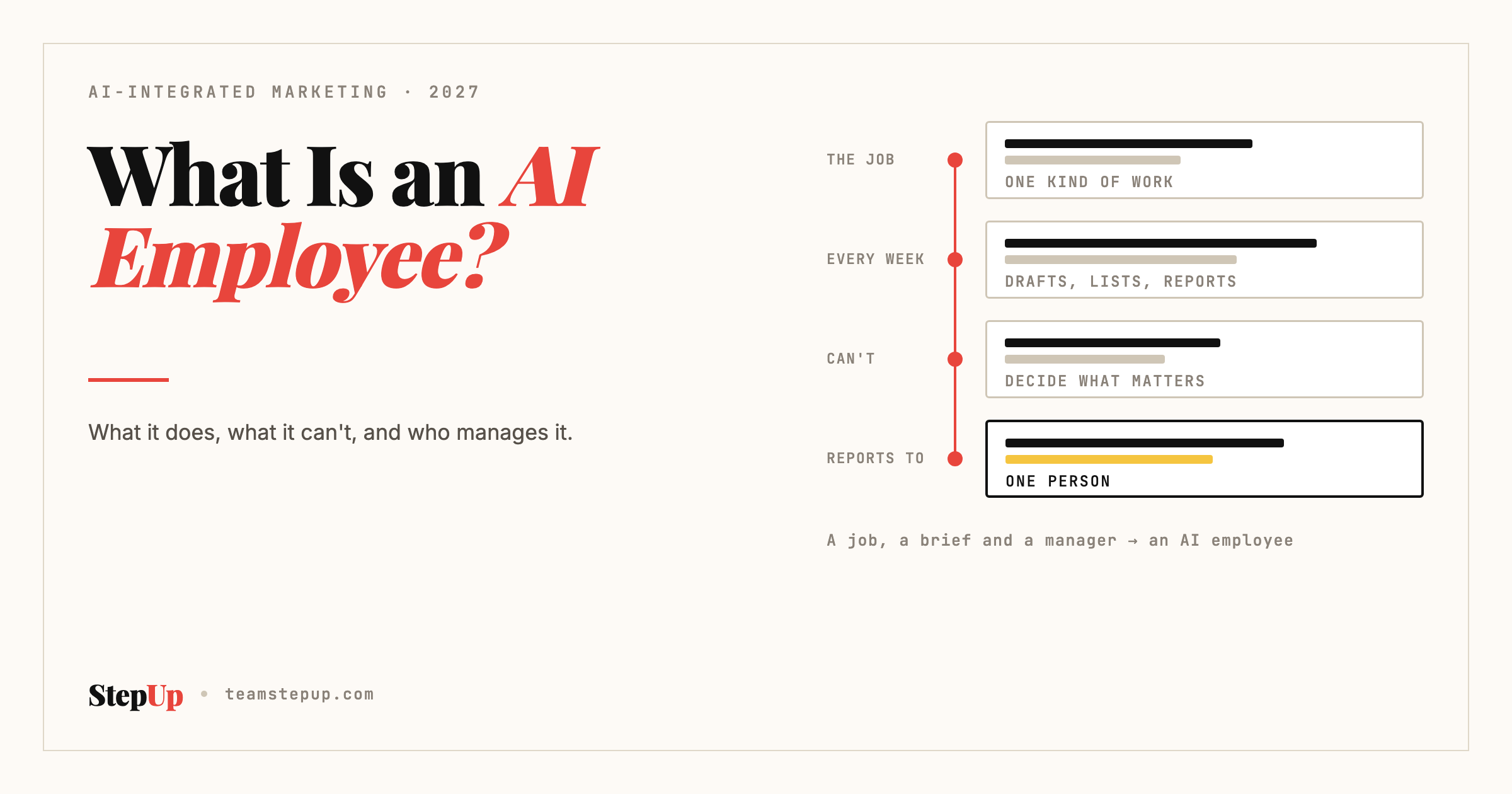
An AI agent is an AI system that carries out a task with several steps, using tools and information, rather than just answering a single question.
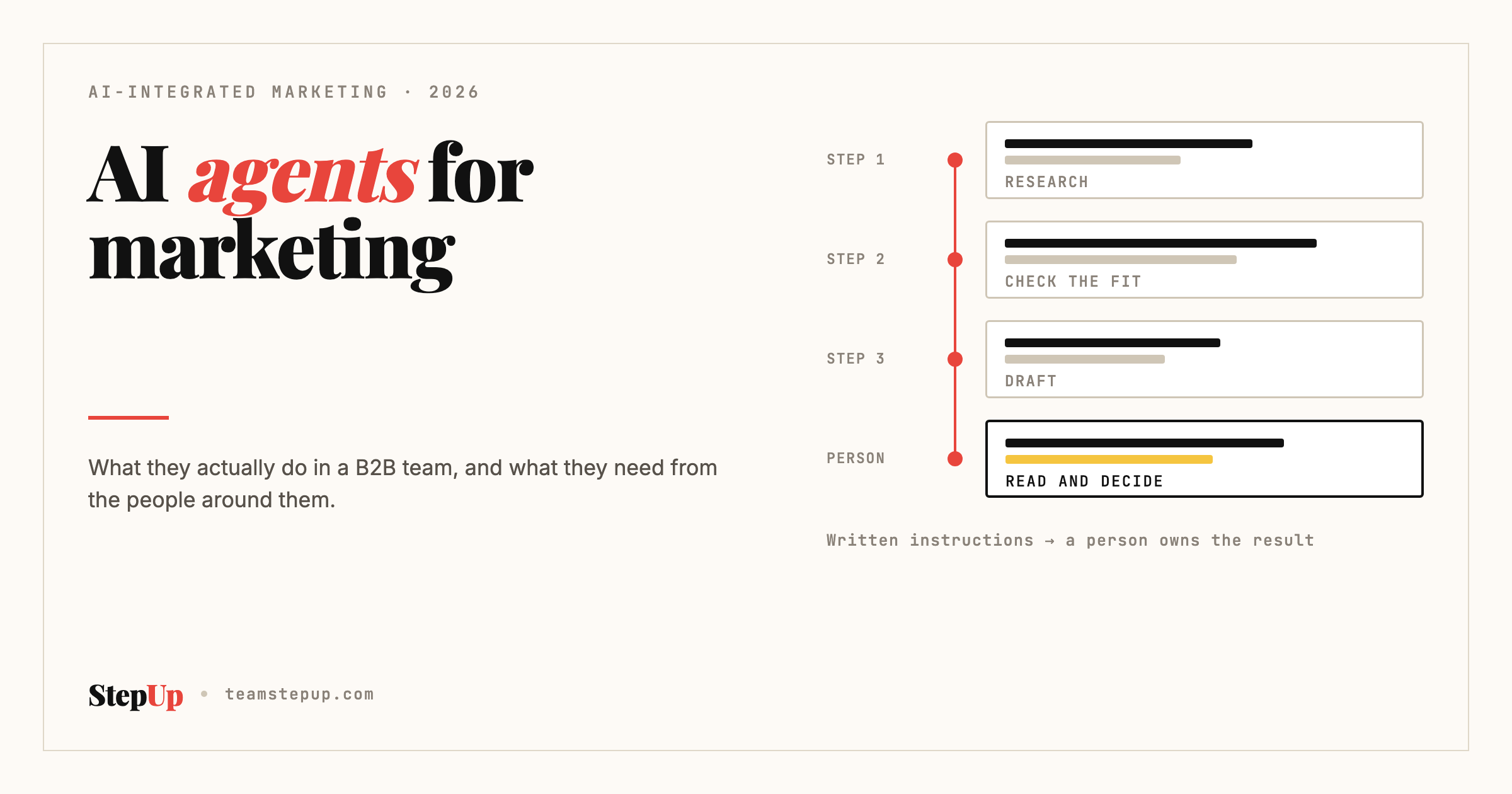
The difference is easiest to see side by side. Ask a chat tool to “write a LinkedIn post” and it writes one. Give an agent the job of “research these twenty companies, check which match our customer profile, and draft a first message for each,” and it works through the steps itself: searching, reading, comparing, deciding and drafting.
So in marketing, an agent is less like a writing tool and more like a very fast, very literal junior team member. It will do exactly what the instructions say, at a speed no person can match. That is both its strength and its risk.
What AI agents do well in a B2B marketing team
In our experience, agents earn their place on work with clear inputs and a clear standard. Here is where they do the most.
Account research
Agents can read company websites, news and public profiles, then summarize what matters: what the company does, recent changes and likely priorities. Research that took a person half a day now takes minutes.
Checking fit against your customer profile
Given a written customer profile, an agent can check a list of companies against it and flag the strong matches. This only works if the profile is precise. Our guide on how to create an ideal customer profile covers what “precise” means.
First drafts of outreach
Agents can draft a first message for each account, based on the research and your voice rules. A person reviews and approves before anything is sent. That review step is not optional, and we explain why below.
Content repurposing
One article can become a LinkedIn post, a newsletter section and a set of talking points for sales. Agents handle this reformatting well, especially when they work from written examples of your best work.
Reporting
Agents can pull numbers from several tools, compare them with last month and write a plain summary. The person reading it still needs to decide what the numbers mean.
Website and content maintenance
Checking old blog posts for outdated facts, missing descriptions, broken links or readability problems is exactly the kind of patient, repetitive work agents do well.
Where AI agents need a person
Agents are fast and tireless. They are not wise. These are the places a person has to stay involved.
Deciding what matters. An agent will optimize whatever it is pointed at, including work nobody needed. Choosing priorities is a human job.
Judging tone. A message can be accurate and still land badly with the person reading it. Anything that goes to a real prospect or client should be read by a person first.
Checking facts. Agents produce confident output whether or not it is right. Claims, numbers and names need checking before they go out.
Protecting the brand. Left alone, agents drift toward generic language. Written voice rules reduce this, but an editor still has to read the work.
Owning the result. When something goes wrong, the agent does not answer for it. A person does.
How to run AI agents so the work is worth keeping
The difference between agents that help and agents that create noise is almost never the technology. It is the setup around them.
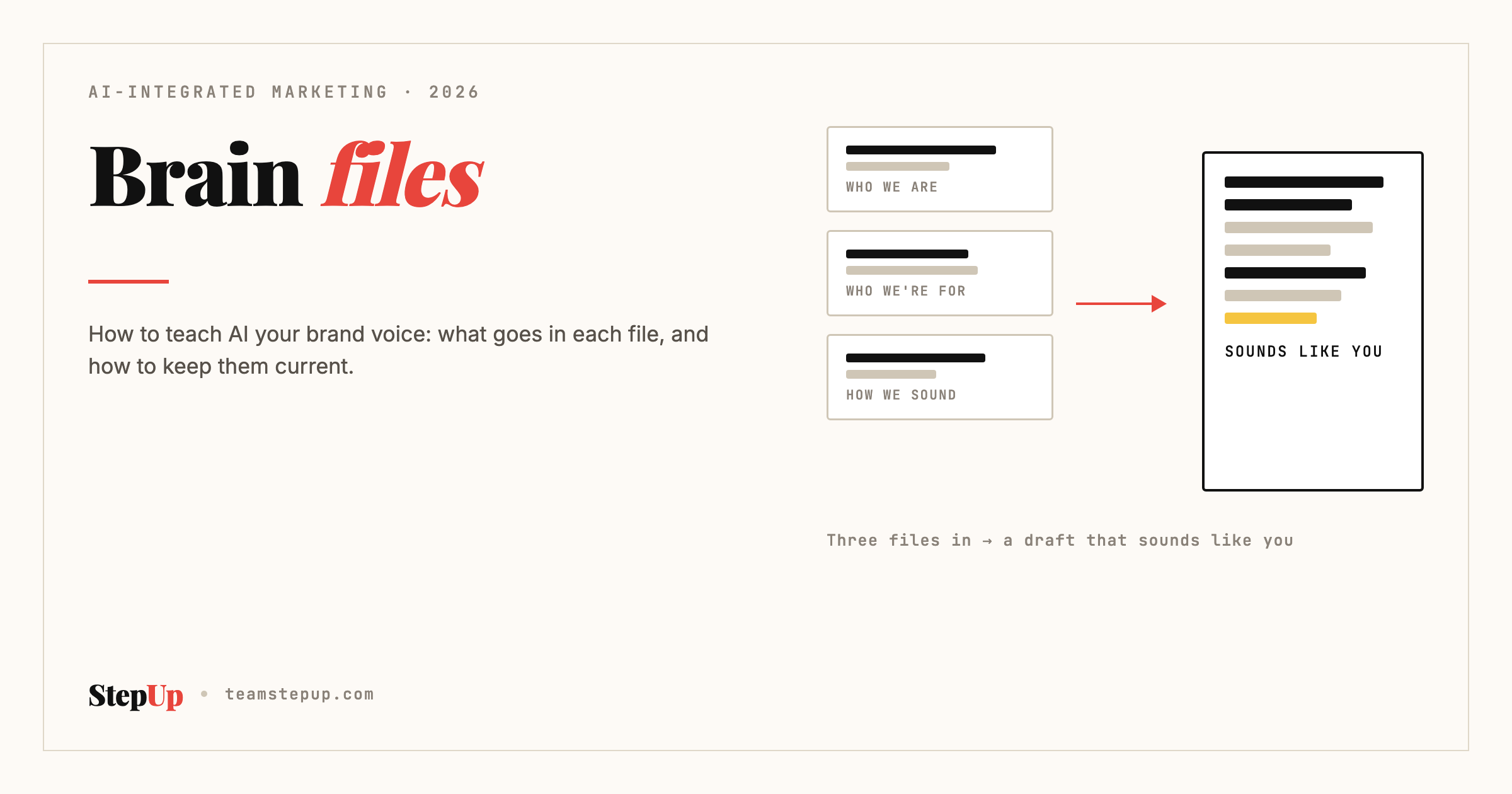
Give every agent written instructions
Agents work from what you write down. That means a description of your company and what it believes, a precise customer profile and a set of voice rules. We call these brain files, and we explain how to write them in brain files: how to teach AI your brand voice.
Give every agent a human owner
Every agent needs one person who reads its output, corrects it and updates its instructions. Without an owner, nobody notices when the quality slips.
Fix the rule, not just the output
When an agent gets something wrong, the tempting fix is to correct that one piece of work. The better fix is to change the instruction that produced it, so the same mistake cannot happen again. Each correction takes minutes, and the whole system improves.
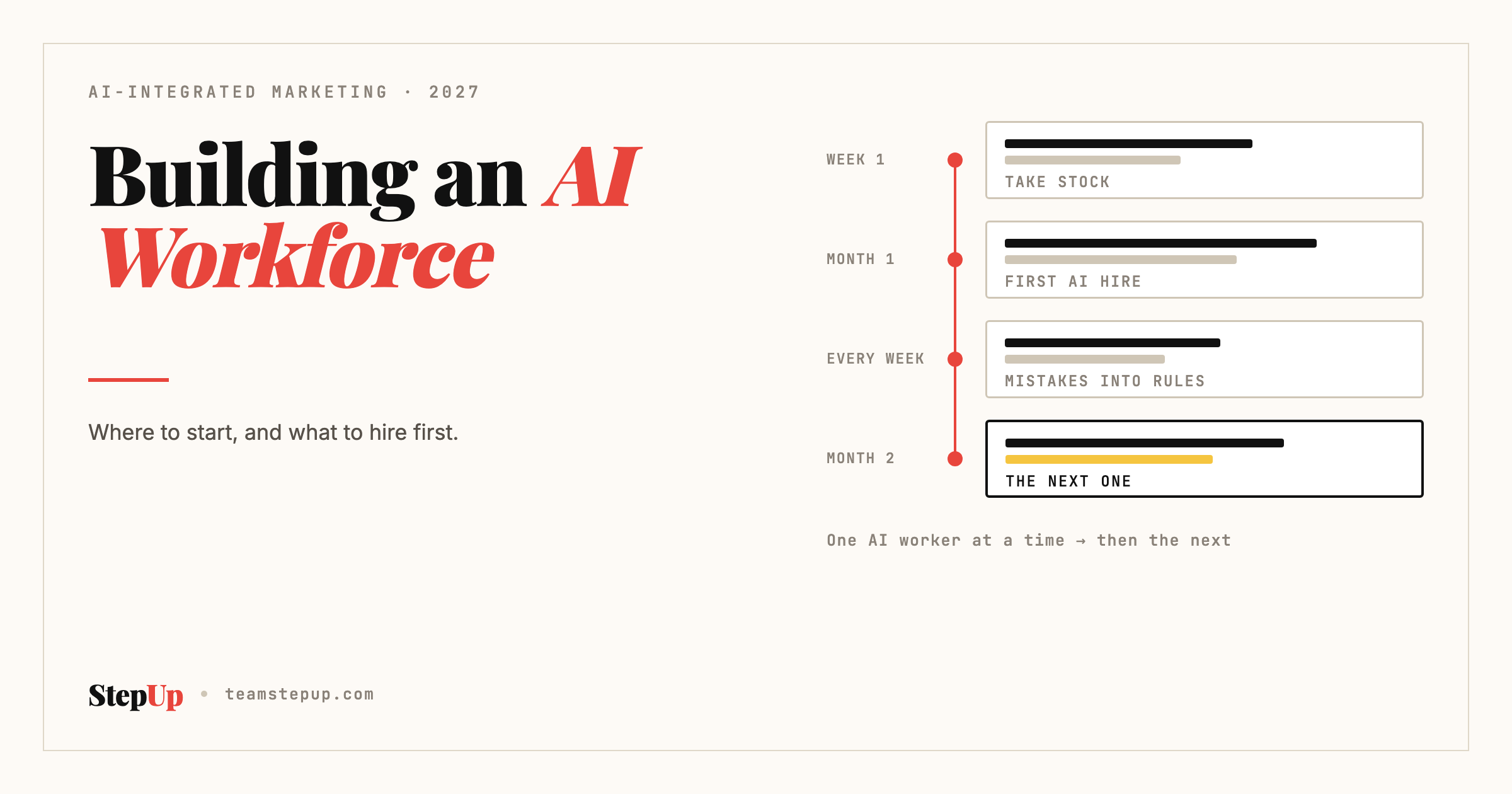
Start with one job
Pick the task that takes the most hours each week, set up one agent for it properly, and run it for a month before adding another. Spreading agents across everything at once is the fastest way to lose track of quality.
Keep a person between the agent and the outside world
Agents can draft, research and prepare. Sending, publishing and replying to real people should go through a human review, at least until you have months of evidence that a specific task is safe to automate fully.
What agentic marketing changes for the team
Agentic marketing, meaning marketing where agents carry out much of the production work, does not remove the need for a marketing team. It changes what the team does.
Fewer hours go into drafting, reformatting and research. More go into deciding, editing and maintaining the system the agents work from. In practice, three human jobs matter most: the person who owns the plan, the editor who judges quality and the operator who keeps the instructions current. We describe these in more detail in will marketing be replaced by AI.
For the strategy that should sit above all of this, see AI marketing strategy.
Frequently asked questions
What are AI agents in marketing?
AI agents in marketing are AI systems that carry out multi-step tasks, such as researching accounts, checking them against a customer profile and drafting outreach, rather than answering a single prompt. They work from written instructions and use tools and data to complete the job.
What can AI marketing agents do?
They handle work with clear inputs and standards well: account research, checking fit against a customer profile, first drafts of outreach and content, repurposing content across channels, reporting and website maintenance. They need people for priorities, tone, fact-checking and final approval.
What is agentic marketing?
Agentic marketing is an approach where AI agents carry out much of the production work in marketing, such as research, drafting and reporting, while people set direction, review quality and maintain the instructions the agents follow.
Will AI agents replace marketers?
They replace a large share of production tasks, not the people who decide strategy, judge quality and own results. Teams that use agents well usually shift their people toward those decisions rather than removing them.
How do you start using AI agents for marketing?
Write down your company description, customer profile and voice rules first. Then choose one task that takes the most hours each week, set up one agent for it, give it a human owner, and review its output for a month before expanding.
Are AI agents safe to use for customer-facing marketing?
They are safe when a person reviews their output before it reaches customers. Agents can produce confident but wrong or badly toned work, so sending, publishing and replying should stay under human review until a task has a long record of reliable results.
So the next time a vendor calls their email scheduler an agent, ask to see the instructions it runs on.
If nobody wrote any, you have your answer.
Want to know where your marketing stands against the market? The AI-Readiness Audit is a short call that looks at your marketing and pinpoints exactly where the gap is — and what it is worth to close first. You leave with a clear picture, even if we never work together.