Originally published May 2020. Updated September 2026.
B2B market research has a reputation problem. Say the words in a planning meeting and people picture a 60-page report from a firm with a Swiss-sounding name, a six-figure invoice and one very confident pie chart.
The fancy version has its place. The cheap version is a survey sent to 3,000 contacts and answered by eleven people, four of whom work in your sales team. (One of them was just checking that the link works.)
Most B2B marketers live somewhere in between.
And the pressure comes from above, as usual. Someone at the top read that the best companies are “customer-obsessed” and would like you to be obsessed too, by the end of the quarter, with no budget and the same calendar you had last week. (In my imagination, the obsession gets its own Slack channel and nobody ever posts in it.)
Truth is, the research that changes your marketing rarely costs much. It takes a few honest conversations, a close look at data you already have, and someone willing to write down what they heard, even when it contradicts the website.
So this is B2B market research at the size most teams can actually run: the methods that work, the questions to ask, and how to turn the answers into something your team will use.
What is B2B market research?
B2B market research is the work of learning who buys what you sell, why they buy it, how they decide and what else they consider. It covers your market, your customers and your competitors.
It differs from consumer research in three ways that shape everything else. First, the audience is small. You may have a few hundred real prospects, not millions. Second, buying is a group decision, usually involving several people with different concerns. Third, the cycle is long, so the reasons someone buys are often set months before they ever talk to sales.
As a result, B2B research leans on depth over volume. Ten good conversations usually teach you more than a thousand survey responses.
Why most B2B companies skip it, and pay for it later
Most B2B teams believe they already know their customer. In a sense, they do. The founder knows the early deals, sales knows the objections, and marketing knows what gets clicks.
The trouble is that these views rarely match. So the website describes one customer, the sales deck describes another, and the ads target a third. Then, when deals slow down, each team blames a different stage of the lead funnel.
Research settles the argument with evidence. It also gives you the raw material for everything that follows: your ideal customer profile, your positioning, your messaging and your content.
B2B market research methods that work for small teams
You do not need all of these. Instead, pick two or three and do them properly.
Customer interviews
This is the most valuable method, and the one teams skip most often. Talk to recent customers, ideally within six months of their decision, while they still remember how it happened. Thirty minutes each is enough. Aim for eight to twelve.
Record the calls if they agree, because the exact words customers use are the most useful thing you will collect. Later, those words become your headlines.
Lost-deal conversations
Next, talk to prospects who chose someone else, or chose to do nothing. They are harder to reach. However, they tell you what customers never will: where your story broke down. Even three of these conversations can change your messaging.
Sales call reviews
Your sales team hears buyers every day. So listen to a handful of recorded calls, or sit in on a few live ones. Note the questions buyers ask, the objections that come up and the words they use to describe their problem.
Your own data
Before spending anything, look at what you already have. Search Console shows which searches bring people to your site. Your CRM shows which industries and company sizes close fastest. Meanwhile, your support inbox shows what confuses customers after they buy.
Competitor research
Read your competitors’ websites, pricing pages, case studies and reviews. In particular, look for the promises everyone makes, since those are the ones buyers have stopped hearing. We walk through the full process in our B2B competitor analysis guide.
Short surveys
Surveys work best after the interviews. Use them to check how widespread something is, once conversations have told you what to ask. Also, keep them to five questions. Response rates drop fast after that.
The B2B market research questions worth asking
Good questions ask about past behavior, not opinions or predictions. “What did you do?” gets a more reliable answer than “What would you do?”
These are the questions we come back to most often.
About the problem
- What was happening in the business when you started looking for help?
- What had you already tried?
- What would have happened if you had done nothing?
About the decision
- Who else was involved, and what did each person care about?
- What other options did you consider, including doing it in-house?
- What almost stopped you from going ahead?
About the result
- What changed after you started?
- How would you describe what we do to a colleague?
That last question is often worth the whole interview. The answer is usually clearer than anything on your website.
How to run B2B market research in four weeks
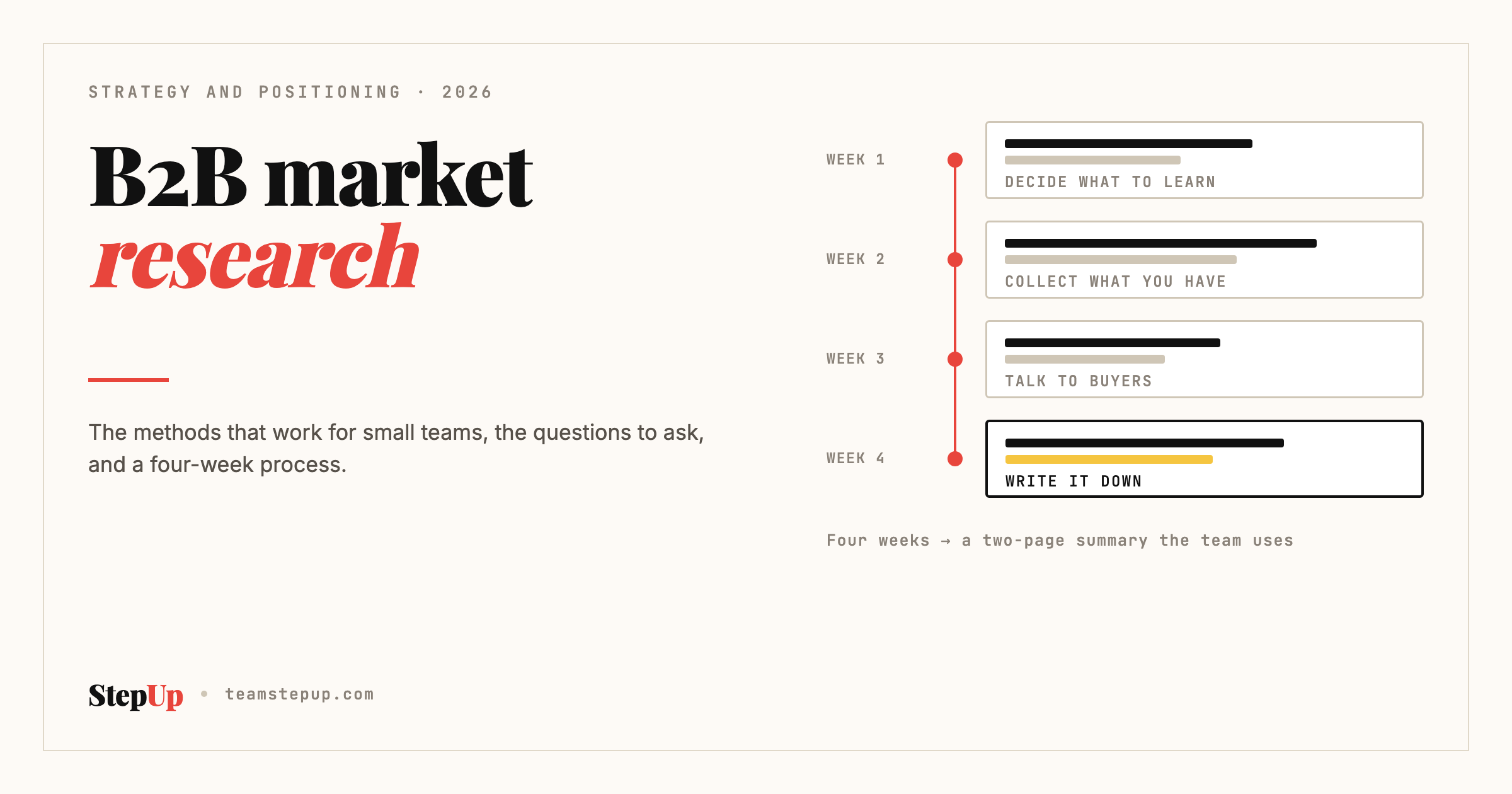
Week 1: decide what you need to learn
Write down the three decisions this research should inform. For example, which industry to focus on next year, why deals stall after the demo, or how to describe the product on the homepage. Research without a decision attached tends to end as a slide deck nobody opens.
Week 2: collect what you already have
Pull the numbers from your CRM, Search Console and past campaigns. Ask sales for their five most common objections. Then list the customers and lost prospects you want to interview, and send the invitations.
Week 3: run the conversations
Hold the interviews and the call reviews. Keep a shared document open and write down the exact phrases people use. After each call, add three lines: what surprised you, what confirmed what you already thought, and one quote worth keeping.
Week 4: find the patterns and write them down
Read all the notes in one sitting. Look for anything that came up three times or more. Finally, write a two-page summary: who buys, what triggers the search, how they decide and the words they use. That document is the output, and everything else builds on it.
Turning research into something your team will use
Research only matters if it changes what people do. So translate it into three things.
An ideal customer profile. The research shows which companies get the most value from you and decide most easily. Our guide on how to create an ideal customer profile shows how to write one.
Buyer personas, kept practical. A persona earns its place when it describes a real role, the problem in that person’s own words and what they need to see before they say yes. For that reason, skip the invented hobbies and the stock photo.
Your messaging. Put customer language into your homepage, your sales deck and your content. If customers call it “chaos in the handoff” and your website calls it “pipeline optimization,” use their words.
These documents are also exactly what AI tools need to write well for you. We explain how in brain files: how to teach AI your brand voice.
How often should you do B2B market research?
Run a full round once a year, ideally before annual planning. In between, keep it light. Two customer conversations a month and a quarterly look at lost deals are enough to notice when the market shifts.
In addition, run it again whenever something big changes, such as a new product, a new market or a sudden drop in the share of deals you win.
Frequently asked questions
What is B2B market research?
B2B market research is the process of learning who buys your product, why they buy, how they make the decision and which alternatives they consider. It usually combines customer interviews, sales insights, your own data and competitor research.
What are the main B2B market research methods?
The most useful methods are customer interviews, conversations with lost prospects, sales call reviews, analysis of your own data (CRM, Search Console, support tickets), competitor research and short surveys. Small teams get the most from interviews and their own data.
How many interviews do I need for B2B market research?
For most B2B companies, eight to twelve customer interviews are enough to see clear patterns. If the same themes keep coming up after the first six or seven, you are close.
How is B2B market research different from B2C research?
B2B audiences are smaller, decisions involve several people, and sales cycles are longer. So B2B research relies more on in-depth conversations and less on large surveys.
What questions should I ask in B2B market research interviews?
Ask about past behavior: what triggered the search, what they tried before, who was involved in the decision, which alternatives they considered, what almost stopped them and how they would describe your product to a colleague.
The firm with the Swiss-sounding name will still be there next year.
By then, you may not need the pie chart.


 Offer your audience something free during these hard economic times: free trials, free courses, or free sessions. Provide them with more content and even give them premium content for free.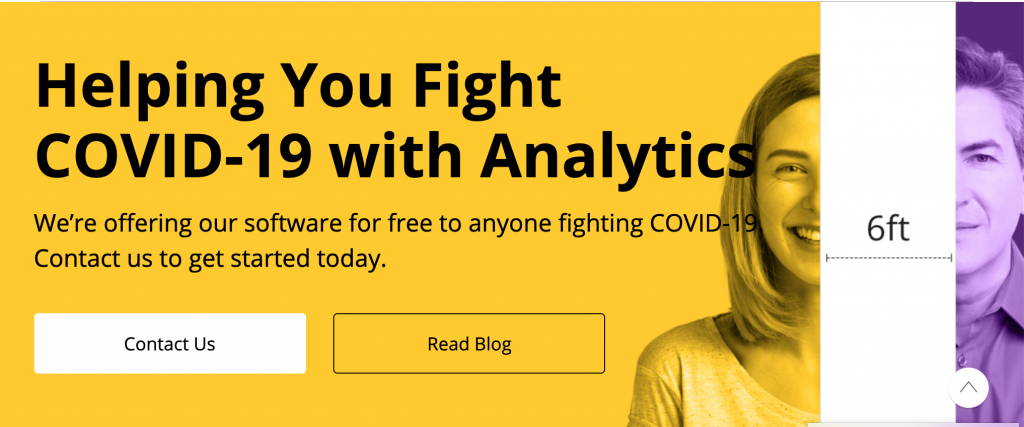
 Wista CounchCon is an excellent example of a video marketing platform for enterprises. In 2018, it held its first virtual event called CouchCon. The virtual event featured 13 influencers who taught attendees about using video for marketing.