Use the Value Proposition Canvas to build your early-stage B2B Start-Up’s Messaging

Why does marketing messaging even matter? Really, you put so much work (and money) into “the right words”, what’s it all about? Well, the truth is — messaging that connects your audience to what you offer is the key piece of the puzzle in emotionally connecting with your potential audience and getting them to take the next (or first) step in your funnel. But getting there should not rely on quick scans of your competitors’ ads and guesswork. It should rely on asking good questions about who your target market is and what you offer them that truly improves your life.

That’s why we developed the Value Proposition Canvas — our methodology that helps us to connect the product to the market to the right message. Our unique approach gets us results every time, and we think it’s an ideal approach for early-stage B2B startups. This is why we love it, why we use it (hundreds of times for our customers, and counting) and it’s also the secret sauce behind writing content that works.

Read on to learn!

[And scroll down for our template! We expect you to steal it!]

 

What is the Benefit of the Value Proposition Canvas?

The Value Proposition Canvas allows businesses to gain a deep understanding of their target market and create the types of products and services that meet their needs. By analyzing your potential customers’ jobs, pains, and gains; you can identify opportunities to differentiate yourself from your competitors and create really compelling marketing that shines.

Our Value Proposition Canvas methodology offers a structured framework to systematically analyze and understand your potential customers. This framework consists of two main components: the customer profile and the value map.

This is not like the ICP or Persona development you may have done. This analysis goes beyond simple demographics and explores the deeper motivations and aspirations of your potential clients as it specifically relates to the challenges that your particular product or service might solve. By understanding the jobs customers are trying to get done, the pain they experience (ie: the challenges they encounter trying to meet their goals), and the gains they desire, you’ll develop a clearer picture of your target market and design intuitive-feeling marketing that gets to the heart of how your solution is their solution.

Investing in Creating the Right Messaging Leads to Effective Marketing

Effective marketing is crucial for any business to thrive and reach its target audience. However, without the right messaging, even the most well-designed marketing campaign can fall flat. This is where the Value Proposition Canvas comes into play.

With the Value Proposition Canvas – you’ll develop messaging that speaks to your target market’s specific needs, desires, and challenges, making them more likely to pay attention and take action. By integrating the findings from the Value Proposition Canvas into your marketing efforts, you can create a cohesive and impactful marketing campaign that resonates loudly with your target market.

The bottom line is that the right messaging is crucial.

Understanding Your Customer’s Needs and Expectations

Once the customer profile is established, the value map comes into play. This component helps businesses identify the unique value they can offer their customers.

By using the Value Proposition Canvas as your map you’ll learn:

  • Which pain points are the strongest for your target market.
  • The ongoing impact of their challenges on them, information you can utilize in writing marketing.
  • Which of your product offerings has the potential to resonate most deeply as a solution for your customers.
  • Potential unmet needs — gaps in the market — where you can offer your product as a solution.

With these findings you can develop powerful value proposition messaging that sets you apart from your competitors and speaks directly to the heart of your target market’s needs and hopes.

This knowledge goes beyond marketing — alignment with your target market’s pain can inform your entire customer lifecycle journey, you can tailor your customer service and product messaging around this knowledge, increasing the likelihood of customer satisfaction and loyalty, ultimately leading to long-term business success.

The Psychology of Why People Buy Things

It’s really valuable to take some time to understand the psychology behind people’s buying decisions. There are so many reasons why individuals choose to buy certain products or services. These factors include emotional triggers, social influence, perceived value, and personal beliefs. By understanding these psychological drivers, businesses can craft messaging that speaks directly to their customer’s desires and motivations.

Market psychology is large and fascinating field, while not necessary, we highly encourage people to spend some time learning about the patterns and trends in human behavior that help us to understand buying patterns overall, and shed some insight into why this methodology (and many others — though we’re partial to this one) work over and over again.


How To Use the Value Proposition Canvas

 

Always Start with the Customer

In order for a business to succeed, it is crucial to understand the needs and wants of the customer — and the best way to do this is to roll up your sleeves and dig into some market research.

You can gather qualitative data about customer needs and wants through approaches such as message mining. This involves analyzing all the feedback your company has received from your existing customers. This includes customer feedback, reviews, and other product comments. With this information in hand, you’ll be able to observe some common themes and use this knowledge to develop solutions that address these specific needs.

Another really valuable approach is through conducting customer and user interviews. By directly engaging with customers and asking high-quality questions, you can gain valuable insights into your existing customer’s preferences, pain points, and expectations. These interviews are a gold mine and a much better replacement for the old-fashioned survey.

Deeply understanding the core needs and core wants of the customer is your business’s silver bullet for writing a successful value proposition. Beyond writing effective marketing — it’s the research that confirms whether you have a true product-market fit and ultimately is a huge driver of lower marketing costs, as you’ll have confidence that you’re investing your paid budget in targeting the right audiences.

Ask Enough ‘Whys’

When using the Value Proposition Canvas it is important to ask enough “whys.” By continuously asking “why,” you can delve deeper into the motivations and desires of your target audience, allowing you to better understand their core pains and their core values.

Asking “why” helps you to go beyond surface-level responses and get to the root of what truly moves and inspires your customers. It helps you to uncover the underlying reasons behind their behaviors and preferences, allowing you to develop core messages that will really connect with them.

Make sure you ask “why” in every area of your Value Proposition Canvas.

Jobs refer to the tasks or problems that your customers are trying to solve, and asking “why” helps you understand the ultimate goals or outcomes they are trying to achieve.

Pain points are the negative experiences or frustrations your customers face, and by asking “why,” you can illuminate the depth of their most challenging obstacles and get to the heart of the solutions you can offer.

Gains, on the other hand, are the positive outcomes or benefits your customers desire, and asking “why” helps you understand their motivations and aspirations.

When considering jobs, pains, and gains, it is important to look at both social, emotional, and functional aspects. Social benefits or social consequences play a huge role here — how will their reputation or their businesses’ reputation be impacted by not solving their challenge at hand, for instance. Emotional aspects relate to how your product or service makes your customers feel, for example, will your solution help them save money or offer them an advantage over their competitors? This will give them joy and relief! Functional aspects include the practical or tangible benefits your customers seek. Perhaps what you offer increases the quality of their work, or makes something easier for them — identifying this will help you communicate it.

By asking enough “whys,” you can gain a deeper understanding of your target audience’s motivations and desires, allowing you to develop a more compelling value proposition that addresses their specific needs and aspirations.

Value Proposition Canvas Structure

Creating value propositions can be a complex task that requires a deep understanding of customers, their needs, and the market. By using the Value Proposition Canvas, you can identify and address the specific needs of your target audience, ensuring that the product or service you’re offering them provides real value for them.

This structure — done right (ie: we recommend it be approached thoughtfully and in a group discussion setting), serves as a valuable tool that will guide you through the intricacies of value proposition creation.
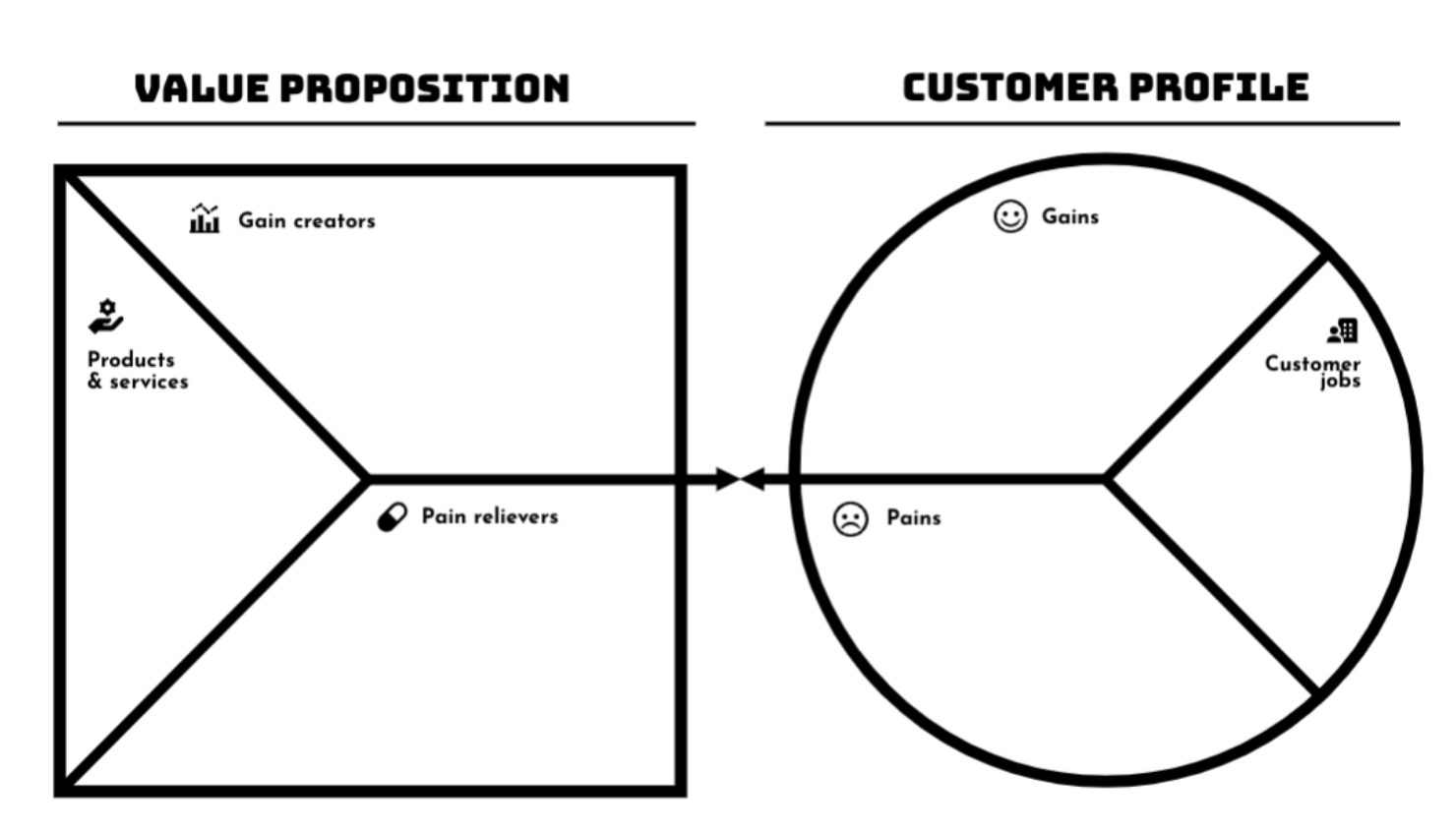
value proposition tools

First: Define the Customer’s Jobs

Begin by making a list of jobs that your target market is tasked with accomplishing. focus specifically on those jobs that relate to your offering (you should have distinguished this when you developed your ICP — which you can learn about here) and try to understand how your customers are currently accomplishing (or failing to accomplish) those jobs.

Second: Lay out the Customer Pains

Once the customer jobs have been defined, the next step is to lay out the customer pains. Pains refer to the frustrations, difficulties, or challenges that customers experience when trying to solve their problems or accomplish their goals. Conduct research, surveys, or interviews to gather insights into the specific pains your target customers face, make a list of their pains, ranked for which are the most painful and relevant for your specific solutions.

Third: Uncover Customer Gains

Gains represent the positive outcomes, benefits, or desires that customers seek when using a product or service. By understanding these gains, you can design value propositions that create a compelling reason why potential customers might choose you and what you offer — instead of your competitors. Said simply, (and frequently) it’s the reason there’s an adage in marketing to focus on the benefits and not the features.

Research in Hand? Time to Write Your Value Propositions

Compose a Remarkable Value Proposition

Once you’ve completed the customer side of the Value Proposition Canvas, it’s time to move on to the value proposition side. A value proposition is a concise statement that communicates the unique value a product or service offers to its customers. It should clearly articulate the benefits, features, and differentiation that make the offering superior to alternatives in the market. Use the insights gathered from the customer side to craft a remarkable value proposition that directly addresses the jobs, pains, and gains of your target customers.

A Few Guidelines for Writing Your Value Propositions:

Guideline 1: Develop a unique value proposition for each buyer persona you serve.

When it comes to attracting and retaining customers, one of the most effective tools for businesses is a unique value proposition. This is especially true when developing a unique value proposition for each buyer persona you serve. By understanding the specific customer pain points and tailoring your products and services to solve them, you can stand out from the competition and create a strong connection with your target audience.

To effectively communicate the value of your products and services, it is important to use clear language that directly addresses a primary customer need. By focusing on the specific pain points of your buyer persona, you can show them how your offerings can provide a solution and improve their lives.

Additionally, it is essential to align the benefits of your offerings with the specific values of your customers. This means understanding what truly matters to your target audience and highlighting how your products and services cater to those values. By doing so, you not only communicate the value of your offerings but also connect at a deeper level with your customers.

Guideline 2: Always Think Like Your Customer

To create effective messaging, it is essential to think like a customer. This means putting yourself in their shoes and understanding their day-to-day activities, needs, and expectations. By doing so, you can develop a deeper understanding of their pain points and create messaging that resonates with them.

When thinking like a customer, it is important to consider their daily routines and activities. What are their priorities? What challenges do they face? By answering these questions, you can tailor your messaging to address their specific needs. For example, if your target audience consists of busy professionals, highlighting the convenience and time-saving benefits of your product or service may be crucial.

Moreover, understanding customer expectations is key. What do they expect from a product or service in your industry? By meeting or exceeding these expectations, you can differentiate yourself from competitors and provide a superior customer experience.

Problem-solving tools like the ‘Five Whys’ can also be helpful in identifying customer needs. By continuously asking “why” until you reach the root cause of a problem, you can uncover insights about what customers truly want and address those needs in your messaging.

Guideline 3: Ensure Your Messaging Needs Fit

Ensuring a fit between your value proposition and your customer’s needs and wants is crucial for the success of your business. When your value proposition aligns with what your customers truly desire, it improves the likelihood of customer satisfaction, loyalty, and ultimately, business growth.

Make sure to take your freshly written value propositions back to your Canvas and ask yourself, “am I really showcasing what we offer and how it benefits my customer, given everything I know about them?” If you can’t answer with a resounding yes, you’ve still got some work to do.

Your Value Proposition Canvas in Action

Here’s two simplistic examples of how the formula works — obviously your real-world value proposition messaging should be much more resonant than this, you should feel excited and even inspired by the messaging you land on. You’ll know it’s right when you read it out loud.

  • A food delivery service: Customer jobs – convenient meal solutions, Customer pains – lack of time to cook, high delivery fees, Customer gains – time-saving, variety of cuisine options, Value proposition – “Fresh, delicious meals delivered to your door in under 30 minutes.”
  • An online learning platform: Customer jobs – skill development, knowledge acquisition, Customer pains – high costs of traditional education, lack of flexibility, Customer gains – improved career prospects, lifelong learning opportunities, Value proposition – “Unlock your potential with affordable and flexible online courses from industry-leading experts.”

Pro Tip: Once you’ve got your value proposition brainstorms written out — it’s a great idea to take your top favorite ones and test them out. You can A/B test on a single variable such as an email or landing page; or you can go further and develop distinct funnels with each proposition, broadcasting your messages loudly and investing budget and several weeks in seeing which of your messages really hit the mark best.

Final Notes: Your Value Proposition vs Tagline vs Slogan

A quick final note (because this comes up often), it’s important to distinguish between a value proposition, tagline, and slogan.

While they may appear similar, they serve different purposes:

  • A value proposition outlines the unique value that a product or service offers to customers.
  • A tagline captures the essence of a brand or product and helps establish brand recognition.
  • A slogan is a catchy phrase or statement that reinforces a brand’s message and differentiates it from competitors.

These should not be identical, but there can definitely be overlap! Of course, everything you create should be unified on tone and brand vibe.

In short, the Value Proposition Canvas — and our methodology for developing key messaging — is a valuable tool for businesses to understand their customers and create compelling value propositions that resonate with their target audience. By thoroughly analyzing customer jobs, pains, and gains, companies can design products and services that address unmet needs and provide remarkable value to customers.

We hope this is helpful and are happy to answer questions should you encounter them on your marketing content creation journey!

(We’re proud HubSpot partners and strongly encourage you to check out their content on the same topic, as well as their Value Proposition Canvas Template by clicking here).


How to Tailor Your B2B Marketing Process to the Stages of Your Buyer’s Journey

Understanding the Buyer’s Journey

B2B Founders and marketers can get a tad conceptual when it comes to talking about their buyers. And it makes sense! When you’re focused on selling high-volume, global solutions — it’s easy to lose the trees for the forest.

But a solid GTM Strategy requires you to come back down to Earth, which is to say, to remember that your customers are just people — who make purchasing decisions the same way anyone would, whether it’s for shampoo or medical devices.

That’s why it’s essential to imagine — and learn from — the imaginative journey through the “mind” of the buyer.

In this article, we will delve into the importance of understanding this fascinating process and uncover the key stages that buyers go through. So, hold on tight as we take you on a journey like no other!

Defining the Buyer’s Journey

Before we dive into the details, let’s start by defining what the Buyer’s Journey actually is. Simply put, it is the process that potential customers go through from the moment they become aware of a problem or need to the moment they make a purchase decision. It’s like a rollercoaster ride filled with emotions, questions, and lots of choices.

Imagine you’re standing at the entrance of a theme park, ready to embark on a thrilling adventure. The Buyer’s Journey is just like that, except instead of roller coasters and cotton candy, it’s filled with moments of discovery, consideration, and ultimately, decision-making. It’s a journey that takes individuals from a state of unawareness to becoming loyal customers.

So why is it essential for businesses to wrap their heads around the Buyer’s Journey? Well, hang on, and we’ll uncover the answers in the next section!

The Importance of Understanding the Buyer’s Journey

Understanding the Buyer’s Journey is like getting insider information on the world’s best-kept secret. It allows you to tailor your marketing efforts, create compelling types of content, and engage with your potential buyers at every stage. By being in sync with their needs and desires, you can meet them exactly where they are in the buying process.

Think of it as navigating through a maze. Without a map, you’re left stumbling in the dark, hoping to stumble upon the right path. But with a clear understanding of the Buyer’s Journey, you have a compass guiding you toward success. You can anticipate their questions, address their concerns, and ultimately, guide them towards making a purchase decision.

The Buyer’s Journey isn’t just a game of chance. It’s a game of strategy. And the better you understand it, the higher your chances of success.

Key Stages of the Buyer’s Journey

Every buyer goes through a unique adventure, braving various stages. To help you navigate this exciting journey, we’ve broken it down into four distinct stages: Awareness, Consideration, Decision, and the Post-Purchase Stage. Each of these stages presents its own set of challenges and opportunities. So, hold on tight as we examine each stage, one paragraph at a time.

Imagine yourself at the start of the Buyer’s Journey, standing at the entrance of a grand hall filled with possibilities. This is the Awareness stage, where potential customers become aware of a problem or need. It’s like stepping onto a platform, where individuals begin to notice the gap between where they currently stand and where they want to be. At this stage, your goal is to capture their attention, spark their curiosity, and make them realize that there is a solution to their problem.

As the journey progresses, we enter the Consideration stage. Here, buyers have identified their problem and are actively seeking solutions. They’re like explorers, venturing into uncharted territory, researching and evaluating different options. It’s your chance to showcase the unique value your product or service brings, highlighting how it can address their pain points and meet their specific needs. By providing valuable information and engaging content, you can position yourself as a trusted advisor, guiding them toward making an informed buying decision.

Next comes the Decision stage, where buyers are on the brink of making a purchase. They’ve narrowed down their options and are ready to choose the best fit for their needs. It’s like standing at a crossroads, weighing the pros and cons of each path. This is your opportunity to demonstrate why your offering is the superior choice. Showcasing testimonials, offering incentives, and providing a seamless buying experience can all help tip the scales in your favor.

But the journey doesn’t end with a purchase. The Post-Purchase Stage (this often overlooked stage of the buying journey) is where the real adventure begins. This is the moment when buyers transition from being customers to brand advocates. It’s like stepping off a thrilling ride, exhilarated and eager to share their experience with others. By providing exceptional post-purchase support, fostering customer loyalty, and encouraging feedback, you can turn your customers into brand ambassadors, driving future sales and growth.

The Buyer’s Journey is an exciting expedition that every business must embark on. By understanding its intricacies and incorporating it into your marketing strategy, you can create a seamless and engaging experience for your potential customers.

The Awareness Stage

Welcome to the land of discovery! The Awareness Stage is where it all begins. Buyers in this journey stage are in search of answers, trying to identify the problematic dragon that needs slaying. It’s crucial to identify your buyer’s problem accurately at this stage. After all, you can’t slay the dragon if you don’t know what it looks like!

Imagine stepping into a dense forest, the air thick with anticipation. As you cautiously make your way through the undergrowth, you can feel the excitement building within you. Every step brings you closer to uncovering the secrets of the mythical creature that has been wreaking havoc on the kingdom.

Identifying the Buyer’s Problem

The first step in the Awareness Stage is to help buyers identify their problem. Are they battling a pesky issue that’s been keeping them up at night? Maybe they’re in desperate need of a solution, but they’re not sure where to find it. By understanding your customer’s pain points, you can position yourself (through compelling content) as the knight in shining armor, ready to save the day.

Picture yourself sitting across from a troubled buyer, their eyes filled with uncertainty. You listen attentively as they pour out their frustrations, their words echoing in your mind. With each sentence, you gain a deeper understanding of the challenges they face and the obstacles that stand in their way. You become their confidant, their guide in this treacherous journey towards a solution.

How to Attract Buyers in the Awareness Stage?

Now that you’ve got their attention, it’s time to showcase your expertise. Provide them with valuable content that educates and sparks curiosity. Show them that you understand their problem better than anyone else. Take them on a magical journey through blog posts, videos, and social media content that leaves them hungry for more!

Imagine crafting a captivating blog post, each word carefully chosen to captivate the reader’s imagination. With every paragraph, you paint a vivid picture of their potential solutions, and all possibilities that lie ahead, inspiring them to take consider taking action.

With your content marketing strategy, you create a tapestry of engaging and informative content that entices and enthralls. Each piece of video content you produce is a window into a world of knowledge, where viewers can catch a glimpse of the transformative power that awaits them. The comments section buzzes with excitement as people share their own experiences, forming a community.

So, embrace the Awareness Stage with open arms. This key phase of the buyer journey should never be overlooked and is the place to showcase the best of your inbound marketing strategies. Embody the spirit of a seeker, a guide, and a storyteller. With every word you write and every piece of content you create, remember that you have the power to ignite the spark of curiosity in your prospective customer.

The Consideration Stage

Congrats, fearless warrior – you’ve made it to the Consideration Stage! Buyers here have moved past their initial discovery and are now actively exploring different solutions to their problem. It’s time for you to present them with compelling options that will make them go, “Eureka! This is exactly what I’ve been searching for!”

But what does the Consideration Stage really entail? It’s a critical phase in the buyer’s journey where potential customers are no longer just browsing. They have identified their pain points and are actively seeking solutions. They are hungry for information, and eager to find the perfect fit that will address their needs.

Presenting Possible Solutions to the Buyer

At this stage, your potential customers are actively evaluating different solutions. They want to weigh the pros and cons, compare options, and find the best fit for their needs. It’s your chance to showcase your unique selling points, highlight the benefits, and prove that your solution is the stuff dreams are made of.

Imagine this scenario: a buyer has finally recognized their need for a new CRM system. They have done their initial research and are now ready to dive deeper into the available options. They want to know how your CRM system can streamline their sales process, improve customer relationships, and ultimately boost their bottom line. This is your moment to shine.

Consider creating detailed product comparison charts, showcasing the features and functionalities of your CRM system alongside your competitors’. Provide in-depth case studies highlighting how your CRM has transformed similar businesses, showcasing real-life success stories. By presenting your potential customers with tangible evidence of the value your solution brings, you can help them make an informed decision. Whatever consideration stage content you choose,

Engaging Buyers in the Consideration Stage

Remember, knowledge is power! Engage with your buyers by providing them with educational content, case studies, or even personalized consultations. Show them the depth of your understanding, and they’ll be more likely to take a leap of faith with you.

Consider hosting webinars or workshops that delve into the intricacies of your solution. Offer whitepapers or eBooks that provide valuable insights into industry trends and best practices. By positioning yourself as a thought leader and a trusted advisor, you can build credibility and establish a strong rapport with your potential customers.

Personalization is key in the Consideration Stage. Take the time to understand your buyer’s unique pain points and tailor your messaging accordingly. Offer personalized consultations or demos to demonstrate how your solution can specifically address their needs. By showing that you truly understand their challenges and have a tailored solution, you can significantly increase your chances of conversion.

In conclusion, the Consideration Stage is a critical juncture in the buyer’s journey. It’s your opportunity to present your potential customers with compelling options, showcase your unique selling points, and engage with them on a deeper level. By providing educational content, case studies, and personalized consultations, you can build trust and position yourself as the ideal solution provider. So, embrace the Consideration Stage, fearless warrior, and guide your potential customers towards their “Eureka” moment!

The Decision Stage

You’ve come a long way, brave soul, and now you’ve reached the Decision Stage – the final showdown before the ultimate victory. The buyer is about to make their move, and it’s your job to show them why your solution is the hero they’ve been waiting for!

Convincing the Buyer to Choose Your Solution

When it comes to the Decision Stage, the name of the game is persuasion. Take a deep breath, flex your storytelling muscles, and paint a vivid picture of the positive outcomes your solution will bring using a variety of types of content. Focus on highlighting the unique value you bring to the table and why your offering is the best fit for their needs.

Strategies for Closing the Sale

To seal the deal, you need more than just a pretty speech from a sales rep. While your sales team does its work, your marketing team can also continue to provide relevant content. Offer incentives, provide guarantees, and create a sense of urgency that will lead your prospective buyers to take action. Discount coupons, limited-time offers, or even personalized messages of encouragement, using messaging geared to their buyer persona type can be the secret sauce that entices them to make the purchase.

Post-Purchase Stage

Congratulations! You’ve successfully guided the buyer through the entire buyer’s journey, and your B2B buyer has made a purchase. But the adventure doesn’t end here! It’s time to ensure buyer satisfaction and establish a long-lasting bond.

Ensuring Buyer Satisfaction After Purchase

Your buyer has chosen you as their champion – now it’s your turn to deliver! Provide exceptional customer service, go above and beyond their expectations, and address any concerns they may have. By ensuring their satisfaction, you’ll win their loyalty and turn them into raving fans.

Encouraging Repeat Business and Loyalty

The customer journey doesn’t end here; you want them by your side for the long haul. Offer loyalty programs, exclusive perks, or even create a community for your customers to interact with one another. Treat them like family with useful perks and engaging content, and they’ll keep coming back for more grand adventures!

And with that, dear adventurer, we have reached the end of our epic voyage through the Buyer’s Journey. We hope you’ve gained valuable insights into the inner workings of your potential customers’ minds. Now, go forth and conquer the market, armed with the knowledge of their journey!

Build Effective Buyer Personas to Improve Customer Engagement: A Step-by-Step Guide for B2Bs

You’ve calculated your TAM and perhaps (hopefully!? click here if you haven’t yet) you’ve even done the research necessary to outline your key ICPs (Ideal Customer Profiles). At this point, you’re no longer just relying on guesswork to get your marketing done, and that’s great!

But wait! Your work’s not done just yet. While identifying your ICPs is crucial (read our most recent blog on how to do just that if you haven’t done it yet), marketing is essentially a person-to-person conversation, which means that you’ve really got to know who you’re talking to before you start.

Why are Buyer Personas so Important?

Creating a buyer persona is like unlocking the secret code to your customer’s hearts. It’s not just about demographics and data; it’s about truly understanding who your potential customers are and what motivates them to become actual customers. By delving deep into their needs, desires, fears, and aspirations, you can tailor your marketing efforts in a way that resonates with them on a personal level.

Let’s say you are a B2B manufacturer of industrial lighting solutions for performance spaces and theaters, you might assume that your target audience consists solely of businesses in need of high-quality lighting products, and therefore you focus on targeting supply buyers for theatre houses. However, by creating a buyer persona, you can develop a more profound comprehension of your ideal customer.

For example, you might discover through your research that your more accurate user persona is Jason. He is a seasoned professional in the theater industry, specializing in lighting design and production. Jason recognizes the significance of superior craftsmanship and values the reliability of lighting solutions. He is deeply passionate about creating captivating visual experiences on stage, understanding that lighting plays a pivotal role in enhancing performances. Jason is motivated by his aspiration to set new industry standards and inspire awe among audiences and fellow professionals.

By doing some thoughtful research, you’ve created a major shift in your marketing teams’ focus, and you’ve likely increased your revenue in the process. This is why creating buyer personas of all your prospective customers is vital.

What is a buyer persona, exactly?

A buyer persona (sometimes called a marketing persona) is a fictional representation of your ideal customer. It’s like creating a character for a novel, except this character represents the people you want to reach with your products or services. It goes beyond vague generalizations and digs into specific details that help you truly understand who your customers are.

When creating a buyer persona, you need to consider various factors such as age, gender, level of education, occupation, income level, hobbies, and interests. But it doesn’t stop there. You also need to understand their pain points, challenges, and goals. What keeps them up at night? What are their aspirations and dreams?

By understanding these nuances, you can tailor your marketing messages to address their specific needs and desires. For example, if you know that your ideal buyer is a busy working professional with limited time, you can highlight the convenience and time-saving features of your product or service.

Why Your Business Needs a Buyer Persona

Imagine trying to sell a fur coat to someone who lives in a tropical paradise or pitching your high-end gym membership to someone who prefers leisurely walks in the park. Without understanding your audience, your marketing efforts are bound to miss the mark. That’s where a buyer persona comes in handy!

Having a clear understanding of your buyer persona allows you to create targeted marketing campaigns that resonate with your potential customers. It helps you speak their language, address their pain points, and showcase how your product or service can improve their lives.

Moreover, a buyer persona helps you identify new opportunities and niches within your target market. By analyzing the characteristics and preferences of your ideal customer, you may discover untapped segments, different types of customers, that you can cater to with a specialized offering.

Creating a buyer persona is an essential step in developing an effective marketing strategy. It enables you to connect with your customers on a deeper level, tailor your messaging to their specific needs, and identify new opportunities within your target market. So, take the time to understand your audience and unlock the secret code to their hearts!

The Steps You Should Take to Create a Detailed Buyer Persona

Creating a buyer persona is an art. It requires research, analysis, and a sprinkle of creativity. However, it’s always helpful to have a guide to make sure you’re covering your basis. Use the steps we outline below as your buyer persona template anytime you want to develop a deeper understanding of your potential customers and strengthen your marketing messaging.

Step One: Identifying Your Ideal Customer

The first step is to clearly identify who your ideal customer is. Start by jotting down the characteristics of your target audience – their age, gender, location, occupation, and any other relevant details. Paint a vivid picture of who they are.

If you’re a business whose been around for a while, your existing customers might be your ideal customers, and you might be doing this work simply to strengthen your existing marketing or solidify your buyer persona profiles. If so, that’s great! You can draw your research from your typical customers. If you’re looking to find your product market fit, you’ll need to do more imagination-based research to draw the ideal persona examples you’re looking for.

For example, if you’re a fitness brand targeting young adults, your ideal customer may be a 25-year-old male living in a metropolitan area, working in a corporate job, and passionate about staying fit and healthy. By understanding these key characteristics, you can tailor your marketing efforts to resonate with this specific audience.

Step Two: Gathering Relevant Data

Now that you have a general idea of your ideal customer, it’s time to dive deeper and gather data that supports your assumptions. Conduct surveys, and interviews, and analyze existing customer data to make sure you’re getting accurate representation of your buyers and complete data. Look for patterns and trends that can help you refine your buyer persona.

For instance, you can create online surveys to gather demographic information, preferences, and buying behaviors from your target audience. Additionally, you can conduct interviews with existing customers to understand their motivations, challenges, and what they value most in a product or service. By collecting this data, you can gain valuable insights into the needs and desires of your ideal customer.

Step Three: Analyzing Customer Behavior

What drives your customers to make a purchase decision? What are their pain points and motivations? By understanding their behavior, and their decision-making process, you can anticipate their needs and tailor your marketing messages to address them directly. Track customer interactions, analyze website data, and embrace the power of analytics.

For example, by tracking customer interactions on your website, you can see which pages they visit the most, what products or services they show interest in, and how long they stay on each page. This data can help you identify the pain points and motivations of your ideal customer throughout their buyer journey. Additionally, by leveraging analytics tools, you can gain insights into customer demographics, behavior patterns, and conversion rates, allowing you to optimize your marketing strategies — and even empower your sales teams — accordingly.

Creating a detailed buyer persona involves identifying your ideal customer, gathering relevant data, and analyzing customer behavior. By following these steps, you can gain a deeper understanding of your target audience and create targeted marketing campaigns that resonate with their needs and desires.

The Key Elements of an Effective Buyer Persona

When crafting your buyer persona, make sure to include the following key elements:

Demographic Information

Include details such as age, gender, location, occupation, income level, and educational background. This information gives you valuable insights into your customers’ lives and helps shape your marketing strategy.

For example, knowing the age range of your target audience can help you tailor your messaging and design to appeal to their specific preferences. Understanding their location can also help you determine if there are any regional factors that may impact their buying decisions.

Additionally, considering the occupation and income level of your ideal customer can provide insights into their purchasing power and what kind of products or services they may be interested in. Educational background can also play a role in understanding their level of expertise and knowledge in a particular industry or field. All of this information should play a key role in how you choose the types of content your produce and your overall digital marketing and content marketing strategy.

Psychographic Information

Go beyond demographics and delve into your customers’ psychographic traits. What are their interests, hobbies, beliefs, and values? Understanding these aspects allows you to create a more targeted and personalized marketing approach.

For instance, knowing your customers’ interests and hobbies can help you identify potential partnerships or collaborations with other brands or influencers that align with their passions. Understanding their beliefs and values can also help you craft messaging that resonates with their ideals, building trust and loyalty.

Moreover, considering psychographic information can help you identify any specific pain points or challenges your customers may be facing. By understanding their needs and desires on a deeper level, you can develop products or services that address those pain points and provide meaningful solutions.

Behavioral Traits

What are the behaviors and habits that define your ideal customer? Are they tech-savvy trendsetters or traditionalists who prefer tried-and-true solutions? By understanding their behavior, you can craft messaging that resonates with their preferences and drives them to take action.

For example, if your ideal customer is a tech-savvy trendsetter, you may want to focus on showcasing the innovative features and cutting-edge technology of your product. On the other hand, if your target audience is more traditional and prefers tried-and-true solutions, you may want to emphasize the reliability and long-standing reputation of your brand.

Understanding behavioral traits can also help you determine the best channels and platforms to reach your customers. If they are active on social media, you can develop a strong presence on those platforms and engage with them directly. If they prefer offline interactions, you can focus on in-person events or traditional advertising methods.

An effective buyer persona includes not only demographic information but also psychographic traits and behavioral traits. By considering these key elements, you can gain a deeper understanding of your customers and tailor your marketing strategy to effectively reach and engage with them.

Utilizing Your Buyer Persona to Improve Customer Engagement

Now that you have a well-crafted buyer persona, it’s time to put it into action. Here are some tips to effectively utilize your persona and improve customer engagement:

Tip #1: Personalize Your Marketing Efforts

Gone are the days of generic marketing messages that speak to no one in particular. With your B2B buyer persona in hand, you can create personalized content and advertisements that speak directly to your ideal individual customer. Use their language, address their pain points, and show them how your product or service can make their lives better.

Imagine this: you have a B2B customer persona named Alex. They are an environmentally conscious procurement manager in their early 30s, responsible for sourcing sustainable and eco-friendly products for their organization. With this insight, you can develop marketing materials that emphasize the environmental advantages of your offering, illustrating how it aligns with Alex’s values and objectives. By customizing your messaging to resonate with their specific interests, you enhance the likelihood of capturing their attention and converting them into a loyal customer.

Tip #2: Enhance Your Customer’s Experience

Your buyer persona can also help you improve the overall customer experience. By understanding your customers’ preferences and frustrations, you can tailor your website design, user interface, and customer service to meet their expectations. This personalized approach will not only increase customer satisfaction but also foster loyalty and repeat business.

For example, let’s say your buyer persona, Mark, is a tech-savvy individual who values efficiency and convenience. By analyzing Mark’s preferences, you can optimize your website’s navigation and checkout process, ensuring a seamless and hassle-free experience. Additionally, you can offer a live chat feature to provide instant support and address any concerns Mark may have. You can also educate your customer service team using the customer insights you’ve gained from your persona research. By going the extra mile to meet Mark’s expectations, you create a positive customer experience that encourages him to continue doing business with you.

Tip #3: Increase Customer Retention

With a detailed buyer persona, you can identify opportunities to increase customer retention. By understanding your customers’ needs and desires, you can develop loyalty programs, personalized offers, and exclusive content that keep them coming back for more. Happy customers are loyal customers!

Remember, your buyer persona is a powerful tool that allows you to understand your customers on a deeper level. By utilizing it effectively, you can personalize your marketing efforts, enhance the customer experience, and increase customer retention. So, put your buyer persona into action and watch your customer engagement soar!

Common Mistakes to Avoid When Creating Your Buyer Persona

Creating a buyer persona is not without its challenges. Here are some common mistakes to avoid:

Making Assumptions About Your Audience

Don’t rely solely on assumptions when crafting your buyer persona. Conduct thorough research and gather real data to support your assumptions. The more accurate your buyer persona, the more effective your marketing efforts will be.

Overlooking Existing Customer Data

Your existing customer base holds a wealth of information that can help you refine your buyer persona. Analyze customer feedback, purchase history, user experience and and website analytics to gain insights into their preferences and behavior. Utilize this valuable data to further personalize your marketing strategies.

Continuously Updating and Refining Your Buyer Persona

Creating a buyer persona is not a one-time task but an ongoing process. Keep your buyer persona up to date by:

1: Keeping Up with Market Changes

The market is constantly evolving, and so should your buyer persona. Stay updated on industry trends, competitor strategies, evolving customer challenges, and changes in consumer behavior. This will help you adapt your marketing efforts to stay ahead of the curve.

2: Regularly Gathering and Analyzing Customer Feedback

Your customers hold the key to unlocking valuable insights. Continuously gather and analyze feedback through surveys, social media interactions, and customer service interactions. This firsthand information will ensure your buyer persona remains accurate and relevant.

Conclusion: The Power of a Well-Crafted Buyer Persona

Creating an effective buyer persona is like having a secret weapon in your marketing arsenal. By understanding your customers on a deeper level, you can tailor your messaging, personalize your marketing efforts, and improve customer engagement. So, grab your creative tools and start crafting your buyer persona today (and drop it in this handy persona template tool from HubSpot when you’re ready to present your findings). Your customers will thank you for it, and your business will reap the rewards!

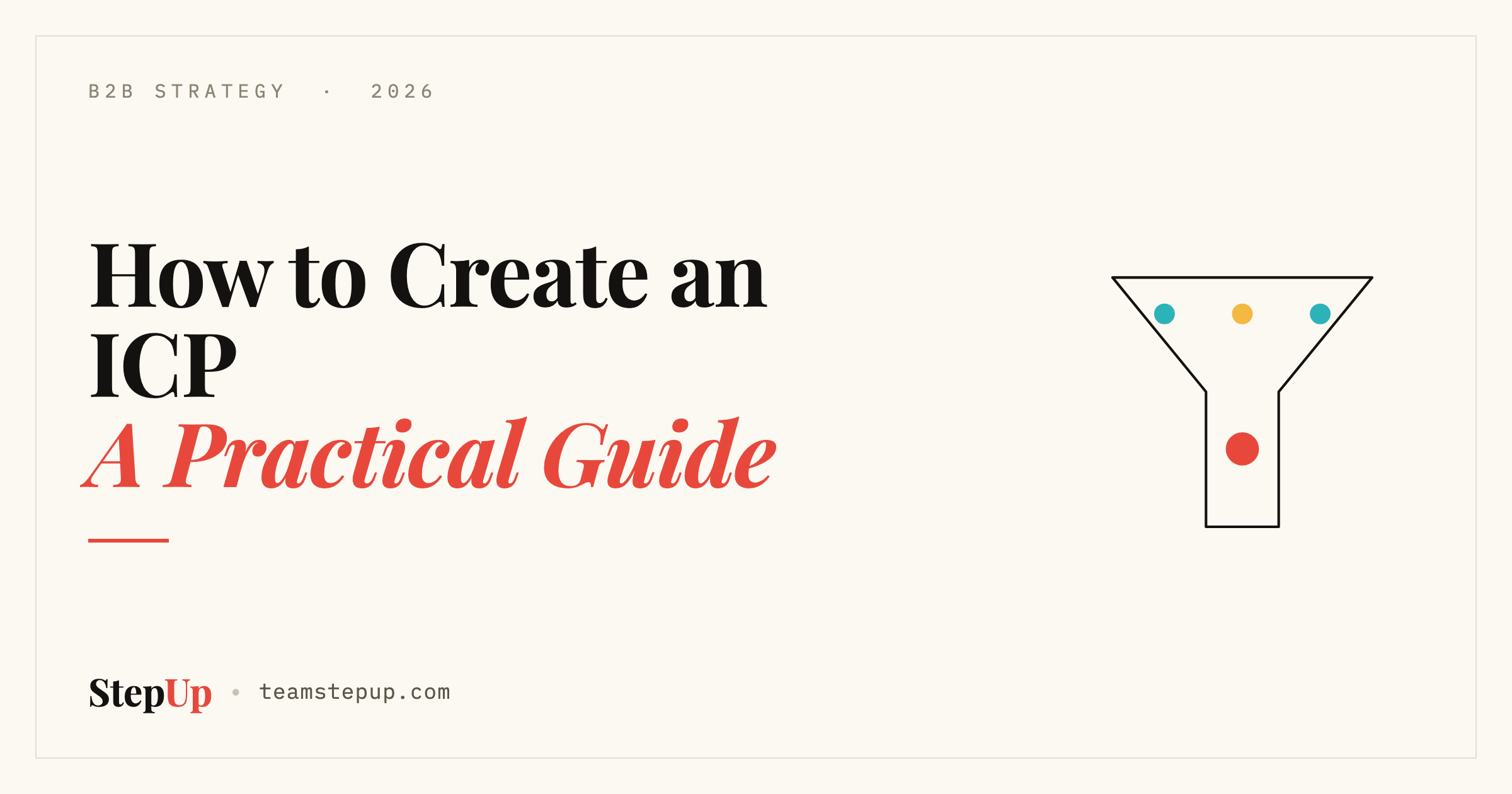
How to Create an Ideal Customer Profile (ICP): A Practical Guide for B2B

This guide to creating an ideal customer profile was originally published June 2023. Updated September 2026.

Trying to be right for everyone is the most expensive mistake a B2B company can make. It shows up as low win rates, long sales cycles, high churn, and a marketing budget spread so thin nothing works.

An Ideal Customer Profile is the correction. It is a written definition of the companies you should pursue, and, just as importantly, the ones you should not.

This is the practical build guide: the data to use, the segmentation methods that work, how to validate the profile before you commit to it, and the mistakes that make ICPs useless. If you want the conceptual grounding first (what an ICP is, and how it differs from a buyer persona), start with our guide to what an ICP is.

What a working ICP gives you

A real ICP changes four things:

  • Where sales and marketing spend their effort. Targeting, territory, campaign selection, and account prioritization all derive from it.
  • Acquisition and retention. As a result, customers who fit stay longer, expand more, and cost less to support.
  • The product roadmap. When feature requests conflict, the ICP tells you whose request counts more.
  • The messaging. Specific messaging requires a specific audience. After all, broad audiences produce broad copy, which persuades nobody.

The common thread is decisions. If your ICP is not changing decisions, it is documentation, not strategy.

Start with TAM, then narrow

Before defining your ideal customer, size the market you are narrowing within. Total Addressable Market is the full revenue opportunity for your category.

TAM does two jobs here:

It sets realistic goals. A small TAM means a niche strategy and a focus on share of a defined set of accounts. By contrast, a large TAM means the constraint is your ability to reach it, not the size of the opportunity.

It informs pricing. The composition of your market (price-sensitive or premium, consolidated or fragmented) shapes what you can charge and how you package.

Once TAM is understood, your ICP becomes a defensible subset of it rather than a guess.

The four inputs that define an ICP

Firmographics: the basic shape

The observable characteristics of a company: industry, employee count, revenue, geography, ownership structure, growth stage.

Selling to small businesses might mean fewer than 50 employees and under $1M revenue. Selling enterprise software, on the other hand, might mean 500+ employees and $50M+ revenue. Firmographics get you a long list quickly.

They are necessary and never sufficient. However, two companies with identical firmographics can have completely different odds of buying.

Technographics: what they already run

The technology a company uses tells you far more about fit than its size does.

If you sell a marketing automation platform, a company already running a CRM has demonstrated it invests in this category, has someone who owns it, and has a system yours must integrate with. A company with no CRM, by comparison, is a different and much longer sale.

Technographics also surface displacement opportunities: companies running a competitor’s product approaching renewal, or a tool known to break at the scale they have reached.

Demographics: who is inside

The roles within the company: job titles, seniority, functional ownership.

In other words, this is where ICP and buyer persona meet. The ICP identifies companies; demographics confirm those companies contain the roles that can evaluate and approve your product. A company that fits perfectly but has nobody who owns the problem is not a real prospect.

Jobs-to-be-done: the reason they would act

The most under-used input, and the one that most improves an ICP.

Instead of asking who they are, ask what they are trying to get done. If you sell project management software, your ICP is not “companies of size X.” It is companies struggling to coordinate multiple simultaneous projects, whatever their size.

JTBD is what turns a list of companies into a list of companies with a reason to act now. That is the difference between a target list and a pipeline.

Filters versus signals

Two ways to segment, and you need both.

Filters are objective and static: industry, size, revenue, location. They narrow the universe. They are easy to apply, but also easy for competitors to apply identically.

Signals are behavioral and time-sensitive: hiring for a relevant role, new executive appointment, funding round, regulatory deadline, expansion into a new market, a competitor’s product being sunset.

Filters tell you who could buy. Signals tell you who might buy now. Most companies build ICPs entirely from filters and then wonder why perfectly-qualified outreach gets no response: they targeted the right companies at an arbitrary moment.

In practice, use filters to define the addressable set, and then signals to sequence it.

How to validate your ICP before you commit

An unvalidated ICP is a hypothesis, and acting on it at scale is expensive. Four checks, in order:

1. Test it against closed-won. Take your last 20–30 wins and score them against the draft profile. A good ICP should describe most of them. If your best customers do not match, the profile reflects who you wish you sold to.

2. Test it against closed-lost and churn. Similarly, run the same scoring on lost deals and churned accounts. Ideally the profile excludes most of them. If it describes your churned customers just as well as your best ones, it is not discriminating on anything that matters.

3. Check it against economics, not just fit. Compare CAC, sales cycle length, gross margin, and retention across the segments you have defined. Surprisingly often, the segment that feels ideal is the one that costs most to serve. That is why the numbers come before the story. The numbers settle it.

4. Interview real buyers. Talk to five customers who match and two who do not. You are checking whether the reason you believe they bought is the reason they say they bought. It frequently is not, and that gap is where your messaging is losing.

Only then, after those four checks, should the ICP drive budget.

Common mistakes

  • Too little research. An ICP built in a workshop from opinion rather than from customer data will encode existing bias.
  • Too broad. If it does not exclude companies that look attractive, it is not narrow enough to change decisions.
  • Filters only, no signals. Right accounts, wrong timing, no response.
  • Never revisited. An ICP that is not reviewed drifts out of date as your product and market change.
  • Written for a deck, not for use. If it exists only as slides, no system and no new hire can apply it.
  • Aspiration instead of evidence. Every company wants to move upmarket. The ICP should describe who you win with today; the upmarket move is a separate strategy with its own plan.

B2B ICP examples

  • A developer-tools startup targeting software companies of 50–200 employees with in-house platform teams and an existing CI/CD pipeline.
  • A B2B marketing agency targeting mid-market financial services firms with a marketing team of three to ten and no in-house demand generation capability.
  • A healthcare SaaS company targeting providers with $5–20M revenue, multi-site operations, and a compliance deadline within twelve months.

Note the pattern: in every case, the profile combines firmographics with a technographic or situational condition. That second half is what makes them usable.

Why the written ICP matters more in 2026

Your ICP used to be read by people. Increasingly it is read by systems.

Research agents, qualification tools, outbound sequencing, and content generation all draw on the same underlying definition of who matters. This changes the standard an ICP has to meet:

It has to be written down somewhere systems can access: a document, not institutional knowledge.

It has to include disqualifiers explicitly. Humans infer that a competitor or an obviously wrong-fit company should be skipped. Systems do not infer; instead, they need it stated.

It has to be maintained. The advantage is that maintenance is now cheap. Scoring every won and lost deal against the profile was a quarterly project nobody completed. Run continuously, it turns the ICP into something that gets corrected by evidence rather than defended in a meeting.

The risk cuts the same way. A vague ICP given to an automated system does not produce vague output. It produces confident, high-volume, wrong output. Ultimately, precision in the definition is what determines whether automation compounds or amplifies error.

What comes next

With the ICP defined, build the buyer personas for the roles inside those companies: their responsibilities, pressures, objections, and where they go for information. Then map the buyer’s journey to identify where your messaging needs to do work.

The order matters. Personas built before the ICP describe individuals at companies you should not be selling to.

Frequently asked questions

What is an ideal customer profile in B2B?

A written definition of the type of company that gets the most value from your product and returns the most value to you, covering firmographics, technology, situation, and the job they need done.

What should an ICP include?

Firmographics (industry, size, revenue, geography), technographics (existing stack), the job to be done, buying signals, and explicit disqualifiers.

What is the difference between an ICP and a buyer persona?

An ICP describes a company; a buyer persona describes a person inside it. The ICP determines which accounts to pursue, the persona determines how to communicate with the people there.

How do you validate an ICP?

Score recent wins, losses, and churned accounts against it. In short, a working profile describes most of your wins and excludes most of your losses. Then check unit economics by segment and interview real buyers.

How many ICPs should a B2B company have?

Usually one, with two or three tiers. Multiple separate ICPs are justified only when you genuinely serve unrelated markets. Otherwise, they are a sign the definition needs sharpening.

How often should you update your ICP?

Review quarterly against closed-won data, and revise whenever your best customers stop matching the profile.

Can you build an ICP without customer data?

You can build a hypothesis using adjacent-product customers, founder experience, and direct interviews, then revise hard after the first ten deals. Treat it as provisional until real data exists.

The short version

Build the ICP from evidence, not aspiration. Combine firmographics with technographics, job-to-be-done, and buying signals. Validate it against what you have actually won, lost, and churned. Write the disqualifiers down explicitly.

Then keep it current, because everything downstream, including every automated system you build, inherits whatever accuracy it has.

StepUp builds the marketing brain behind AI-integrated go-to-market for global B2B companies. It starts with an ICP precise enough to run an operation on. Let’s talk.

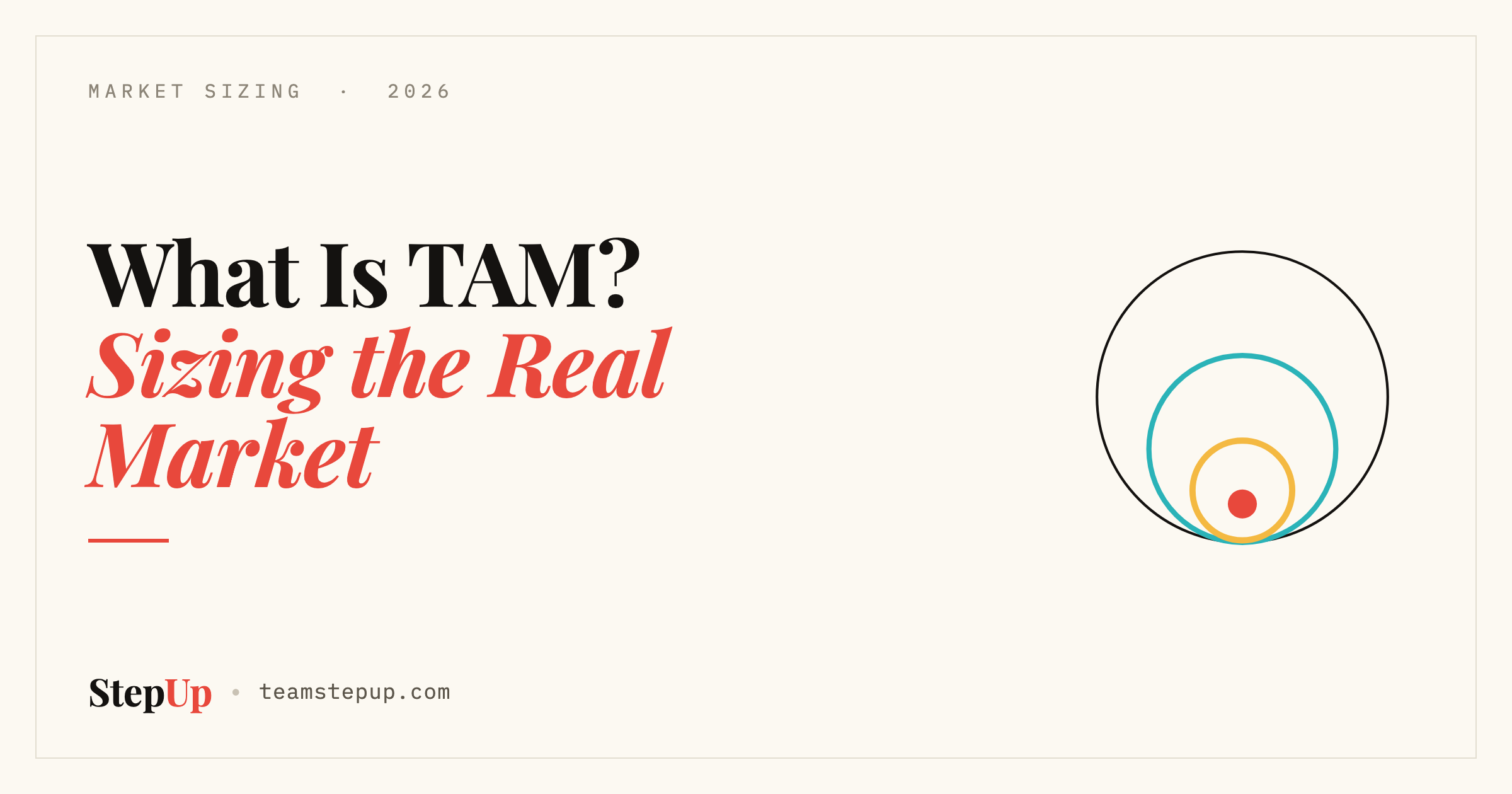
What is TAM? An In-Depth Guide to Total Addressable Markets (TAMs)

This guide to total addressable market was originally published May 2023. Updated September 2026.

Total Addressable Market (TAM) is the maximum possible revenue a product or service could generate if it captured 100% of its market, with no competition and no resource constraints. It’s a ceiling, not a forecast. GTM and finance teams use TAM to size opportunity; investors use it to judge upside before funding a company.

What Is Total Addressable Market (TAM)?

TAM tells you the size of the opportunity before you decide whether it’s worth chasing. It’s the revenue ceiling for a specific product in a specific market, not what you’ll capture, but what exists to capture.

Businesses use TAM to set growth targets grounded in an actual market size, not wishful thinking. It also feeds decisions on where to invest: whether a new market is worth entering, whether a product line is worth building, and how much a business is realistically worth to an acquirer or investor.

A B2B software company estimating TAM for a new product typically looks at three inputs: how many companies fit the target profile, what those companies currently spend on comparable tools, and how fast that spending is growing. Multiply those together and you get a number, but that number is only useful if the inputs are real, not generic industry averages. More on that in the mistakes section below.

TAM vs. SAM vs. SOM: What’s the Difference?

TAM is often confused with two related metrics: Serviceable Addressable Market (SAM) and Serviceable Obtainable Market (SOM). Each one narrows the picture further.

Metric What it measures Example
TAM Total revenue opportunity if you captured the entire market $1B for luxury cars, globally
SAM The portion of TAM you can realistically target given your business model and reach $100M: luxury cars sold to high-income buyers in your target regions
SOM The portion of SAM you can realistically win, given current resources and competition $50M: accounting for a specific geography and sales capacity

The gap between TAM and SOM is where most of the useful strategic thinking happens. TAM tells you the market exists. SOM tells you what’s actually reachable with the team and budget you have.

Why Does TAM Matter for GTM Planning?

Estimating TAM does three things for a business:

  • Sets a ceiling for growth targets. You can’t set a credible revenue target without knowing the size of the market underneath it.
  • Surfaces new markets and gaps. A company selling organic food in the US might find a $50B domestic TAM, and a separate $20B TAM in a market it hasn’t entered yet. That’s a build case for expansion, not just a nice number.
  • De-risks investment decisions. A weak TAM is one of the fastest ways to kill a product idea before it consumes a year of resources. A strong TAM doesn’t guarantee success, but it clears the first bar.

Of course, none of this works if the TAM number is inflated or generic. A TAM built on top-level industry reports, with no filter for your actual ICP, tells you about the industry, not about your business.

How to Calculate TAM: 3 Proven Methods

The basic formula is simple: number of potential customers × average contract value. What changes everything is which number you plug in for each, which is why there are three different methods, and why picking the wrong one produces a number you can’t defend.

#### Top-Down Approach

Start with total market size, from an analyst report or industry database, and narrow it to your segment. Fast to build, but it leans on outside data instead of your own customer or pipeline insight. It’s useful for a pitch deck slide or a first-pass sanity check. It’s a poor basis for planning headcount or quota, because the inputs aren’t filtered for your ICP.

#### Bottom-Up Approach

Start with your actual customer data (segment size, average contract value, real conversion rates) and build up to a total. Slower to produce, but far more defensible, because every input is something you can point to and defend. This is the number that should drive resourcing decisions.

#### Value Theory Approach

Estimate what customers are willing to pay for the specific value you deliver, then multiply by the number of customers who’d pay it. Useful for early-stage companies without market comps or their own sales data yet, because it forces you to define the value proposition precisely before you can put a number on it.

That is why most businesses use a blend: top-down for the pitch deck, bottom-up for the operating plan. Treating the two as interchangeable is where TAM estimates go wrong. See the worked example below.

How to Estimate Your TAM in 5 Steps

Follow these five steps to build a TAM estimate you can actually defend to a board, an investor, or your own leadership team.

  1. Define your target market. Identify who actually buys: company size, industry, buying triggers, not just demographics. For B2B, this means your ICP: firmographics, tech stack, and the specific trigger that makes a company ready to buy.
  2. Break the market into segments. Group your target market into segments with shared characteristics and behavior. A fitness app might segment by “committed athletes,” “casual users,” and “rehab/medical use,” each with a different willingness to pay.
  3. Gather real data. Pull from market reports and analyst data, but weight your own CRM, pipeline, and win-rate data more heavily. Primary data, from surveys, discovery calls, or your own funnel, beats a generic industry report every time.
  4. Pick your calculation method. Match the method to your data maturity: top-down if you’re early and building a first estimate, bottom-up once you have real segment and deal data, value theory if you’re still validating the offer.
  5. Validate and revisit. Compare your number against a second method as a sanity check. Then revisit it: TAM shifts as your ICP sharpens, as competitors enter, and as the market itself moves.

A Worked TAM Example: Sizing a $50M ARR Opportunity

Say you’re selling a compliance tool to mid-market fintechs in the US.

Top-down: There are roughly 9,000 mid-market fintechs in the US. Industry data says the average compliance software spend is $18,000 a year. That’s a TAM of $162M.

Bottom-up: You’ve identified 1,200 companies that match your actual ICP, based on revenue band, existing tech stack, and a specific regulatory trigger. At your real average contract value of $22,000, that’s a TAM of $26.4M. A very different number from the top-down estimate, and a much more useful one.

Which number do you plan around? The bottom-up number, almost always. Admittedly, the top-down figure is useful for a pitch deck slide. However, the bottom-up figure is what should actually drive headcount, quota, and channel decisions. The gap between the two isn’t an error: it’s the difference between the size of the market and the size of the market you can actually reach.

Common TAM Mistakes to Avoid

A few mistakes show up in almost every TAM estimate that falls apart under scrutiny:

  • Treating TAM as SAM. Quoting the whole-market number when only a fraction of it fits your ICP, product, or geography. Investors and boards catch this immediately.
  • Never filtering for ICP. Using an industry report’s total spend figure without subtracting for company size, geography, or buying readiness. That’s the top-down trap in the worked example above.
  • Setting it once and shelving it. TAM calculated at the seed round and never revisited, even after the ICP shifted twice since then.
  • Skipping the bottom-up check. Presenting only a top-down number because it’s bigger and easier to build, with no bottom-up figure to sanity-check it against.
  • Confusing TAM growth with SOM growth. A growing overall market doesn’t mean your obtainable share is growing: competitors and channel saturation can eat that growth before you see any of it.

Frequently Asked Questions About TAM

What’s a good TAM for a B2B startup?

There’s no universal number. What matters is whether your TAM, after you subtract for SAM and SOM, is large enough to support your growth targets. A $50M TAM can be an excellent business if the unit economics work. A $10B TAM means nothing if you can’t realistically capture a viable slice of it.

How often should you recalculate TAM?

At minimum once a year, and any time you enter a new market, add a product line, or your ideal customer profile changes. TAM isn’t a number you set once at the pitch deck stage and leave alone.

What’s the difference between TAM and market share?

TAM is the total opportunity available. Market share is the percentage of that opportunity you’ve actually captured. You can have a large TAM and a tiny market share, and that gap is usually where the growth strategy lives.

Can a TAM be too big to be useful?

Yes. A TAM calculated at the whole-industry level is usually too broad to guide real decisions. The more useful number is almost always your SAM: the portion of that market you can actually serve given your product, pricing, and reach.

Do investors care more about TAM or SAM/SOM?

Both, but for different reasons. TAM tells them the ceiling. SAM and SOM tell them whether you have a credible plan to reach a meaningful piece of that ceiling in a reasonable timeframe. A huge TAM with no credible SOM story is a common reason pitches stall.

What Comes After You’ve Sized Your TAM

Sizing the market answers one question: how big the opportunity is. It doesn’t answer the next one: how you actually win your share of it. A precise TAM won’t fix a weak GTM motion, and a rough TAM won’t sink a sharp one, but you need both pieces to build a plan investors and your own team can trust.

That’s a different exercise: turning a TAM number into a plan for reaching the right customers first.

______________

Marketing shouldn’t run on guesswork.

StepUp embeds senior marketing leaders and a full-stack team inside B2B companies, and installs the operating system that makes marketing plannable, executed, and measured, not just busy. It’s not a campaign, and it’s not a retainer. It’s a department your team owns, long after we’ve stepped back.

If marketing is busy but nothing is moving, what would it take to find out why?

Let’s talk.

MQL to SQL Conversion: Your Guide to Turning Leads into Customers

As business owners, we all strive to attract potential customers and turn them into loyal patrons. But not all leads are created equal – some may have stumbled upon our website by chance, while others are actively searching for a solution to their problem.

So, how can we identify and prioritize the most promising leads?

The answer lies in converting Marketing Qualified Leads (MQLs) to Sales Qualified Leads (SQLs).

Let’s take a closer look at MQLs and SQLs – two essential terms in the world of marketing and sales. By understanding the differences between them, you can develop a successful lead conversion strategy.

Understanding Marketing Qualified Leads (MQLs) and Sales Qualified Leads (SQLs)

When it comes to lead generation, it’s important to understand the difference between MQLs and SQLs. Let’s take a closer look.

MQLs are potential customers who have shown interest in our brand or service in some way – through filling out a form, subscribing to a newsletter, attending a webinar, or downloading a whitepaper. They’re usually at the top or middle of the sales funnel and not quite ready to make a purchase. That’s where nurturing comes in – by providing personalized content and campaigns, we can guide them down the funnel and turn them into SQLs.

On the other hand, SQLs are leads that have been qualified by the sales team. They have a clear intent to purchase, and have been assessed to be a good fit for our service, with the budget and authority to proceed with the purchase. They’re at the bottom of the sales funnel and ready to become customers.

The main difference between MQLs and SQLs is their readiness to purchase. By identifying and nurturing MQLs, we can move them down the funnel and convert them into SQLs. This helps us optimize our lead generation efforts and maximize our return on investment.

Once an MQL becomes an SQL, the sales team can take over and focus on closing the deal. This makes our sales process more efficient and effective.

In conclusion, understanding the difference between MQLs and SQLs is essential for any business that wants to improve its lead generation efforts and close more deals. By providing personalized content and campaigns to nurture MQLs, we can turn them into SQLs and increase our chances of success.

Why Lead Qualification is Crucial

Lead qualification is a vital process that can help your business align its marketing and sales efforts, improve conversion rates, and make the most efficient use of resources. By identifying Marketing Qualified Leads (MQLs) and Sales Qualified Leads (SQLs), you can tailor your approach and nurture leads effectively.

Effective lead qualification can help you make the most of your time and resources. By focusing your efforts on the leads that are most likely to convert, you can improve your ROI and boost your bottom line.

Aligning Marketing and Sales Efforts

Lead qualification creates alignment between marketing and sales teams by defining MQLs and SQLs. This approach helps sales teams target the right leads and prioritize resources for the most appropriate leads. Moreover, lead qualification helps reduce the cost-per-lead and improve the overall return on investment (ROI).

Improving Lead Conversion Rates

Lead qualification helps improve lead conversion rates by ensuring that the sales team is targeting leads that are most likely to convert into customers. By investing in leads that are ready to purchase, businesses can streamline their sales process, reduce sales cycle length, and increase overall conversion rates. Also, lead qualification helps identify potential roadblocks in the sales process and address them proactively.

Ensuring Efficient Use of Resources

Lead qualification ensures efficient use of resources by directing attention to leads that are most likely to convert into customers. Businesses can avoid wasting time and effort, reducing costs. Also, lead qualification helps identify leads that require further nurturing or education before they are ready to make a purchase decision. By providing these leads with the necessary support, businesses can increase the likelihood of converting them into customers in the future.

Defining Criteria for MQL and SQL

Defining criteria for MQL (Marketing Qualified Lead) and SQL (Sales Qualified Lead) is a crucial step in any successful lead generation strategy. It helps align our sales and marketing teams, prioritize our resources and ultimately improve our conversion rates. Let’s explore the key steps involved in setting these criteria.

Identifying Key Buyer Personas

The first step is to identify our key buyer personas. This means understanding our ideal customers and their pain points, so we can create targeted campaigns that move them down the marketing and sales funnels. By creating detailed buyer personas, we can gain insights into their specific needs and challenges, which can inform our lead qualification criteria.

For example, if our target audience consists of small business owners looking for cost-effective solutions to manage their finances, our lead qualification criteria may prioritize leads who have engaged with content related to budgeting or financial management.

Determining Lead Scoring Metrics

Next, we need to determine lead scoring metrics. This involves ranking leads based on their engagement with our brand and their fit with our ideal customer profile. By assigning points to various lead activities such as website visits, content downloads, and other engagements, we can rank leads based on their engagement and prioritize our marketing efforts on those with the highest scores.

For instance, a lead who has downloaded a white-paper, attended a webinar, and visited our pricing page may receive a higher lead score than a lead who has only visited our homepage.

Establishing a Lead Qualification Framework

Finally, we need to establish a lead qualification framework that defines what constitutes an MQL and what actions are required before a lead can be upgraded to an SQL. This framework must be based on data-driven insights and continuously optimized to ensure maximum efficacy.

For example, an MQL may be defined as a lead who has engaged in multiple high-value activities and meets certain demographic criteria, while an SQL may be defined as a lead who has requested a product demo or spoken with a sales representative.

Overall, defining criteria for MQL and SQL requires a deep understanding of our target market and their behaviors. By following these steps and continuously refining our approach, we can ensure that our sales and marketing teams are aligned and working towards the same goals, resulting in more efficient lead generation and higher conversion rates.

The Conversion Process: From MQL to SQL

Step 1: Engaging with MQLs

The first step in converting an MQL to an SQL is to engage with them in a meaningful way. We can do this by providing valuable and relevant content, such as white-papers, webinars, and case studies. This builds trust and credibility with our leads, encouraging them to move closer to becoming an SQL.

Step 2: Assessing Readiness to Upgrade

After engaging with our MQLs, we need to assess their readiness to be upgraded to an SQL. Using lead scoring metrics, we can determine if the lead has demonstrated a high level of engagement and is ready to progress down the funnel.

Step 3: Smooth Handoff from Marketing to Sales

Once a lead is identified as an SQL, they are passed over to the sales team. To ensure a smooth transition, we must provide the sales team with a comprehensive history of the lead’s engagement with our brand. This information will help them to tailor their sales pitch to the lead’s specific needs and interests, making for a seamless and effective handoff process for the whole team.

Step 4: Effective Sales Follow-up and Conversion

The final step in the conversion process is for the sales team to follow up with the lead and convert them into a paying customer. The sales team needs to engage with the lead quickly and effectively, presenting them with a compelling offer that addresses their needs and concerns. By providing a clear value proposition, we can convince the lead to become a customer and further strengthen our relationship with them.

By following these steps, we can successfully convert MQLs to SQLs and increase our conversion rates. It is crucial to continuously evaluate and optimize our conversion process to ensure that we are providing our leads with the best possible experience.

Wrap-Up: Converting MQLs to SQLs for Better ROI

Converting MQLs to SQLs is vital for companies seeking to streamline their lead generation efforts and maximize ROI. By recognizing the difference between MQLs and SQLs and establishing a robust lead qualification framework, companies can focus on high-quality leads that are most likely to convert into customers. The conversion process necessitates close attention to detail, but with a data-driven approach and a well-defined strategy, companies can successfully turn their MQLs into SQLs and expand their customer base.

Four Strategies for Successful B2B Webinars

In the dynamic world of digital marketing, B2B webinar marketing has taken the spotlight as a powerhouse strategy for engaging your target audience. Whether your aim is lead generation, educating prospects, or promoting your offerings, hosting a successful webinar can truly transform your business.

In this article, we’ll reveal four game-changing strategies for crafting impactful B2B marketing webinars that will drive you closer to your marketing goals. Let’s dive in!

Unveiling the Power of B2B Marketing Webinars

Before we explore the strategies, let’s take a moment to grasp why webinars have become an absolute must for B2B marketers.

In this digital era, reaching your target audience has become easier, but standing out amidst the competition is no walk in the park. That’s where webinars step in.

Hosting a webinar enables you to provide valuable information, foster relationships, and establish your organization as a thought leader in your industry. The best part? Webinars allow real-time engagement, sparking higher levels of interaction and conversion rates.

Get ready to unlock the potential of B2B marketing webinars and take your brand to new heights!

The Soaring Popularity of B2B Webinars

In the ever-evolving B2B marketing landscape, digital channels have taken center stage. And guess what? Webinars have become an absolute game-changer.

According to a recent study by Demand Gen Report, a whopping 71% of potential B2B buyers have turned to webinars for their purchase research in the past 12 months. It’s crystal clear that webinars have become an indispensable part of the B2B marketing toolkit.

By hosting webinars, you can seamlessly connect with your target audience, delivering high-quality content and engaging them in one convenient space. It’s all about providing the information they need to make informed purchase decisions.

Get ready to harness the power of B2B webinars and unlock remarkable possibilities for your marketing endeavors!

B2B Webinars: Unleashing Marketing Potential

Let’s dive into the incredible benefits of B2B webinar marketing:

Lead generation: Webinars are a powerhouse for generating qualified leads. By having attendees register, you capture their contact info and open doors for follow-up after the event.

Educating your audience: Webinars provide a golden opportunity to educate your audience on specific topics, equipping them with valuable insights for their business.

Building authority: Hosting webinars positions your organization as a trusted thought leader in your industry. Sharing valuable information cultivates trust and credibility among your audience.

Increasing engagement: Webinars foster real-time engagement, enabling you to interact, address queries, and provide personalized attention to your audience.

But wait, there’s more! B2B marketing webinars have an extensive repertoire of benefits that can drive a wide range of marketing objectives.

Get ready to leverage the boundless potential of B2B webinars and propel your marketing efforts to new heights!

Boosting Sales with B2B Webinars

In any B2B marketing campaign, generating leads that convert to sales is paramount. Enter B2B webinars—an incredibly effective tool for achieving this objective. By providing your audience with valuable information about your products or services, you enable them to make an informed choice that aligns with their business needs.

Did you know? A remarkable 62% of webinar attendees request a demo from sales and feel confident enough to inquire about pricing (Bright Talk!).

Moreover, webinars offer a platform to showcase your products or services in action. By demonstrating how your offerings work and how they can address specific challenges and benefit their business, you help your audience witness the true value you bring to the table.

Elevating Brand Awareness through B2B Webinars

Building brand awareness is a key goal in B2B marketing, and guess what? B2B webinars are here to make it happen.

By hosting webinars that focus on industry-specific topics, you position your organization as a thought leader, gaining recognition and trust for your brand.

But wait, there’s more! Webinars offer a fantastic opportunity to reach a broader audience. With strategic promotion on social media and other channels, you can attract attendees from around the globe, expanding your brand’s reach like never before.

Positioning Your Brand as a Trusted Thought Leader

In the realm of B2B marketing, establishing thought leadership holds immense value. By becoming a reliable source of information, your organization can earn credibility and the trust of your target audience.

Enter B2B webinar marketing—an effective tool to achieve thought leadership. Through valuable insights and information shared during webinars, you showcase your expertise and position yourself as an authoritative figure in your industry.

The bottom line is that webinars and virtual events have become integral to B2B marketing. They empower you to generate leads, educate your audience, build authority, increase engagement, drive sales, raise brand awareness, and establish thought leadership—all in one go.

If you haven’t jumped on the webinar bandwagon yet, now’s the perfect time to start. With the right approach, B2B webinars can propel your marketing objectives and elevate your business to new heights.

Strategy 1: Define Your Target Audience

To create a powerful webinar, understanding your target audience is key. This knowledge helps you tailor your content, ensuring its relevant and valuable.

Defining your audience is crucial for a successful webinar. Without a clear understanding, your content might miss the mark and fail to engage.

Identify Key Decision-Makers

Start by identifying key decision-makers you want to reach. This includes executives, managers, and others within your target companies. Understanding their needs and interests helps you create content that resonates, boosting attendance. 

Consider job titles, company size, and industry to get a clearer picture of your audience’s needs.

Segment for Personalized Content

Segment your audience to provide personalized, relevant content. Consider factors like job function, buyer’s journey stage, and industry expertise. Segmentation allows you to address specific pain points and challenges, making your webinar more valuable.

By delivering personalized content, you increase the chances of audience engagement and relevance.

Strategy 2: Create Engaging Content

Once you’ve defined your target audience, the next step is crafting captivating content that keeps them interested in your webinar. Here are some strategies for creating resonant content:

Balancing education and promotion

Strive for a balance between educational information and promoting your product or service. Your audience engages more when they receive valuable insights rather than a pure sales pitch.

For instance, in a webinar about social media marketing, offer tips for creating engaging content on different platforms. Also, highlight how your product or service can save time and increase reach. Provide actionable advice that benefits their business alongside showcasing your offering. This adds value and enhances the likelihood of their attendance in future webinars.

Utilizing storytelling techniques

Incorporate storytelling to make your content more engaging and memorable. Stories connect emotionally with your audience and make your content relatable.

Share success stories of how your product or service helped companies achieve their goals. For example, describe how a struggling client improved their social media engagement and sales after using your product.

You can also share a personal experience related to the webinar topic. If discussing time management, share how you overcame time struggles and increased productivity by implementing specific strategies.

The key is to humanize your content, making it relatable and appealing to your audience. Incorporating storytelling techniques ensures a more engaging and memorable webinar experience.

Strategy 3: Choose the Right Webinar Platform

Webinars and online events have gained popularity as effective ways to connect with audiences. Selecting the right platform for your webinar is vital to its success. Consider these key features when evaluating different options:

Ease of use: Opt for a user-friendly platform that minimizes technical difficulties for both you and your attendees.

Reliability: Choose a stable and dependable platform to avoid any technical issues during your webinar.

Engagement features: Look for platforms with live polls, Q&A, and chat functionality to encourage interaction and keep your audience engaged.

Integration: Consider platforms that seamlessly integrate with your existing marketing and CRM systems, streamlining lead capture and follow-up.

Popular webinar platforms to consider:

Zoom: Known for its ease of use, reliability, and features like breakout rooms and virtual backgrounds. It integrates well with tools such as HubSpot and Salesforce.

Webex: A robust platform offering features like screen sharing, recording, and whiteboarding. It integrates smoothly with other Cisco collaboration tools.

GoToWebinar: Recognized for its user-friendly interface, simplicity, and focus on lead capture and follow-up. It integrates with popular marketing tools like Marketo and Salesforce.

BrightTALK: Offers a variety of webinars and events across industries, with engaging features like live chat and audience analytics. It integrates with marketing automation tools like Eloqua and Marketo.

Choose the platform that best suits your needs, budget, and audience size. By selecting the right platform, you can deliver a successful and engaging webinar that resonates with your audience.

Strategy 4: Promote Your Webinar Effectively

After creating your webinar and selecting a platform, it’s essential to promote it effectively to reach your target audience. Follow these tips to maximize your webinar’s exposure:

Leverage email marketing and social media: Highlight the benefits of attending your webinar in your email campaigns and include a clear call-to-action for registration. Segment your email list to tailor your message to specific groups. Utilize social media platforms like Facebook, Twitter, and LinkedIn to reach your audience. Use relevant hashtags and targeted advertising to increase visibility. Create a social media calendar to plan your pre-webinar posts. Collaborate with industry influencers to expand your reach and tap into their followers.

Partner with industry influencers: Collaborate with respected influencers in your industry. Offer them opportunities to co-host or promote your webinar to their audience. Look for influencers with a significant following and credibility. Consider providing incentives or commissions for each registration they drive. This partnership can help you connect with a broader audience and establish relationships with key players in your industry.

Remember, promoting your webinar is crucial for its success. Utilize email marketing, social media, and influencers to reach a wider audience and drive registrations. Keep your messaging consistent and relevant, and track your results to refine your strategy over time.

Conclusion

Incorporating webinars into your B2B marketing strategy is essential for educating, engaging, and building relationships with your target audience. By implementing the four strategies outlined here, you can create impactful webinars that resonate with your audience, generate leads and sales, and establish your organization as a thought leader in your industry. Embrace the power of b2b webinar marketing to take your marketing efforts to the next level.

What Is Dark Social? Why B2B Buyers Decide Where You Can’t See

Originally published April 2023. Updated September 2026.

A prospect books a demo. The form asks how she heard about you, and she writes “a colleague.” Your analytics say she arrived by typing your web address directly. Your attribution report gives the credit to “direct traffic,” which tells you nothing.

What actually happened is simpler. Three weeks earlier, someone on her team pasted one of your articles into a Slack channel with the note “this is exactly our problem.” Two people read it. One forwarded it to her. She remembered your name.

That chain of private sharing is dark social. It is where a large share of B2B buying influence now lives, and almost none of it shows up in a dashboard.

What dark social means

Dark social is the sharing of content through private channels that analytics tools cannot track. It covers messaging apps, email, internal chat tools, text messages and private communities.

The term was coined in 2012 by Alexis Madrigal, then a writer at The Atlantic. He noticed that a large portion of the site’s traffic arrived with no referral information at all. People were not typing long article addresses by hand. They were clicking links that friends had sent them privately.

In B2B, the channels have changed since then, but the behavior has only grown. Today, dark social typically means:

  • Slack and Microsoft Teams channels inside a buyer’s company
  • Direct messages on LinkedIn
  • Email forwards between colleagues
  • WhatsApp and text groups among peers
  • Private communities and member forums
  • Conversations on calls and at events, which leave no digital trace at all

Why dark social matters so much in B2B

B2B purchases are group decisions. Several people need to agree, and they rarely do their thinking in public.

Instead, they share an article in a team channel, forward a guide to their boss, or ask a peer in a private group which vendors they trust. By the time anyone visits your website with intent, much of the decision has already taken shape in conversations you never saw.

This matters for two reasons.

First, it means your analytics undercount what works. Content that shapes buying decisions often looks weak in reports, because the traffic it drives arrives later, labeled as direct or branded search. As a result, teams cut the very content that is doing the persuading.

Second, it means trust travels through people, not ads. A recommendation from a colleague carries more weight than any campaign. Therefore the content that wins in dark social is the content people are willing to put their own name behind when they share it.

Why analytics can’t see dark social

When someone clicks a link inside a private app or an email client, the browser often passes no information about where the click came from. The visit lands in your analytics as direct traffic, the same bucket as someone typing your address from memory.

Similarly, when a buyer hears your name on a call and later searches for it, the visit shows up as branded search. The call gets no credit.

This is not a tracking bug you can fully fix. Private channels are private by design. The goal, then, is to design your content and your measurement so that the effect of those conversations becomes visible.

How to measure dark social, roughly

You will not get precise numbers. You can, however, get a reliable signal.

Ask people. Add an open text field to your demo and contact forms: “How did you first hear about us?” Answers like “a colleague sent me your article” or “my old boss recommended you” are dark social in plain words. Review them monthly.

Watch direct traffic to deep pages. Hardly anyone types a long article address by hand. So a rise in direct visits to a specific blog post usually means it is being shared privately.

Track branded search over time. When more people search for your company name, something is spreading. Compare it with what you published and where your team showed up.

Use tracked links where you control the share. In newsletters, sales emails and posts, add simple tracking parameters. They will not catch every forward, but they show which pieces travel furthest.

Listen in sales conversations. Ask your sales team to note what prospects mention on first calls. “We’ve been reading your stuff” is a data point.

For the handoff between marketing interest and sales conversation, our guide on converting MQLs to SQLs covers how to agree on what counts as a real opportunity.

How to make content that travels in dark social

People share content privately for one reason: it helps them make a point to someone whose opinion matters to them. That sets a high bar, and it shapes what works.

Answer a question a buyer would ask a colleague

The best dark social content answers the question someone is already debating inside their company. How much should we spend on marketing next year? Should we hire or outsource? Is our customer profile still right? Content that settles an internal argument gets forwarded.

Say something specific enough to disagree with

Generic content does not get shared, because it does not help anyone make a point. A clear point of view does. It gives the person sharing it something to say: “This is what I’ve been trying to explain.”

Make it easy to lift

Short summaries at the top, clear headings, a table or a simple framework. Buyers often paste a single section into a chat rather than the whole link. Content built in pieces travels further.

Be consistent where your buyers already are

On LinkedIn in particular, people who see your thinking repeatedly start to associate your name with a problem. Then, when the problem comes up in a private channel, your name comes up with it.

Dark social and your wider marketing

Dark social is not a channel you can buy. Rather, it is the result of everything else working.

A clear narrative gives people words to repeat. Useful content gives them something to send. Visible people, especially founders and sales leaders on LinkedIn, give them a face to recommend. Together, these create the conditions for private sharing.

This is also why attribution arguments so often go nowhere. When most of the influence happens out of sight, the last click tells a very small part of the story. A better approach is to agree on a few leading signals, such as self-reported source, direct visits to deep pages and branded search, and review them alongside pipeline.

If you are planning next year’s spend with this in mind, our B2B marketing budget guide covers how to protect the work that does not show up neatly in reports.

Frequently asked questions

What is dark social in simple terms?

Dark social is content shared privately, through messaging apps, email, internal chat tools or direct messages, where analytics cannot see where the visit came from. It usually shows up in reports as direct traffic.

Why is it called dark social?

The term was coined in 2012 by Alexis Madrigal at The Atlantic. “Dark” refers to the fact that analytics tools cannot see this sharing, not to anything secretive or negative about it.

How much traffic comes from dark social?

Nobody can measure it exactly, because it is untraceable by design. For B2B companies, the practical sign is a large share of direct traffic landing on deep pages like blog posts, which people rarely type by hand.

How do you track dark social?

You can estimate its effect rather than track it directly. Ask “how did you hear about us” in an open text field, watch direct visits to specific articles, monitor branded search over time, use tracked links where you control the share, and listen to what prospects say on first calls.

Is dark social good or bad for B2B marketing?

It is good for companies with useful, specific content and a clear point of view, because private recommendations carry more trust than ads. It is hard for teams that rely only on last-click attribution, because the work that drives decisions looks weaker in reports than it is.

What is an example of dark social?

A manager pastes your article into her team’s Slack channel with a note saying it describes their problem. A colleague forwards it to the head of the department, who later types your web address and books a call. Your analytics record a direct visit. The article did the work.

So the next time a demo form says “a colleague,” ask which one.

Then ask what they forwarded.

How to create a B2B Newsletter that engages buyers and increases revenue – with examples

Newsletters have been around for decades, but they are more essential than ever for B2B companies in 2023. In this blog post, we’ll explore why newsletters should be a key component of your B2B marketing strategy, and highlight the types of newsletters that B2B buyers love to receive.

With so many channels vying for attention, cutting through the noise and connecting with your audience can be tough. But newsletters offer a unique opportunity to deliver valuable content directly to their inbox on a regular basis. By providing helpful information, industry insights, or even company updates, you can build trust with your readers and position yourself as a thought leader.

So what types of newsletters do B2B buyers want to receive? We’ll dive into some examples of successful newsletter formats that are sure to engage your audience. From curated roundups of industry news to deep dives into relevant topics, there’s a newsletter style out there for every business.

So if you’re not already incorporating newsletters into your marketing mix, now is the time to start. Let’s explore how this simple yet effective tactic can help you reach new heights in 2023 and beyond.

Why B2B Newsletters Are Essential in 2023

Today there are too many new tools and platforms emerging daily and your brand will most likely not be remembered. But newsletters offer an opportunity to deliver valuable content directly to your clients’ and prospects’ inboxes regularly.

By providing helpful information, industry insights or even company updates, you can build trust with your readers and position your company and yourself as a thought leader.

Not only do newsletters help keep your brand top-of-mind with clients and prospects, but they also offer several other benefits:

  • Cost-effective: Compared to other marketing channels, such as advertising or social media campaigns, newsletters are relatively cheap and easy to produce.
  • Personalization: With advanced email marketing tools available today, it’s easy to personalize newsletters based on subscribers’ interests or behaviors.
  • Measurable ROI: With metrics such as open rates and click-through rates readily available, it’s easy to track the effectiveness of your newsletter campaigns.


Types of Newsletters B2B Buyers Love

Now that we’ve established why newsletters are essential, let’s dive into some examples of successful newsletter formats that are sure to engage your audience:

Curated Roundups

Offer a selection of relevant industry news or company updates that your readers may find interesting. This type of newsletter format is perfect if you’re short on time but still want to provide value to your subscribers.

For example, HubSpot’s “Marketing Blog” features a weekly roundup of their best blog posts from the week called “The Marketing Update.” The update includes links and summaries for each post along with an eye-catching graphic.

Deep Dives

Focus on one specific topic or trend relevant to your industry and provide deep insights or analysis. This type of newsletter format works best when you have original research or data to share.

For example, CB Insights publishes a weekly newsletter called “The Weekly Brief,” which analyzes trends in venture capital funding and emerging technologies.

Educational Content

Provide helpful tips, tricks, or guides to help your readers solve problems or improve their businesses. This type of newsletter format is perfect for positioning yourself as an expert.

For example, Moz publishes a monthly newsletter called “The Moz Top 10” featuring their ten most popular blog posts from the month and educational resources such as webinars and eBooks.

Product Updates

If you’re looking for a way to keep existing customers engaged, a great format you can use is one that gives your customers the low down on new product updates, features or services.

For example, Slack sends regular product updates highlighting new features such as improved search functionality or integrations with third-party apps.


Examples of Successful Newsletter Formats

Here are some list real-world examples from successful B2B companies that use these newsletter formats effectively

1. HubSpot’s “Marketing Blog”

Curated roundups of their best blog posts from the week with an eye-catching graphic.

Hubspot b2b Newsletter

HubSpot’s “Marketing Blog” is a compelling newsletter example that delivers curated and valuable content directly to users’ inboxes on a regular basis. This type of newsletter format is perfect for those who are short on time but still want to provide value to their subscribers, making it an effective way to keep customers informed and engaged.

What sets HubSpot’s “Marketing Blog” apart from other newsletters is its eye-catching graphic that draws readers in, making them more likely to engage with the content. With this approach, businesses can easily build trust with their readers while positioning themselves as thought leaders in their space.

2. CB Insights’ “The Weekly Brief”:

Detailed analysis on trends in venture capital funding and emerging technologies

CB Insights’ “The Weekly Brief” provides a comprehensive look into venture capital and emerging technology trends. It offers deep insights, original research data and in-depth analysis on the latest developments in these industries. With this newsletter, companies can stay ahead of the curve to gain a competitive advantage. The personalized nature of this newsletter allows readers to keep up with content tailored to their interests or behaviors, making it an effective way to engage them. Additionally, businesses can easily track their newsletters’ performance with metrics such as open rates and click-through rates available at hand.

3. Moz’ “The Moz Top 10”

Ten most popular blog posts from the month along with educational resources such as webinars and eBooksB2b newsletter

Moz’ “The Moz Top 10” is a monthly newsletter that provides readers with the ten most popular blog posts from the month along with educational resources such as webinars and eBooks. This type of newsletter format is great because it helps the readers get up-to-date on the latest industry trends and news, while also giving them valuable insights into the topics so that they can look smart amongst their colleages. What’s unique about this particular example is that Moz includes additional educational resources to support its content – making it easy for readers to dive deeper into their favorite topics or areas of interest.

4. Slack’s Product Update emails

Highlights new features such as improved search functionality or integrations with third-party apps.

Slack b2b newsletter

Slack’s product update emails are a great way to keep customers informed and engaged with the newest features, services, and integrations. These emails feature detailed descriptions of the latest releases and updates, along with helpful screenshots and visuals that make it easier for customers to understand their functionality.

With these emails, users can stay up-to-date on new functionalities, such as improved search capabilities or third-party app integrations that make your workflow more efficient. These updates also allow users to identify gaps in their operations, helping them make smarter decisions about utilizing Slack tools. Plus, by highlighting the latest advancements in one place, customers can get an overall picture of all of Slack’s offerings – making it easy for them to maximize the value of their experience with the platform.

5. Pipedrive’s “Startup Insights” Newsletter

Regular updates offering curated articles, case studies, and experiences related to startup success.

Pipedrive’s Startup Newsletter is a great example of an effective newsletter format. It provides curated content specifically tailored to entrepreneurs and startups, such as tips on how to scale quickly and efficiently and information on the latest trends in venture capital funding. The newsletter also offers insights from industry experts and covers topics ranging from customer acquisition strategies to hiring best practices. What makes Pipedrive’s startup newsletter unique is that it dives deep into topics that are relevant to entrepreneurs and provides actionable advice rather than just general information. This helps readers stay up-to-date on industry trends while at the same time offering practical advice they can use right away.

6. Gartner’s “CIO Dashboard” Newsletter

Weekly insights on enterprise technology topics relevant to CIOs.

Gartner B2B newsletter

Gartner’s “CIO Dashboard” is an innovative newsletter format designed to provide CIOs with valuable insights and actionable advice on the latest trends in technology. This comprehensive news digest features informative articles, interviews, and case studies from industry leaders who have seen success within the tech space. The Dashboard also offers interactive charts that make visualizing data and tracking key performance metrics easier. With this tool, CIOs can quickly get up-to-date information on the hottest topics in IT, helping them stay ahead of their competition.

What sets Gartner’s “CIO Dashboard” apart is its ability to synthesize complex topics into easy-to-understand graphics and give readers concrete strategies for improving their operations!

7. Oracle NetSuite’s Newsletter

Monthly newsletter providing valuable content for small businesses with real-world examples from successful B2B companies that use these newsletter formats effectively.

Oracle NetSuite’s B2B newsletter is an effective example of a thought leadership strategy. Each week, readers are provided with insights from industry leaders on the latest topics related to cloud technology and ERP systems. The unique format keeps readers engaged by sharing actionable steps that can be taken right away to apply the learnings discussed in each article. Moreover, it also offers webinars and e-books as additional learning resources give subscribers useful information they can use every day in their business operations.


Best Practices for Creating Effective B2B Newsletters

To create effective B2B newsletters that engage subscribers, here are some best practices:

1) Segment Your List: Segmenting allows you to send targeted messages based on subscriber interests.

Segmenting your list is essential to creating effective B2B newsletters, as it enables you to send tailored messages based on subscriber interests. By doing so, you can ensure that each subscriber receives content specific to their needs and preferences. Furthermore, segmentation can help increase engagement with subscribers and make your newsletters more impactful.

2) Personalize Your Content: Use subscriber data like name or location where applicable

Personalizing your B2B newsletter content is an effective way to create meaningful connections with subscribers. By using subscriber data such as their name or location, you can make your newsletters more personalized and engaging. Furthermore, personalization can help build trust between you and your readers and give them a reason to stay subscribed. Moreover, personalization can also help create a sense of exclusivity and make your subscribers feel more valued and appreciated.

3) Keep It Short & Sweet: People have short attention spans; keep content brief but informative

Keeping B2B newsletter content brief but informative is essential for creating engaging, effective content. Content creators must be conscious of their readers’ short attention spans and strive to create a message that is both concise and impactful. To do this effectively, content should be written in an easy-to-digest style with higher semantic richness to draw attention and increase CTR.

4) Include Clear CTAs: Make sure there is always an obvious next step for subscribers after reading

Including clear call-to-action (CTAs) in a B2B newsletter is essential for engaging subscribers and driving conversions. By providing a clear, actionable next step after reading each article, content creators can increase the likelihood of readers taking action. For example, if an article discusses the benefits of a certain software solution, then a good CTA would be to asking for a demo right inside the newsletter.

5) Test Your Campaigns: Try different subject lines/messages/CTAs etc., and analyze the results

Testing variables in a B2B newsletter effectively determine what resonates with subscribers and ensures your newsletters are as impactful as possible. By running A/B tests on various aspects of your newsletter, including subject lines, messaging, and CTAs, you can gain insights into what works best for your audience. For example, you may experiment with sending newsletters at different times during the week or day to determine when subscribers are most likely to engage.

The newsletter is essential to every B2B marketer’s toolkit in 2023

Newsletters should be an essential component of every B2B marketer’s toolkit in 2023 since they allow brands direct access straight into their target audience’s inbox while being cost-effective at the same time. Furthermore, Curated Roundups work well when pressed for time, while Deep Dives work well when sharing original insights; Educational Content provides value by positioning oneself as an expert, while Product Updates drive engagement.

SaaS Content Strategy in 2026: How to Create Content That Generates Demo Requests

This guide to SaaS content strategy was originally published February 2023. Updated September 2026.

The SaaS content playbook that worked for the last decade is quietly breaking.

It went like this: publish high-volume informational content at the top of the funnel, capture the traffic, nurture it down. It worked because search sent you the traffic. Increasingly, search answers the question itself, and the reader never arrives.

That does not mean content stops working for SaaS. It means the center of gravity moves. Here is how to build a SaaS content strategy in 2026 that still produces demo requests, and what specifically has changed.

Why content has outsized impact for SaaS

A SaaS purchase is not a purchase of software. It is a change to how a team works, and the person championing it is carrying real risk.

Understand what they are carrying and you understand what to write.

They have to prove it to the business. A problem needed solving and your buyer put their name on the solution. They need to show ROI, and they need the argument ready before the CFO asks.

They have to sell it to their colleagues. A new tool changes how people do their jobs daily. Your champion has to make sure that change lands as an improvement, or they will spend the next year defending it.

They are betting their reputation. If this works, it is a career moment: evidence they can identify a problem, choose well, and lead an implementation. If it fails, that follows them too.

Content that speaks to all three converts. Content that only describes features speaks to none of them.

This is also why SaaS companies are naturally positioned to own their category’s knowledge base. Your users will treat your content as their primary reference for the problem your product solves, if you actually write it.

Content ideation: start from the GTM strategy

Your go-to-market strategy is the source, not the keyword tool. It defines your story, your value proposition, and the buyer’s journey, which is to say, what your buyer needs to learn at each stage before they can move to the next one.

Write the questions your buyer must answer to advance. That list is your content outline. Keywords come after.

Find your buyer’s real questions

Go where they ask them. Slack communities and Discord servers in your category. Reddit threads. Quora. Support tickets and lost-deal notes, which are the most under-used content source in most companies.

Collect the questions, categorize them by journey stage, and extract keywords from the questions, not the other way around. Keyword-first research produces content aimed at search engines. Question-first research produces content aimed at buyers that happens to rank.

Competitor analysis: find the gap, not the overlap

Analyze competitors before you write, but not to copy them. (Our B2B competitor analysis guide walks through the full method.)

What not to do: decide your topics based on what competitors are publishing. That guarantees you arrive second on every topic, against a domain with more authority.

What to do: find the gaps. Use a tool like Semrush to examine their content. The keywords they rank strongly for are not your early opportunity. The relevant keywords where they rank poorly, or have not published at all: that is where you start.

Map content types before you prioritize

Most content teams blur three different jobs together and then wonder why nothing performs:

  • Community building: podcasts, social, live discussion. Builds relationships and awareness. Slow, hard to attribute, valuable.
  • Lead capture: guides, white papers, tools, benchmarks. Trades something valuable for contact details.
  • Search: blog and product pages built to be found. Compounding, durable, and the traffic keeps arriving after you stop paying.

For an early-stage B2B SaaS company, search-built content should still be the priority. It generates traffic without continuous spend, it establishes authority, and it compounds, provided you account for what has changed about search.

What changed: AI answers and the collapse of top-of-funnel traffic

Here is the update that matters most, and the reason the old playbook is failing.

A large share of informational queries are now answered directly: in AI-generated search results, in assistants, in chat interfaces. When someone asks “what is customer churn”, they get an answer. They do not get a list of ten blogs to choose from.

Three consequences follow:

1. Generic awareness content has lost most of its traffic value. The high-volume definitional post that used to bring in thousands of monthly visits now feeds a summary. You are still contributing the answer; you are no longer getting the click.

**2. Being cited now matters as much as ranking.** When an AI system answers your buyer’s question, you want to be the source it draws on. That means content structured to be quotable: clear question-shaped headings, a direct answer in the first sentence beneath each, definitions stated plainly, data attributed, and claims that stand alone without the surrounding paragraph.

3. Content nobody else can write has gone up in value. Anything a model can synthesize from the open web, it will. What it cannot synthesize is your proprietary data, your customers’ results, your benchmarks, your teardowns of real implementations, your opinions with your name on them. That is the content that earns both citations and demo requests now.

The practical shift for a SaaS content strategy: less volume at the top, more depth in the middle and bottom, and a hard bias toward material only you could publish.

Building the plan by journey stage

The Content Marketing Institute’s research has consistently found that marketers’ biggest planning challenge is creating content that serves the different stages of the buyer’s journey. Here is how each stage works now.

Awareness: their challenge, not your product

Buyers here are exploring a problem and do not yet know solutions like yours exist. Content addresses the pain point and educates on how to solve it.

Highest search volume, informational intent, lowest conversion, and now, the stage most exposed to AI summarization.

How to make it still worth doing: write awareness content that carries something proprietary. Your data, your framework, your specific take. A generic “what is X” post is a donation to someone else’s answer engine. The same post built around original benchmarks from your own customer base gets cited, and the citation carries your name.

Consideration: how solutions compare

Buyers have identified the problem and are evaluating options. Content should help them understand the landscape and decide well.

Comparison content works hardest here: genuine comparison, including where you are not the right answer. Buyers are already reading reviews and asking peers; a vendor honest about its limits gains more credibility than it loses.

Medium volume, light buying intent, and considerably more durable against AI summarization because the reader wants detail, not a summary.

Decision: the terms your competitors only bid on

Bottom of funnel means lower volume, higher intent, and long-tail terms addressing a specific piece of a larger problem.

These are the terms most SaaS companies bid on in paid search ([category] software, [category] tool, [category] solution, [competitor] alternative) and leave out of their organic strategy entirely. That gap is the opportunity, and it is still there.

Blog posts ranking for decision-stage terms routinely outperform higher-volume posts on every metric that matters, because the traffic is smaller and dramatically better qualified.

Where AI fits in producing the content

Since AI is changing the demand side, it is worth being precise about the supply side.

Used well, AI removes the production bottleneck: research synthesis, structural drafting, turning one expert conversation into several formats, keeping a large content library current. That is real leverage, and refreshing existing content is where most SaaS companies get the fastest return.

Used badly, it produces exactly the generic, synthesizable content that no longer earns traffic. It does so at greater volume and lower cost, which makes the problem worse rather than cheaper.

The distinction is whether there is a marketing brain underneath it: a documented ICP, a defined narrative, a real voice, and proprietary inputs the model would not otherwise have. With that context, AI multiplies a strategy. Without it, it multiplies noise.

Keep it anchored to the GTM strategy

Every piece should reflect the GTM strategy so that your value proposition to your ICP comes through consistently and separates you from everyone else in the category.

That consistency is doing more work than it used to. When a buyer’s research is partly mediated by AI systems synthesizing many sources, a company saying the same clear thing everywhere is far more likely to be represented accurately than one saying five different things in five places.

Frequently asked questions

What is a SaaS content strategy?

A plan for what content to create, for whom, and at which stage of the buyer’s journey, derived from your go-to-market strategy, with the goal of attracting qualified buyers and moving them toward evaluating your product.

How long does SaaS content marketing take to work?

Typically six to twelve months for search-driven content to produce meaningful pipeline, with results compounding after that. Decision-stage content can convert much sooner because it captures buyers already in market.

Should SaaS companies still invest in top-of-funnel content in 2026?

Yes, but differently. Generic awareness content has lost most of its traffic value to AI-generated answers. Awareness content built on proprietary data, original research, or a distinctive point of view still earns attention and citations.

What is AEO and does it replace SEO for SaaS?

Answer Engine Optimization means structuring content so AI systems can extract and cite it accurately. It does not replace SEO: it extends it. The same content should rank in traditional search and be quotable by an answer engine.

How much content does a SaaS company need?

Fewer, better pieces beat volume, and that is more true every year. Twenty pieces that genuinely serve your ICP at each journey stage outperform two hundred generic posts, and cost less to maintain.

What content generates the most demo requests?

Decision-stage content: comparisons, alternatives pages, implementation guides, pricing explanations, and use-case pages for specific ICP segments. Low volume, high intent, and usually neglected organically.

The short version

SaaS content still works, but the balance has moved. Start from your GTM strategy, build from your buyers’ real questions, and structure everything so it can be quoted as well as ranked.

Spend less on content anyone could write, and much more on the content only you could: your data, your customers’ results, your point of view. That is what earns the citation, and the demo request.

StepUp builds AI-integrated content operations for B2B SaaS companies: the strategy, the brain behind it, and the system that keeps it running. Let’s talk.

Posted in GTM