Four Strategies for Successful B2B Webinars

In the dynamic world of digital marketing, B2B webinar marketing has taken the spotlight as a powerhouse strategy for engaging your target audience. Whether your aim is lead generation, educating prospects, or promoting your offerings, hosting a successful webinar can truly transform your business.

In this article, we’ll reveal four game-changing strategies for crafting impactful B2B marketing webinars that will drive you closer to your marketing goals. Let’s dive in!

Unveiling the Power of B2B Marketing Webinars

Before we explore the strategies, let’s take a moment to grasp why webinars have become an absolute must for B2B marketers.

In this digital era, reaching your target audience has become easier, but standing out amidst the competition is no walk in the park. That’s where webinars step in.

Hosting a webinar enables you to provide valuable information, foster relationships, and establish your organization as a thought leader in your industry. The best part? Webinars allow real-time engagement, sparking higher levels of interaction and conversion rates.

Get ready to unlock the potential of B2B marketing webinars and take your brand to new heights!

The Soaring Popularity of B2B Webinars

In the ever-evolving B2B marketing landscape, digital channels have taken center stage. And guess what? Webinars have become an absolute game-changer.

According to a recent study by Demand Gen Report, a whopping 71% of potential B2B buyers have turned to webinars for their purchase research in the past 12 months. It’s crystal clear that webinars have become an indispensable part of the B2B marketing toolkit.

By hosting webinars, you can seamlessly connect with your target audience, delivering high-quality content and engaging them in one convenient space. It’s all about providing the information they need to make informed purchase decisions.

Get ready to harness the power of B2B webinars and unlock remarkable possibilities for your marketing endeavors!

B2B Webinars: Unleashing Marketing Potential

Let’s dive into the incredible benefits of B2B webinar marketing:

Lead generation: Webinars are a powerhouse for generating qualified leads. By having attendees register, you capture their contact info and open doors for follow-up after the event.

Educating your audience: Webinars provide a golden opportunity to educate your audience on specific topics, equipping them with valuable insights for their business.

Building authority: Hosting webinars positions your organization as a trusted thought leader in your industry. Sharing valuable information cultivates trust and credibility among your audience.

Increasing engagement: Webinars foster real-time engagement, enabling you to interact, address queries, and provide personalized attention to your audience.

But wait, there’s more! B2B marketing webinars have an extensive repertoire of benefits that can drive a wide range of marketing objectives.

Get ready to leverage the boundless potential of B2B webinars and propel your marketing efforts to new heights!

Boosting Sales with B2B Webinars

In any B2B marketing campaign, generating leads that convert to sales is paramount. Enter B2B webinars—an incredibly effective tool for achieving this objective. By providing your audience with valuable information about your products or services, you enable them to make an informed choice that aligns with their business needs.

Did you know? A remarkable 62% of webinar attendees request a demo from sales and feel confident enough to inquire about pricing (Bright Talk!).

Moreover, webinars offer a platform to showcase your products or services in action. By demonstrating how your offerings work and how they can address specific challenges and benefit their business, you help your audience witness the true value you bring to the table.

Elevating Brand Awareness through B2B Webinars

Building brand awareness is a key goal in B2B marketing, and guess what? B2B webinars are here to make it happen.

By hosting webinars that focus on industry-specific topics, you position your organization as a thought leader, gaining recognition and trust for your brand.

But wait, there’s more! Webinars offer a fantastic opportunity to reach a broader audience. With strategic promotion on social media and other channels, you can attract attendees from around the globe, expanding your brand’s reach like never before.

Positioning Your Brand as a Trusted Thought Leader

In the realm of B2B marketing, establishing thought leadership holds immense value. By becoming a reliable source of information, your organization can earn credibility and the trust of your target audience.

Enter B2B webinar marketing—an effective tool to achieve thought leadership. Through valuable insights and information shared during webinars, you showcase your expertise and position yourself as an authoritative figure in your industry.

The bottom line is that webinars and virtual events have become integral to B2B marketing. They empower you to generate leads, educate your audience, build authority, increase engagement, drive sales, raise brand awareness, and establish thought leadership—all in one go.

If you haven’t jumped on the webinar bandwagon yet, now’s the perfect time to start. With the right approach, B2B webinars can propel your marketing objectives and elevate your business to new heights.

Strategy 1: Define Your Target Audience

To create a powerful webinar, understanding your target audience is key. This knowledge helps you tailor your content, ensuring its relevant and valuable.

Defining your audience is crucial for a successful webinar. Without a clear understanding, your content might miss the mark and fail to engage.

Identify Key Decision-Makers

Start by identifying key decision-makers you want to reach. This includes executives, managers, and others within your target companies. Understanding their needs and interests helps you create content that resonates, boosting attendance. 

Consider job titles, company size, and industry to get a clearer picture of your audience’s needs.

Segment for Personalized Content

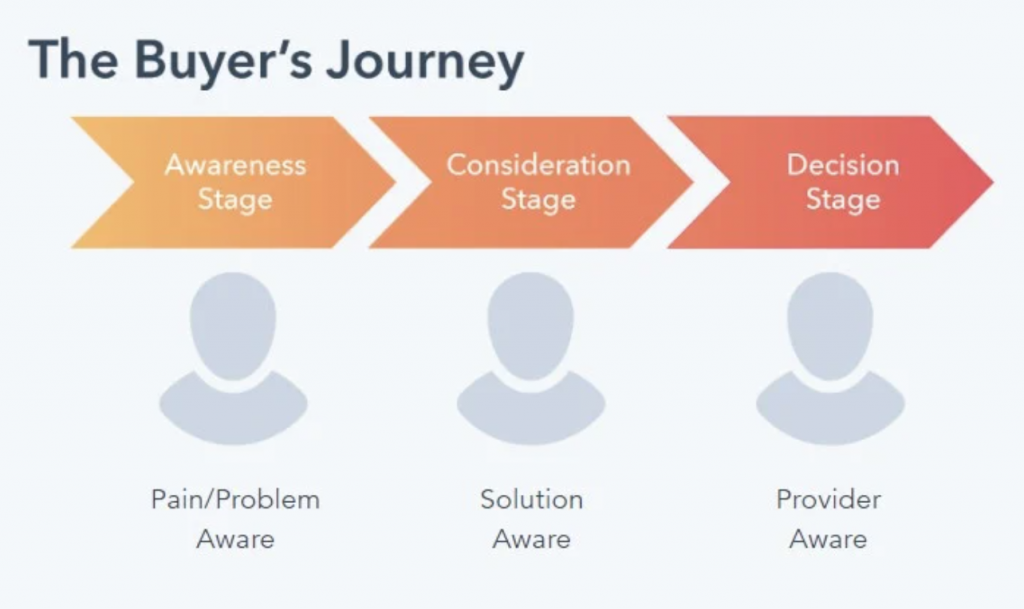
Segment your audience to provide personalized, relevant content. Consider factors like job function, buyer’s journey stage, and industry expertise. Segmentation allows you to address specific pain points and challenges, making your webinar more valuable.

By delivering personalized content, you increase the chances of audience engagement and relevance.

Strategy 2: Create Engaging Content

Once you’ve defined your target audience, the next step is crafting captivating content that keeps them interested in your webinar. Here are some strategies for creating resonant content:

Balancing education and promotion

Strive for a balance between educational information and promoting your product or service. Your audience engages more when they receive valuable insights rather than a pure sales pitch.

For instance, in a webinar about social media marketing, offer tips for creating engaging content on different platforms. Also, highlight how your product or service can save time and increase reach. Provide actionable advice that benefits their business alongside showcasing your offering. This adds value and enhances the likelihood of their attendance in future webinars.

Utilizing storytelling techniques

Incorporate storytelling to make your content more engaging and memorable. Stories connect emotionally with your audience and make your content relatable.

Share success stories of how your product or service helped companies achieve their goals. For example, describe how a struggling client improved their social media engagement and sales after using your product.

You can also share a personal experience related to the webinar topic. If discussing time management, share how you overcame time struggles and increased productivity by implementing specific strategies.

The key is to humanize your content, making it relatable and appealing to your audience. Incorporating storytelling techniques ensures a more engaging and memorable webinar experience.

Strategy 3: Choose the Right Webinar Platform

Webinars and online events have gained popularity as effective ways to connect with audiences. Selecting the right platform for your webinar is vital to its success. Consider these key features when evaluating different options:

Ease of use: Opt for a user-friendly platform that minimizes technical difficulties for both you and your attendees.

Reliability: Choose a stable and dependable platform to avoid any technical issues during your webinar.

Engagement features: Look for platforms with live polls, Q&A, and chat functionality to encourage interaction and keep your audience engaged.

Integration: Consider platforms that seamlessly integrate with your existing marketing and CRM systems, streamlining lead capture and follow-up.

Popular webinar platforms to consider:

Zoom: Known for its ease of use, reliability, and features like breakout rooms and virtual backgrounds. It integrates well with tools such as HubSpot and Salesforce.

Webex: A robust platform offering features like screen sharing, recording, and whiteboarding. It integrates smoothly with other Cisco collaboration tools.

GoToWebinar: Recognized for its user-friendly interface, simplicity, and focus on lead capture and follow-up. It integrates with popular marketing tools like Marketo and Salesforce.

BrightTALK: Offers a variety of webinars and events across industries, with engaging features like live chat and audience analytics. It integrates with marketing automation tools like Eloqua and Marketo.

Choose the platform that best suits your needs, budget, and audience size. By selecting the right platform, you can deliver a successful and engaging webinar that resonates with your audience.

Strategy 4: Promote Your Webinar Effectively

After creating your webinar and selecting a platform, it’s essential to promote it effectively to reach your target audience. Follow these tips to maximize your webinar’s exposure:

Leverage email marketing and social media: Highlight the benefits of attending your webinar in your email campaigns and include a clear call-to-action for registration. Segment your email list to tailor your message to specific groups. Utilize social media platforms like Facebook, Twitter, and LinkedIn to reach your audience. Use relevant hashtags and targeted advertising to increase visibility. Create a social media calendar to plan your pre-webinar posts. Collaborate with industry influencers to expand your reach and tap into their followers.

Partner with industry influencers: Collaborate with respected influencers in your industry. Offer them opportunities to co-host or promote your webinar to their audience. Look for influencers with a significant following and credibility. Consider providing incentives or commissions for each registration they drive. This partnership can help you connect with a broader audience and establish relationships with key players in your industry.

Remember, promoting your webinar is crucial for its success. Utilize email marketing, social media, and influencers to reach a wider audience and drive registrations. Keep your messaging consistent and relevant, and track your results to refine your strategy over time.

Conclusion

Incorporating webinars into your B2B marketing strategy is essential for educating, engaging, and building relationships with your target audience. By implementing the four strategies outlined here, you can create impactful webinars that resonate with your audience, generate leads and sales, and establish your organization as a thought leader in your industry. Embrace the power of b2b webinar marketing to take your marketing efforts to the next level.

Exploring the Phenomenon of Dark Social for B2B Marketers

B2B Marketers often refer to “dark social.” But what is its effect on brands and their growth, and how can it be measured?

Social media use has revolutionized how we communicate and interact personally and professionally. It has captivated marketers, analysts, and researchers as a growing digital landscape trend.

This article explores this phenomenon, from its definition and origin to its role and impact on marketing, growth, and analytics. Furthermore, it delves into the challenges and opportunities that dark social presents for businesses and brands in the age of data-driven decision-making.

Understanding This Phenomenon

Definition and Origin of Dark Social

Dark social or ‘silent sharing’ refers to sharing content through private, non-public channels such as email, messaging apps, and forums. It involves the transmission of links and URLs that are difficult or impossible to measure through traditional web analytics tools, as they occur outside of public social share networks.

The term “dark social” was coined in 2012 by Alexis Madrigal, a journalist for The Atlantic, who discovered that a significant proportion of web traffic came from untraceable sources.

Historically, dark social originated when people used chat rooms and instant messaging to exchange content and communicate. In recent years, it has gained momentum due to the rise of mobile devices and messaging apps, which have become an integral part of our daily lives.

The Role of Dark Social in Today’s Digital Landscape

This basic human tendency highlights the limitations of traditional social analytics in capturing the full scope of social interactions.

While public social networks like Facebook, Twitter, and Instagram are still essential channels for brand promotion and content distribution, they only represent a fraction of social sharing.

Furthermore, dark social plays a crucial role in consumer behaviour and purchase decisions. Research has found that people are likelier to trust and act upon recommendations from family and friends sent through private channels than publicly shared ones.

Understanding and harnessing the power of dark social is essential to develop effective marketing strategies that resonate with target audiences.

The Impact of Dark Social on B2B Marketing and Analytics

Challenges in Measuring Dark Social Traffic

One of the biggest challenges of silent sharing is the difficulty in measuring its impact on traffic, conversions, and revenue. Often, this kind of traffic is misidentified as direct traffic or organic search traffic because it lacks referral tags.

As a result, marketing campaigns can be undermined by skewed analytics and inaccurate performance metrics.

To address this issue, marketers and analysts can employ various tactics, such as URL shorteners, creating customized landing pages, and leveraging social sharing buttons that track clicks and shares.

Additionally, they can use advanced analytics tools that integrate with messaging apps and email providers to gain deeper insights into dark social traffic and engagement.

The Influence of Dark Social on Consumer Behavior

Dark social represents a valuable opportunity for B2B brands to tap into the power of personal recommendations and word-of-mouth marketing to drive engagement and conversions. By creating compelling and shareable content that aligns with the interests and values of their target audience, brands can increase the likelihood of their content being shared through private channels.

Moreover, by understanding the nature and motivations of silent sharing, brands can gain valuable insights into the needs and preferences of their audience, which can inform their product development, positioning, and messaging strategies. With the rise of social commerce and influencer marketing, harnessing the potential of dark social has become more critical than ever for B2B brands seeking to establish a competitive advantage.

Strategies for Addressing Dark Social in Marketing Campaigns

There are several approaches that brands can take to address dark social in their marketing campaigns. One way is to optimize their content for private sharing by including shareable links and messaging that encourage sharing. Additionally, brands can leverage chatbots and messaging apps to offer personalized recommendations, customer support, and exclusive discounts to customers who share their content through private channels.

Furthermore, brands can leverage the data and insights gained from dark social to inform their social media and content strategies. By identifying the topics, formats, and channels that resonate with their audience, brands can create more targeted and effective campaigns and content that drive engagement and conversions.

Dark Social Platforms and Channels

Popular Dark Social Apps and Tools

People use several popular dark social apps and tools to share content privately. These include messaging apps such as WhatsApp, Facebook Messenger, and WeChat, email services like Gmail and Outlook, and forums like Reddit and Quora. Each platform presents unique opportunities and challenges for brands seeking to tap into dark social.

For example, messaging apps offer a highly personalized and intimate environment for sharing content but can be difficult for brands to navigate without being intrusive or spammy. Conversely, email is a more formal and professional channel that can be leveraged for targeted campaigns and lead nurturing. Similarly, forums provide a rich source of user-generated content and insights that can be used to inform content strategies and build brand advocacy.

The Rise of Messaging Apps and Private Communities

Messaging apps and private communities have seen explosive growth in recent years, with more and more people turning to these channels for communication and content consumption. This trend has been driven by several factors, including the desire for more secure and private communication, the availability of new features and functionalities, and the proliferation of mobile devices.

dark social

For B2B brands, messaging apps and private communities provide a unique opportunity to engage their audience and build relationships through one-to-one interactions. By creating exclusive groups and communities, B2B brands can foster a sense of community and belonging among their fans and customers while providing them with valuable content and offers.

The Role of Email in Silent Sharing

Despite the rise of messaging apps and social networks, email remains a crucial channel in silent sharing. Research has found that email accounts for over 70% of all dark social sharing, making it a valuable channel for brands seeking to leverage the power of personal recommendations and referrals.

To optimize their email campaigns for silent sharing, brands can include shareable links and buttons within their email templates. Additionally, they can segment their email lists based on user behavior and preferences and tailor their messaging to align with the needs and interests of their target audience.

Best Practices for Navigating Dark Social

Tips for Identifying and Tracking Traffic

Identifying and tracking dark social traffic is essential to any B2B marketing strategy that seeks to leverage its potential. To do so, brands can use various tools and techniques, such as Google Analytics, Bit.ly, and SocialFlow, to measure and monitor their traffic and engagement.

One effective strategy is to create unique URLs and landing pages for different channels and campaigns, which can help brands to isolate and track their traffic. Additionally, brands can monitor their social mentions and sentiment to identify potential dark social conversations and trends.

Leveraging Dark Social for B2B Brand Awareness and Engagement

Dark social represents a valuable brand opportunity to build brand awareness and engagement through word-of-mouth marketing and personal recommendations. By creating shareable and relevant content that resonates with their target audience, brands can encourage their customers and fans to share their content through private channels, expanding their reach and influence.

Moreover, by engaging with their audience through messaging apps and private communities, brands can foster long-term relationships that are built on trust, loyalty, and mutual value. This can lead to increased customer retention, advocacy, and sales.

Ensuring Privacy and Security in Dark Social Communications

As the use of these channels continues to grow, privacy and security concerns have emerged as significant issues for B2B brands and consumers alike. Given the sensitive nature of private communication and sharing, brands must ensure the privacy and security of their customers’ data and interactions.

This can be achieved through secure messaging apps and encryption technologies and by adhering to data protection and privacy regulations such as GDPR and CCPA. Additionally, brands can educate their customers and employees about the risks and best practices of using dark social channels to minimize the risks of data breaches and cyber-attacks.

The Future of Dark Social

Emerging Trends and Technologies of Unmeasurable Engagement

Several emerging trends and technologies are transforming how we communicate and interact online, shaping the future of dark social. AI-powered chatbots, integration of social media and messaging apps, and blockchain-based messaging platforms that prioritize privacy and security are all examples of these trends.

Additionally, the increasing use of video and live streaming on social media and messaging apps presents new opportunities for brands to engage their audience through immersive and interactive content experiences.

The Potential Impact of Regulation and Privacy Concerns

The growing emphasis on data protection and privacy concerns has raised questions about the future of dark social and its impact on B2B marketing. Regulations like GDPR and CCPA have imposed strict rules on collecting, using, and sharing personal data, which has prompted brands and marketers to rethink their strategies for capturing and analyzing dark social traffic.

Moreover, growing public awareness of the risks and consequences of data breaches and cyber-attacks has highlighted the importance of secure and private communication channels that respect users’ privacy and rights. This has spurred the development of new technologies and platforms that prioritize encryption, decentralization, and user control.

The Evolving Role of Dark Social

Despite the challenges and opportunities, its evolving role in the digital ecosystem is still uncertain. As social media and messaging platforms evolve and converge, the boundaries between public and private sharing may become blurred, leading to new forms of social engagement and measurement.

Opportunities Through Dark Social: How to Leverage Private Sharing

While Dark Social can be challenging to track and measure, it presents unique opportunities for B2B marketers. Here are some ways that you can use it to improve your marketing efforts:

  1. Build Relationships
    Dark Social channels like email and private messaging provide an opportunity to build relationships with your audience on a more personal level. Creating content that resonates with your audience and encouraging them to share it can make a more meaningful connection with your audience.
  2. Gain Insights
    Even though it can be difficult to track, it still provides valuable insights into what content resonates with your audience and their interests. By monitoring social listening tools and analyzing direct traffic, you can gain insights into what’s working and what’s not.
  3. Create Personalized Content
    Private conversations are often more personal and intentional than public conversations on social media. Using the insights gained from your marketing efforts, you can create more personalized content that resonates with your audience on a deeper level.
  4. Expand Your Reach
    Channels like email and private messaging allow you to expand your reach beyond your immediate network. By creating easily shareable content and encouraging your audience to share it, you can reach new audiences and expand your reach.

Additionally, as the use of messaging apps and private groups continues to grow, the role of dark social in shaping consumer behavior and decision-making may become even more pronounced, requiring brands to adapt their strategies and tactics to stay ahead of the curve.

Conclusion

Dark social, especially in B2B marketing, is a complex and dynamic phenomenon that presents challenges and opportunities for brands seeking to engage their audience and drive conversions in the digital age. By understanding the nature and motivations of sharing, identifying and tracking their dark social traffic, and leveraging the unique opportunities presented by messaging apps and private communities, B2B brands can create more targeted and effective campaigns that resonate with their target audience.

While the future of dark social is uncertain, one thing is clear: its impact on marketing and analytics will only continue to grow in importance and significance as we enter a new era of data-driven decision-making.


The B2B Competitive Analysis That Will Supercharge Your GTM Strategy

What can you do to get your company its market share. And then, how do make that piece of cake keep growing?

That’s what this article will show you how to do. Let’s dive right in!

Knowing what your customers need and how to provide it better than competitors is the key. To make sure your company stands out and truly wows your customers, you must analyze the competition.

This is called competitor analysis and it involves assessing the strengths and weaknesses of other businesses in your industry.

A methodical approach to evaluating the competition ensures a well thought out foundation for the multiple stages that follow in your GTM strategy. B2B competitive analysis involves taking the time to study your competition and understand their market strategies so that you can make informed decisions about how to effectively target your own ideal customers.

By understanding your competitors you will gain valuable insight into the market’s needs, and be able to craft a strategy that will give you a truly competitive edge.

Let’s take a closer look at what it is and why competitive analysis is key for a successful product launch, as well as how to properly address this component within your GTM strategy.


The wrong approach to B2B competitive analysis

Let’s get this out of the way because as much as you might know this, it is very challenging to not do. The wrong approach to competitive analysis is looking for what your competitors are doing well and try to emulate it (and put your own spin on it of course).

While this strategy may appear to be a safe route, (“seems to be working fine for them”) it usually leads to mediocre or even embarrassing outcomes in the long run. Not only does this approach leave you no better off than your competitors, but attempting to imitate them will likely make you look worse rather than better in the public eye.

Instead of looking for ways to replicate success, focus on creating original strategies and ideas that set you apart from the competition. This approach will show off your unique value and help you stand out from the crowd.


What should your competitive analysis outputs look like?

Competitive analysis is a powerful tool to gain great insights into your competition. Its main outputs include determining product strengths and weaknesses, understanding competitor positioning, and examining the channels they use to reach their target customers. It can help give you an edge in the competitive landscape, so that you can find the opportunities to stand out from your competition.

Let’s have a look at what these actually mean:

Product strengths and weaknesses

Understanding the strengths and weaknesses of your product or service compared to those offered by other competitors is the most essential part of the analysis. Evaluating these differences can help you determine what value your offering brings to the market and reveal areas where you have advantages over your competitors. Additionally, by closely examining what areas you fall short in comparison to another business, you can determine where improvements are needed in order to remain competitive. This can be done through customer feedback, competitor research, and industry benchmarking.

To simplify we can use these basic questions for each competitor:

Internally, what are they really good at? what are they not good at?

Which opportunities does the market offer them?
What are potential threats for them in the market?

Positioning insights

Examining your competitors’ positioning strategies can provide invaluable insight. Look for their main focal points and identify any potential areas they may be overlooking in terms of their approach to positioning statements, social media presence, and customer testimonials. Understanding how they position themselves in the market will help you better understand their target customers and what makes them unique. Additionally, it will give you an idea of what ideas and values they are trying to convey to their audience, allowing you to craft a more compelling message that resonates with potential customers.

Content and Channels

Understanding how your competitors use various channels to reach and engage with their audiences, can provide invaluable insight for your own business. Analyzing their activity on all channels relevant to your audience can help you determine what types of content are producing optimal or poor results. Additionally, identifying which channels are being underutilized by your competitors can open up opportunities for you to expand your own presence in those areas. By taking the time to assess the various strategies employed by your competitors, you can capitalize on those insights and gain an advantage over them.

In evaluating a content marketing program, you want to assess the types of content produced (blog posts, ebooks, case studies etc.), the publishing cadence , and measure the performance.

You can measure website content in SEO performance,
Which keywords do they rank for?
Which Keywords are bring in the most traffic?

Social channels performance can be measured by looking at reach, engagement etc.


How to do competitive analysis effectively

Identify the most relevant competitors

Finding the right competitors is critically important for businesses in competitive places like the B2B sphere. Digging up useful information about your website when compared to bigger players in your market can be daunting and disheartening at times. For that reason, it’s essential to be realistic about who you decide to face off against. Bear in mind that you can always update your rivals after a certain amount of time if you feel ready to move on from your existing adversaries.

Two simple starting points:

Google Search – A simple way for you to identify good competitors is just to Google your target keywords.

Specific market analysis tools – Try tools or platforms like,  G2 or Semrush market explorer.

Join professional communities – Joining professional communities that your target audience are likely to be part of allows you to see which vendors are being recommended for the same problem you solve. (This method can be a gold mine for a whole bunch of valuable information beyond just who your competitors are).


SEO competitive analysis gives you more than SEO

We mentioned analysing your competitors SEO above for content but it’s important understand that SEO competitive analysis gives much more than just insights into search engine optimization. It can provide a comprehensive analysis which takes many different aspects into account to give you a robust picture of your go-to-market (GTM) strategy’s performance in the market. This analysis can help identify both opportunities and potential weaknesses that can be used to formulate and adjust strategies for success by understanding the values, preferences and needs of the target audience.

Additionally, SEO competitive analysis allows you to gain insight into what your competitors are doing with regards to their own marketing campaigns, giving an advantage when formulating new strategies to compete in the same markets. Understanding such data helps companies craft plans tailored specifically for their target customers needs while capitalizing on the opportunities that exist from the gaps left by competitors.


What part does the competitive analysis have in the GTM strategy?

When it comes to constructing a winning GTM strategy, it is essential to take a step-by-step approach as every layer relies heavily upon the prior. This is especially crucial for the competitive analysis step. Let’s explore the steps of the GTM strategy and underline where the competitive analysis step comes in the order.

Identify your target audience

The first stage of the workflow is defining the total addressable market, which includes identifying your ideal customer profile at the company level as well as determining who are the relevant stakeholders within that company. This information provides important context for later steps in the process, such as understanding their buying journey and formulating actionable strategies for success.

Breakdown Your Buyer’s Journey

The next stage requires you to detail the stakeholder’s buying journey by mapping out how they interact with your products or services from start to finish. By understanding their needs, pain points and expectations clearly, you can create marketing content and sales processes that cater specifically to them for maximum efficacy.

competitive analysis

Afterwards comes competitive analysis which helps you gain insight into what your competition is doing and how successful they are being at meeting their business goals. Leveraging this information will help you understand both your strengths and weaknesses when compared to those of your competitors while giving you guidance on which markets or sectors might be better suited for your products or services in terms of risk minimization.

Value proposition, messaging, demand generation and KPIs

Finally, once you have completed competitor analysis you can move forward with completing the final pieces of your GTM strategy: value proposition formulation, messaging development, demand generation strategies formulation, as well as setting up key performance indicators (KPIs) that will allow you track progress towards targets throughout the entire process.

Following a structured approach when creating a B2B GTM strategy is essential in order to ensure that all required tasks are taken into consideration in order to achieve desired results efficiently and effectively. Additionally it can provide valuable insights from competitive research allowing businesses leverage such knowledge when crafting plans tailored specifically for its target audience’s needs.

Get that piece of cake and make it grow!

Analysing the competition is essential for devising an effective GTM strategy that will ensure a successful product launch. With a comprehensive approach to evaluating the competition, you can build a strong foundation for your strategy and increase your chances of success. The payoff of this effort – new customers and a larger slice of the cake – makes it well worth the investment. By taking a methodical approach and investing in a competitive analysis, you set your company up for success and expand your market share.

How to create a B2B Newsletter that engages buyers and increases revenue – with examples

Newsletters have been around for decades, but they are more essential than ever for B2B companies in 2023. In this blog post, we’ll explore why newsletters should be a key component of your B2B marketing strategy, and highlight the types of newsletters that B2B buyers love to receive.

With so many channels vying for attention, cutting through the noise and connecting with your audience can be tough. But newsletters offer a unique opportunity to deliver valuable content directly to their inbox on a regular basis. By providing helpful information, industry insights, or even company updates, you can build trust with your readers and position yourself as a thought leader.

So what types of newsletters do B2B buyers want to receive? We’ll dive into some examples of successful newsletter formats that are sure to engage your audience. From curated roundups of industry news to deep dives into relevant topics, there’s a newsletter style out there for every business.

So if you’re not already incorporating newsletters into your marketing mix, now is the time to start. Let’s explore how this simple yet effective tactic can help you reach new heights in 2023 and beyond.

Why B2B Newsletters Are Essential in 2023

Today there are too many new tools and platforms emerging daily and your brand will most likely not be remembered. But newsletters offer an opportunity to deliver valuable content directly to your clients’ and prospects’ inboxes regularly.

By providing helpful information, industry insights or even company updates, you can build trust with your readers and position your company and yourself as a thought leader.

Not only do newsletters help keep your brand top-of-mind with clients and prospects, but they also offer several other benefits:

  • Cost-effective: Compared to other marketing channels, such as advertising or social media campaigns, newsletters are relatively cheap and easy to produce.
  • Personalization: With advanced email marketing tools available today, it’s easy to personalize newsletters based on subscribers’ interests or behaviors.
  • Measurable ROI: With metrics such as open rates and click-through rates readily available, it’s easy to track the effectiveness of your newsletter campaigns.


Types of Newsletters B2B Buyers Love

Now that we’ve established why newsletters are essential, let’s dive into some examples of successful newsletter formats that are sure to engage your audience:

Curated Roundups

Offer a selection of relevant industry news or company updates that your readers may find interesting. This type of newsletter format is perfect if you’re short on time but still want to provide value to your subscribers.

For example, HubSpot’s “Marketing Blog” features a weekly roundup of their best blog posts from the week called “The Marketing Update.” The update includes links and summaries for each post along with an eye-catching graphic.

Deep Dives

Focus on one specific topic or trend relevant to your industry and provide deep insights or analysis. This type of newsletter format works best when you have original research or data to share.

For example, CB Insights publishes a weekly newsletter called “The Weekly Brief,” which analyzes trends in venture capital funding and emerging technologies.

Educational Content

Provide helpful tips, tricks, or guides to help your readers solve problems or improve their businesses. This type of newsletter format is perfect for positioning yourself as an expert.

For example, Moz publishes a monthly newsletter called “The Moz Top 10” featuring their ten most popular blog posts from the month and educational resources such as webinars and eBooks.

Product Updates

If you’re looking for a way to keep existing customers engaged, a great format you can use is one that gives your customers the low down on new product updates, features or services.

For example, Slack sends regular product updates highlighting new features such as improved search functionality or integrations with third-party apps.


Examples of Successful Newsletter Formats

Here are some list real-world examples from successful B2B companies that use these newsletter formats effectively

1. HubSpot’s “Marketing Blog”

Curated roundups of their best blog posts from the week with an eye-catching graphic.

Hubspot b2b Newsletter

HubSpot’s “Marketing Blog” is a compelling newsletter example that delivers curated and valuable content directly to users’ inboxes on a regular basis. This type of newsletter format is perfect for those who are short on time but still want to provide value to their subscribers, making it an effective way to keep customers informed and engaged.

What sets HubSpot’s “Marketing Blog” apart from other newsletters is its eye-catching graphic that draws readers in, making them more likely to engage with the content. With this approach, businesses can easily build trust with their readers while positioning themselves as thought leaders in their space.

2. CB Insights’ “The Weekly Brief”:

Detailed analysis on trends in venture capital funding and emerging technologies

CB Insights’ “The Weekly Brief” provides a comprehensive look into venture capital and emerging technology trends. It offers deep insights, original research data and in-depth analysis on the latest developments in these industries. With this newsletter, companies can stay ahead of the curve to gain a competitive advantage. The personalized nature of this newsletter allows readers to keep up with content tailored to their interests or behaviors, making it an effective way to engage them. Additionally, businesses can easily track their newsletters’ performance with metrics such as open rates and click-through rates available at hand.

3. Moz’ “The Moz Top 10”

Ten most popular blog posts from the month along with educational resources such as webinars and eBooksB2b newsletter

Moz’ “The Moz Top 10” is a monthly newsletter that provides readers with the ten most popular blog posts from the month along with educational resources such as webinars and eBooks. This type of newsletter format is great because it helps the readers get up-to-date on the latest industry trends and news, while also giving them valuable insights into the topics so that they can look smart amongst their colleages. What’s unique about this particular example is that Moz includes additional educational resources to support its content – making it easy for readers to dive deeper into their favorite topics or areas of interest.

4. Slack’s Product Update emails

Highlights new features such as improved search functionality or integrations with third-party apps.

Slack b2b newsletter

Slack’s product update emails are a great way to keep customers informed and engaged with the newest features, services, and integrations. These emails feature detailed descriptions of the latest releases and updates, along with helpful screenshots and visuals that make it easier for customers to understand their functionality.

With these emails, users can stay up-to-date on new functionalities, such as improved search capabilities or third-party app integrations that make your workflow more efficient. These updates also allow users to identify gaps in their operations, helping them make smarter decisions about utilizing Slack tools. Plus, by highlighting the latest advancements in one place, customers can get an overall picture of all of Slack’s offerings – making it easy for them to maximize the value of their experience with the platform.

5. Pipedrive’s “Startup Insights” Newsletter

Regular updates offering curated articles, case studies, and experiences related to startup success.

Pipedrive’s Startup Newsletter is a great example of an effective newsletter format. It provides curated content specifically tailored to entrepreneurs and startups, such as tips on how to scale quickly and efficiently and information on the latest trends in venture capital funding. The newsletter also offers insights from industry experts and covers topics ranging from customer acquisition strategies to hiring best practices. What makes Pipedrive’s startup newsletter unique is that it dives deep into topics that are relevant to entrepreneurs and provides actionable advice rather than just general information. This helps readers stay up-to-date on industry trends while at the same time offering practical advice they can use right away.

6. Gartner’s “CIO Dashboard” Newsletter

Weekly insights on enterprise technology topics relevant to CIOs.

Gartner B2B newsletter

Gartner’s “CIO Dashboard” is an innovative newsletter format designed to provide CIOs with valuable insights and actionable advice on the latest trends in technology. This comprehensive news digest features informative articles, interviews, and case studies from industry leaders who have seen success within the tech space. The Dashboard also offers interactive charts that make visualizing data and tracking key performance metrics easier. With this tool, CIOs can quickly get up-to-date information on the hottest topics in IT, helping them stay ahead of their competition.

What sets Gartner’s “CIO Dashboard” apart is its ability to synthesize complex topics into easy-to-understand graphics and give readers concrete strategies for improving their operations!

7. Oracle NetSuite’s Newsletter

Monthly newsletter providing valuable content for small businesses with real-world examples from successful B2B companies that use these newsletter formats effectively.

Oracle NetSuite’s B2B newsletter is an effective example of a thought leadership strategy. Each week, readers are provided with insights from industry leaders on the latest topics related to cloud technology and ERP systems. The unique format keeps readers engaged by sharing actionable steps that can be taken right away to apply the learnings discussed in each article. Moreover, it also offers webinars and e-books as additional learning resources give subscribers useful information they can use every day in their business operations.


Best Practices for Creating Effective B2B Newsletters

To create effective B2B newsletters that engage subscribers, here are some best practices:

1) Segment Your List: Segmenting allows you to send targeted messages based on subscriber interests.

Segmenting your list is essential to creating effective B2B newsletters, as it enables you to send tailored messages based on subscriber interests. By doing so, you can ensure that each subscriber receives content specific to their needs and preferences. Furthermore, segmentation can help increase engagement with subscribers and make your newsletters more impactful.

2) Personalize Your Content: Use subscriber data like name or location where applicable

Personalizing your B2B newsletter content is an effective way to create meaningful connections with subscribers. By using subscriber data such as their name or location, you can make your newsletters more personalized and engaging. Furthermore, personalization can help build trust between you and your readers and give them a reason to stay subscribed. Moreover, personalization can also help create a sense of exclusivity and make your subscribers feel more valued and appreciated.

3) Keep It Short & Sweet: People have short attention spans; keep content brief but informative

Keeping B2B newsletter content brief but informative is essential for creating engaging, effective content. Content creators must be conscious of their readers’ short attention spans and strive to create a message that is both concise and impactful. To do this effectively, content should be written in an easy-to-digest style with higher semantic richness to draw attention and increase CTR.

4) Include Clear CTAs: Make sure there is always an obvious next step for subscribers after reading

Including clear call-to-action (CTAs) in a B2B newsletter is essential for engaging subscribers and driving conversions. By providing a clear, actionable next step after reading each article, content creators can increase the likelihood of readers taking action. For example, if an article discusses the benefits of a certain software solution, then a good CTA would be to asking for a demo right inside the newsletter.

5) Test Your Campaigns: Try different subject lines/messages/CTAs etc., and analyze the results

Testing variables in a B2B newsletter effectively determine what resonates with subscribers and ensures your newsletters are as impactful as possible. By running A/B tests on various aspects of your newsletter, including subject lines, messaging, and CTAs, you can gain insights into what works best for your audience. For example, you may experiment with sending newsletters at different times during the week or day to determine when subscribers are most likely to engage.

The newsletter is essential to every B2B marketer’s toolkit in 2023

Newsletters should be an essential component of every B2B marketer’s toolkit in 2023 since they allow brands direct access straight into their target audience’s inbox while being cost-effective at the same time. Furthermore, Curated Roundups work well when pressed for time, while Deep Dives work well when sharing original insights; Educational Content provides value by positioning oneself as an expert, while Product Updates drive engagement.

How to Create a SaaS Content Strategy That Generates Demo Requests

Why SaaS Companies Can Make A Bigger Impact with Content Marketing

Growing a SaaS business requires organic content marketing – not only because it is essential for any company but especially true of those in the SaaS industry.

The reason content has the potential to have a bigger impact on a SaaS buyer audience is due to how a single SaaS product can impact the business functionality.

When we truly grasp what happens as a result of that, it helps us understand how to communicate with our target audience on a level that gets through. This is in essence what we want to achieve with our content marketing.

Creating Effective SaaS Content is to Empathize with your Buyer

When we think of our buyer, we must consider how high the stakes are for them. Where and how does this purchase affect them? The one responsible for introducing and implementing your SaaS solution to their company has a lot to prove, potentially lose, or if done right, gain.

The first front is on the business level. A problem needed to be solved, something needed to be fixed and your buyer is in the position to be the hero. To management, they want to prove that they can be relied upon to find the best solution to that problem. To accomplish this, they want to validate the value of the purchase by proving ROI for the business’s bottom line.

The second front is with the ones who will use the SaaS product, the buyers’ coworkers. A new SaaS tool can mean a lot of change for how some in the company go about doing their jobs on a daily basis.

So our buyer bears the responsibility of ensuring that this change is a positive one for their coworkers and ultimately makes their jobs easier.

The third and perhaps most important impact on your SaaS buyer is how it benefits their professional growth and career. It presents an opportunity for leadership experience. All the benefits to the business from using your SaaS product can be credited to your SaaS buyer who introduced and implemented it.

It is so important that your SaaS content strategy addresses these needs. For your target audience, who constantly look to educate themselves on these fronts, it presents a great opportunity for your SaaS brand to serve as a fountain of knowledge to help your audience.

As the provider of the solution, the SaaS company is naturally positioned as a trusted source. The ones who use your SaaS product will rely on the content you create as their primary source of information and knowledge.

Helping your customers with valuable content in the above areas is essential for cultivating a devoted clientele, forming your brand as a trusted resource of information, and attaining long-term revenue.


Content Ideation

Here is how you begin to map out what to write about: The Go-To-Market strategy should be your guide to your brand story and value proposition. When done correctly, the GTM strategy maps out the buyer’s journey related to your product and what they need or want to learn at each stage until they are ready to buy.

Now we’ll explore a few techniques for generating unlimited content ideas that will rank for SEO and address your buyer’s pain points. 

This will serve as your content topics outline, dividing it by the stages of the buyer’s journey

Using the buyer’s journey, you can write questions your buyer needs to answer to advance to the next stage of their journey.


Identify Your Buyer’s Burning Questions

Join communities that your buyer is part of like Slack channels and Discord.

Visit the platforms they might go to get answers to their pressing questions like Quora.

Make lists and categorize the questions that are relevant to your product. From these questions you can extract keywords. 

Collecting the keywords that are relevant to your target audience’s questions should be your first step in your keyword research. 


Competitor Analysis: Which Gap Are You Filling?

Before creating content, it is always wise to conduct a thorough analysis of competitors. The first thing to look for is where to steer clear of topics that already have too much content written about them.

However, it is critical to be careful with your approach to how you look at your competitor’s digital activity.

What you should not do: decide to write based on what your competitors are writing about.

Instead, you want to be strategic, finding the opportunities created by gaps in your competitor’s activity.

You can do this by using an SEO tool like Semrush to analyze their blog content. Which keywords your competitors have a strong ranking for, will not be the ones to focus on at an early stage. The keywords that have low rankings and do not bring your competitor’s website low organic traffic present you with an opportunity to fill the gap, and that is where you should begin.

Saas content strategy


Map Content Types and Prioritize Your Content Plan

Many content marketers do not properly distinguish between content types.

If you want to make the most of your content marketing efforts it is essential to understand the proper place for each piece of content.

  • Community building – podcasts, discussing hot topics on social platforms
  • Lead Generation – guides and white papers
  • Search – Blog and product pages created for Search Engine Optimization (SEO)

So how should a SaaS company prioritize these in their content strategy?

Social media is a valuable tool for building brand awareness, building a community and engaging with customers. As a B2B SaaS startup, your SEO-based blog should be the top priority as it will generate sustainable traffic and leads, establish authority and thought leadership, and create content that converts over the long term.


Why You Should Prioritize SEO-Focused Content 

Investing in SEO-based content marketing for your B2B SaaS startup is a crucial decision you can make to ensure long-term success. Unlike social media, which requires unnecessary expenses to reach a broader audience, SEO-based content can bring organic traffic and leads without the need for continuous investment. Investing even modestly in SEO early on will not only reap big rewards but also become more powerful over time. Make sure you prioritize this part of your content marketing strategy today!


Formulate Your Content Plan with SEO Research 

Strategically planning your content creation with SEO-centered pieces based on the buyer journey stages not only assists you in choosing keywords but also provides a clear comprehension of what type of material is meant for every stage and enables you to create realistic objectives.

The Content Marketing Institute’s 2022 survey revealed that the greatest planning challenge content marketers face is in creating content that appeals to the different stages of the buyer’s journey.

Content marketer's challenge

Let’s make sense of what defines the content at each stage of our SaaS buyer’s journey: 

Explore Their Challenges And Solutions In The Awareness Stage

In the awareness stage of the B2B SaaS buyer journey, potential customers are just beginning to explore their challenges and search for solutions. At this stage, it’s important to create content that raises awareness of your brand by addressing common pain points or challenges that your potential customers are facing and then educating on how to solve them.

Awareness stage content will focus on search terms with the highest search volume, that have informational intent, and will see the lowest number of conversions.

Content in the awareness stage can convert readers with educational content assets such as eBooks and white papers and webinars. 


How Your SaaS Product Solves These Problems/Opportunities

The consideration stage of the B2B SaaS buyer’s journey is the point where potential customers have identified a problem or opportunity and are looking for information to help them evaluate possible solutions. At this stage, your content should focus on providing information that helps potential customers to understand their options and make informed decisions.

Good content for this stage will compare your product to your competitors. Highlight your strengths and weaknesses in relation to other solutions available in the market. This can help potential customers to understand the unique value proposition of your product and how it compares to other options.

Consideration stage content will be based on search terms with medium search volume and ‘light’ buying intent.


Content for the Decision Stage That Converts Demos

Bottom of the funnel content at the decision stage should be made of search terms with lower search volume and higher buying intent. Use long tail keywords that address a specific part of a larger challenge.

Lower volume keywords can help you reach your target audience and draw relevant traffic to your website. As they are less competitive.

blog posts that rank for decision stage keyword terms outperform blog posts going after larger volume keywords.

keywords that most SaaS businesses are bidding on in paid ads like ______solution, ______software, ________tool.

Many of your competitors probably make the mistake of only focusing on these in their paid search campaigns, and therefore leave them out of the organic content strategy. That is exactly why this is where you will have an opportunity to get ahead.


Remember: Your SaaS Content Strategy should be Guided by Your GTM Strategy

Through every step of creating your content marketing strategy and every step of its execution, it is important to ensure that your content reflects the GTM strategy so that your unique selling proposition to the ideal customer profile is clearly communicated and consequently distinguishes you from other contenders in the sector.

When you create a SaaS content strategy that is aligned with your go-to-market strategy, you will guide your potential buyers through their journey of discovering, liking, and trusting your brand! And they will inevitably want to see how your SaaS product works. 


How is Marketing Different for Early Stage Startups?

With 90% of startups estimated to fail, there’s a high probability that an early-stage startup won’t survive its first year.

Why do startups fail so often?

As it turns out, the answer lies in marketing. As much as 70% of startup failures can be attributed to ineffective marketing strategy or poor execution.

That’s why in order to form the right marketing strategy, it’s important that early-stage Startup companies shift their approach as to what marketing should achieve at this early stage.


Why So Many Startups Fail Because of Marketing

Today there are dozens of good marketing strategies for startups out there. Some are geared for a minimal marketing budget others for making as much noise as possible.

The reality is, that even if these marketing strategies with all the fancy marketing tactics are executed to perfection, they will not achieve much until problem market fit has been proven.

marketing for early stage startups

To be clear, you can grow before you have figured out your problem market fit. Envisioning the sweet sound of media buzz and heralded demand for your product may feel like success.

And that’s why companies with large budgets pour money into PR, social media, content marketing, with SEO, blog posts and email campaigns. But that growth eventually proves unsustainable. 

But the quickest way to risk your startup’s demise is by scaling too early before having proof of the market problem that you solve.


What Early-Stage Startup Marketing Needs to Focus On

Every business needs to adjust their marketing strategy based on their maturity stage.

Startup founders will romanticize the days when having a marketing budget was only a fantasy. Back when lean operations relied solely on creative problem-solving in order to develop a Minimum Viable Product (MVP).

After MVP is proven, startups look for their first market validation via someone in their inner circle. Either trying the product themselves or connecting to someone who tries the product (usually as a favor).

Even after gaining a few of these ‘early adapters’, sooner or later the pressure comes to prove that the market agrees if the product actually solves something that they’re willing to pay for.

The only focus marketing should have at this stage is to decipher who that market is and why.


The 3 Stages of a Business According to Sangram Vajre

Sangram Vajre, co-founder of Terminus and author of “ABM is B2B,” defines the three stages of a business as follows:
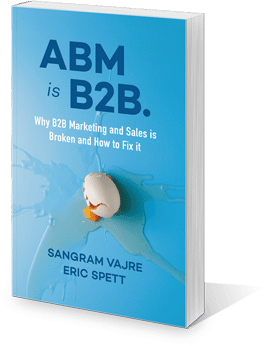
ABM is B2B

  1. Problem Market Fit: In this stage, a business identifies and defines the problem that it wants to solve for its customers. The focus is on understanding the pain points of the target audience and developing a solution that meets their needs. 
  2. Product Market Fit: In this stage, the business has a working solution to the problem and is focused on refining and improving the product to meet the needs of the target market. This stage is all about testing and validation, and making sure that the product is delivering real value to customers. 
  3. Platform Market Fit: In this stage, the business has a fully-formed product and is focused on scaling the solution and expanding its reach to new markets. This stage involves developing a platform that makes it easy for others to use the product, building partnerships, and finding new ways to generate revenue. 

These three stages are critical for businesses to go through in order to be successful in the long term. By understanding and focusing on each of these stages, a business can develop a strong foundation that will help it grow and scale over time.


How Does go-to-market (GTM) strategy fit in?

A GTM strategy leaves no part of your product launch to guessing. Every step of the way is mapped out.

In a GTM strategy you will detail your target market, define how your product brings them value, map their customer journey, workout the messaging guidelines, the exact marketing channels you’ll use, how much budget to allocate and what the goals look like for each individually.

We talk about how to build a winning GTM strategy in 2023 here.


Build A GTM Strategy According to The Objectives Of  Your Business Stage

The company’s Go To Market (GTM) strategy changes as the company progresses from stage to stage. The GTM strategy is a comprehensive plan for bringing a product or service to market, and as a company grows and evolves, its GTM strategy must also evolve.

Navigating the vast array of marketing tactics and channels can be intimidating. To best leverage your marketing efforts, so that they achieve the objective of your company’s business stage you need to create a Go-To-Market (GTM) strategy.

Implementing your GTM strategy should streamline the processes you use to execute each actionable step. When you streamline your system, executing your strategies becomes straightforward and achievable.

For example, in the Problem Market Fit stage, the focus is on finding the right problem to solve, so the GTM strategy might involve market research, customer interviews, and other forms of customer discovery. In the Product Market Fit stage, the focus is on testing and refining the product, so the GTM strategy might involve customer feedback, beta testing, and other forms of product validation.

In the Platform Market Fit stage, the focus is on scaling and growing the business, so the GTM strategy might involve building a platform, forming partnerships, and expanding into new markets.

In each stage, the company’s GTM strategy must change to meet the new challenges and opportunities that come with growth. By having a flexible and adaptive GTM strategy, a company can maximize its chances of success as it progresses through each stage.




How to Build a Winning B2B Go To Market Strategy in 2023

With the new year comes the daunting task of building your B2B go-to-market strategy.

Competition is tight and the market is evolving at a pace we’ve never seen before.

Launching a product is not easy. Keeping focused every step of the way is essential. Without a well-thought-out strategy, you won’t achieve the desired results.

How do you create a go-to-market strategy that will be successful in 2023?

What Makes a B2B Go To Market Strategy Effective?

Without a good plan, you can chase the wrong customer base, arrive too late or early to your market, or target an area inundated with similar solutions.

All which result in wasting time and resources on a product that won’t be successful.

An effective B2B Go To Market strategy

– Identifies the available market to target

– Determines where your product fits in the marketplace

– Sets a clear plan of action

How to Create a B2B Go-to-Market Strategy

First, identify your target market and understand their needs, wants, and preferences. This will help you create a tailored message that resonates and drives conversions. Once you have identified your target market, you can then proceed to outline how you will reach them.

1. Identify your target audience

Identifying a target audience is essential for any successful B2B go-to-market strategy. Narrow down your target audience using parameters like company size, industries, locations, the technology profile.

To drill down further, work alongside the product development team to understand the problem they set out to solve.

A focused approach to your marketing efforts, helps tailor your messaging and campaigns.

2. Breakdown Your Buyer’s Journey

Mapping your buyer’s journey is foundational to the go-to-market strategy. It helps to understand the path from problem to buy. Think about how best to target and create your messaging for each stage of the buyer’s journey. The buyer’s journey consists of three stages: qualified, aware, and engaged.

There are only two factors that matter in the qualified stag:

  1. The lead fits your ICP and target persona descriptions.
  1. They have interacted with your website or your campaigns.

In the awareness stage, the lead may not be engaged yet. This is where you need to focus on providing helpful content that educates them about what you offer and why it’s better than other options. Finally, in the buying stage, prospects are researching solutions and comparing different vendors.

Provide detailed product information and customer success stories that show how you solve the problem.

3. What can you learn from your competitors?

Conducting competitive research on the key players in the market to assess how they have brought their products to market. By understanding your competitors’ strategies, you can identify gaps and opportunities.

Identifying the gaps and opportunities in your competitors’ strategies can offer insight to how best to highlight your own offering and its desirable features that are missing from the competition’s.B2B Go To Market Strategy

Analyze customer reactions to their products by reading reviews and any online chatter about the products, which will help you identify the strengths and weaknesses of their product.

Understand how each competitor markets their product: Which offers are they using? What approach are they taking in their messaging?

Look for what you can do better for your own product launch. Your strategy should account for both the successes and failures of your competitors’ launches.

4. Develop your value propositions

A value proposition is a statement that communicates the unique benefits and advantages of your product. Tailor your value proposition to the needs and wants of your target audience. It’s important to understand what they are looking for and how you can provide it.

When developing your value propositions, start by researching your competitors’ strengths and weaknesses. This will help you identify areas where you can differentiate yourself from them. Then, create a list of features that make up your offering and ask yourself questions about each. By answering these questions, you can develop a value proposition that sets your product or service apart.

Additionally, try to understand how recent events in the market may have changed your prospect’s perspective. Did their experience shift in any way when it comes to the challenge your product helps them overcome?

This may take you back to the buyer journey ‘drawing board’. But it will be key to creating unique content that is relevant to where your buyer stands today.

5. Establish a messaging strategy

B2B GTM StrategyCreating effective messaging for your product is essential to connecting with potential customers.



Start by refining the wording of your top value propositions to ensure they are concise, clear, and easy to understand. Avoid bombastic language or jargon that could be off-putting and make sure you make promises you can deliver on.

Once you have your refined value props, rewrite them in the context of your buyer personas’ pain points.

Key areas to focus on when establishing your messaging:

Clarity and conciseness – Can the reader understand what you mean and what you want them to do next?

Benefits – Are your product’s benefits conveyed?

Hook – Get your reader’s attention right off the bat with an interesting opener.

Truthfulness – Is your messaging accurate and truthful? Don’t exaggerate and make unsubstantiated claims.

Simple language – Don’t use language that your customers won’t understand. don’t assume that your reader uses all of the industry jargon or acronyms.

6. Generate Demand

Demand generation is about educating your audience on the problem and your solution.

It can involve a combination of marketing tactics like blog posts, videos, webinars, email campaigns, social media, and more.

Consider which channels make most sense when it comes to reaching your audience.

Avoid trying too many distribution channels at once without mastering any. This can lead to a lack of focus and an inability to measure success or failure.

7. Establish KPIs

When evaluating the success of a go-to-market strategy, define the terms of success for each tactic that you choose.

Set KPIs to measure progress toward the goals that determine what success looks like for your product launch.

Additionally, it’s important to track your progress so you can make adjustments as needed based on performance data.

8. Put in place an Optimization process

The optimization process is essential to the success of any B2B go-to-market strategy. By collecting user insights and data, you can refine your offering and increase customer satisfaction.

This helps to build trust and loyalty with buyers, as they know that their opinions are being taken into account.

Based on the feedback you return to the drawing board.

Also, a feedback loop can help you identify areas where to improve.

Adjust messaging and value propositions, tailored to meet the needs of your target market.

By implementing a comprehensive feedback loop, your GTM initiatives will be on point and empower you optimize execution.

Launch Your Product with a Strong GTM Strategy

Creating a go-to-market strategy is essential for any new venture. It helps to ensure a successful product launch.

With a strategy in place, you can execute your sales and marketing programs and win new business.


Not Understanding How Your B2B Buyer Makes Decisions = Marketing Failure

90% of marketing and sales failures stem from missing something crucial in how your B2B buyer makes their decisions. 

The B2B market has changed dramatically in the last couple of years. 

The B2B buyer has taken control of the sales process:

  • They strive to research everything on their own terms.
  • They expect to find the relevant answers when searching on their own. 
  • They want to evaluate their options before talking to a sales rep.
  • They give an advantage to companies who help them in their process. 

Building your marketing based on your buyer’s decision-making process is still very challenging.

B2B buying decisions are often made by a long and complex process that involves multiple stakeholders. 

Also, you will not know where your buyer stands at any given moment in the process and they can disappear without a trace. 

On the one hand, B2B marketing is more challenging than ever, but on the other, marketers have never had as much influence on a company’s growth as they do today.

This article will show you how to reinvent your buyer’s journey and how it can be the key to unlocking your company’s growth potential.


Today’s Challenge of Deciphering the B2B Buyer Journey

The challenge is that the B2B buyer journey is non-linear. 

Using all the data and scientific methods isn’t enough to truly understand how your potential customers decide to purchase.

Here are a few examples of the challenges we B2B marketers face today. 

You need to account for the multiple stakeholders who will have a say, each with varying interests, concerns and goals. 

There are technical specifications involved depending on the detailed requirements of individual challenges that your company is solving.

You can’t be sure where your buyer actually is in the process at any given moment. And the sales cycle can take what feels like forever.

You can celebrate one day because your prospect just moved to an advanced pipeline stage. And then you don’t hear from them for the next two months.. 

When you finally do hear from them, their level of understanding of your solution regresses to that of someone who has visited your website for the first time..

You Probably Don’t Know Your Buyer Like You Think 

Now, you’re probably thinking, “I know my buyer and their journey, it’s one of the first things I mapped out when I first started the position”. 

I’m sure you do have a buyer’s journey mapped out. But when was the last time that happened? When was it last reevaluated in light of changes in the market? 

Your buyer is a human and sees things differently today than a year ago. This is definitely true in many areas of their life in general. When it comes to their problems in the perspective of where the market is today, your product/service has a good chance to have changed drastically. 

The first place to begin the reevaluation process should actually be your ICP. 

Don’t work on an entire 2023 strategy before covering these basics. 

Developing a strategy can only begin after you have a clearly defined updated ICP and decision maker that reflects today’s reality. Read our article on updating an ICP in 2023 here.


How to Create A B2B Buyer’s Journey in 2023 

There are many good B2B buyer journey mapping guides out there today. 

This is not meant to replace those, rather, these pointers are meant to give you additional factors to use for further refining your buyer’s decision process. 

1. Know your ideal buyer persona

Reevaluate your ICP and your ideal buyer considering the biggest shifts that occurred in their world over the past year. Personalize your messaging and make your sales funnel more effective accordingly.

2. Buying triggers

Focus on your buyer’s specific trigger that causes them to initiate the journey. When you map it out, you can clarify their pains and goals.

3. Know the buying shifting point

Every buyer has a moment when they decide internally if they want your solution. IT IS THE SELLING SHIFTING POINT. They are now ready to proceed and are looking for a provider who can provide the solution.

4. Always be learning and testing what works

Buyers are not robots. Every buyer makes decisions at a different pace. Find out what works and test variables so they can relate to different types of buyers.

A Different Approach to Your 2023 Go-To-Market Strategy 

You might be considering going with the obvious and easy route for planning your 2023 strategy by replicating whatever ‘worked’ in the previous year. And, of course, dump whatever didn’t work. 

For instance, a webinar you ran that was generated the number of leads to help hit the MQL KPI.   

Well, that obviously means that there will definitely be a webinar this time as well. Right? 

Or, maybe you tried to run an ABM direct messaging campaign on LinkedIn that didn’t generate enough leads – it will not be part of 2023’s plan.

While this may seem like a logical approach, it is, in reality, wrong and likely to set you on a path of failure. 

Why One Tactic Worked And The Other Didn’t? 

Looking back at 2022, Did you evaluate which marketing tactics actually worked and which didn’t?

How different is your 2023 marketing strategy from what you ran in 2022?

Will you be dropping the tactics that didn’t work? 

You’re in the wrong direction if you’re focusing on the determining factors for which tactics will make the cut in your new plan because it’s not a question of one tactic or another. 


It’s Not About Tactics, It’s About Knowing Your B2B Buyer 

Your marketing efforts failed because they didn’t meet your buyers where they needed to. The reason for the failed campaign in 2022, is that you didn’t address what actually mattered to your buyer.  

Go back and look at the offer. The messaging. How did you communicate the challenge that your buyer is experiencing? How did you communicate your solution? 

If you didn’t see the success that you were hoping for, it’s most likely that your messaging simply did not resonate with your buyer. 


Why Reevaluating Your Ideal Customer Profile is The Most Important Thing To Do for 2023

Identifying, clarifying, and accurately describing your Ideal Customer Profile is the #1 priority for any B2B marketer in 2023. 

Here’s why…

As a result of the magnitude of the shifts in the market over the past year, your Go-To-Market strategy will have to look very different in 2023.

Suppose you want your marketing to result in an increase in conversion rates and accelerated sales. In that case, you have to adapt your strategy and execution to the way your audience is buying today.

The first part of your strategy that needs to be addressed is the Ideal Customer Profile. 

Without defining your ICP first, you won’t be able to craft any personalized messaging or understand which media to use. 

To be honest, when was the last time you redefined the ICP for the company?

Over time, almost all businesses change and pivot in some way or another as they gain a deeper understanding of their solutions and customers.

As a marketer, you need to be confident that your Ideal Customer Profile is on point in terms of what you’re solving for them today. 

Your 2023 Go-To-Market strategy may use advanced tactics, and your tech-stack may be the latest, but unless you understand your target audience and what drives them to buy today, your strategy will fail.

How A Correctly Defined ICP Translates to Bottom Line

By defining an ICP, you can determine who and why you should target.

So that 

  • You can target your marketing message and deliver it to the most valuable prospects
  • You get better insights and focus into the buyer’s journey

Once you have these, you can then

? Increase the speed of the sales cycle 

? Boost your conversion and retention rates

So What’s Wrong With Your Current ICP Definition? 

The market looked different when you last defined who would benefit most from your product or service – or the ideal customer for what your business offers.

Their company looked at things differently. 

Their problems were different.

Over the course of 2022, things have changed in the market across industries and especially in the technology industry.

  • The tech bubble bursting (When Covid hit, investors moved all of their capital from the traditional industries that were shut down and poured it all into tech. Tech companies gave nonproportionate evaluations of their capabilities of profitability). 
  • The economic recession brought on by the Ukraine war. Costs skyrocket while tech companies have mass layoffs. 

What does it mean for you? That your buyers also have changed. Their needs have changed, and you need to rethink everything you thought you knew about them. 

How to Redefine your Ideal Customer Profile in 2023 

The basic definitions for your ICP are based on Firmographic data like the industry, size, revenue, and demographic data like location. 

But it’s not enough. 

How do you categorize these companies? What are the characteristics of these companies?

To maximize the effectiveness of your marketing efforts, you need to narrow the ICP audience as much as possible. 

As competitiveness is increasing In 2023, your audience needs to be super niche and defined by new categories. 

“But, hey… If I narrow down my audience so much, how would I be able to build a scalable business model?” You might ask.

ICP + ICP + ICP  = Target Market (TAM)

Many companies suffer from this issue. They’re afraid to narrow down their ICP and miss a huge part of their potential TAM. 

But that is the wrong to look at it!

By nailing your first ICP, and generating consistent revenue, you will be able to grow your business and reach a larger audience.

Redefine Your Audience Based on These Three Criteria

We recommend defining your audience by the following 3 things: 

  • Urgency 
  • Significance
  • Budget 
  1. Urgency

How urgent is the problem that you are solving in 2023 for your audience?

Making sure your buyers want the problem solved as soon as possible is the most important part.

If there is a subcategory within your audience that doesn’t understand this urgency, drop them.

  1. Significance

How big is the problem that you are solving? How significant is the solution for the company? 

You should focus less on features because that kind of messaging resonates with an audience that is already using your competitor. 

And if they are using your competitor then your solution falls into that “Nice-To-Have” category.

Get out of the “Nice-To-Have” mindset.

 Instead, focus on what your happiest customer will say about your product/solution after they have experienced its full potential. 

Only those who can benefit from the solution you offer at that level are who you should target. 

  1. Budget

Are you sure there is a budget allocated for this issue? 

The answer is likely not known at this point because it depends on you to get them there!

It is your job to crystallize the significance and urgency of the problem by giving it a name and story that will come to life in a well-planned and razor-sharp Go-To-Market strategy and execution plan.

You have to take a progressive approach to help you clarify who your messaging is resigning with. The audience that connects to your execution on the messaging of the first two criteria, will allocate the budget. 

You must have predetermined stages of reflection on which part of the audience is not responding and simply drop them. 

What You Should Do Now

In order for your marketing to succeed in 2023 you must go back to the basics and rethink your audience and the buyer’s journey. 

Reevaluate the value of your solution through the lens of your audience and where they are today. 

When you have the right audience defined, only then can you focus on their journey and break it down by stages and understand each stage’s triggers. 

Once confident that your ICP and the buying journey are adjusted accordingly, you can proceed to build a kick-ass Go-To-Market strategy that will bring home the money.


The top 7 Digital Channels for Marketing in China

A massive digitally connected population with untapped potential is a marketer’s dream. China being the second-largest economy with more than 90% of its population on the internet presents exciting business opportunities for both B2B and B2C businesses. However, despite the ideal circumstances, most outside businesses fail to capitalize on the Chinese market and replicate the same success they experience everywhere else.

The most popular digital marketing channels in Mainland China

Marketing in China is very different. Many tools that are a big norm in business transactions worldwide are either ignored or are rarely used in China. One such example is email. Chinese professionals seldom use email for communications. They instead prefer WeChat, a popular tool that’s covered later in this article.

digital marketing in china

So, let’s take a look at the 7 most important channels you’ll need for running successful marketing campaigns in China.

2 –Baidu

The first listing, Baidu, is the Chinese equivalent of Google. It is the most popular search engine in China and is the preference of more than 88% of Chinese netizens. If you are looking for business opportunities in China, then Baidu is the place to be.
On a foundational level, both Google and Baidu work similarly. You’ll have the option to rank your website organically on Baidu through SEO practices or go towards the paid route.
One thing to note is that the average user will see more PPC ads (around 8-10) on Baidu when compared with Google. The Chinese population is also more likely to click on PPC ads because they believe they are more credible.

2 – ZhiHu

ZhiHu is a free platform where industry experts share their opinions, preferences, and knowledge. If you look for a western equivalent of ZhiHu, the closest example would be Quora. The general user demographic on ZhiHu are elite industry professionals and decision-makers between the ages of 25 – 40. Posting content on ZhiHu is completely free, but you’ll have to ensure that it’s effectively written for best results.

3 – LinkedIn

Finally, a recognizable name. LinkedIn is among the most effective platform for marketers looking to connect directly with decision-makers and potential leads. However, you must remember that the Chinese version works as a separate entity from the international version and require an intricate process for digital marketing. Despite this, the channel is effective and can deliver results.

4 – HuoDongXing

HuoDongXing is among the biggest event marketing platforms that allow you to access multiple customer segments through SMS, WeChat, and other channels. It allows you to market your seminars, webinars, corporate events, product launch, and multiple other events to a wider population at reasonable rates.

5 – WeChat

This is perhaps the most important tool for marketing in China. If you enter the Chinese market, WeChat is among the primary requirements for any campaign. Without it, success is next to impossible. It was already stated at the start that Chinese professionals prefer WeChat over email. However, its importance is not limited to that. From personal correspondence to multimillion-dollar business deals and live streaming events, everything happens on WeChat.

6 – KOL’s

KOL is the Chinese counterpart of Instagram where you can use different influencers to market your business among their followers. Influencer marketing is quite effective in the west but it is nowhere close to China. Chinese influencers have a lot of sway over their followers and you can leverage that for effective digital campaigns.


The top 7 Digital Channels for Marketing in China


7 – Tencent ads

Tencent-ads is quite similar to Baidu when it comes to advertising, but focuses on apps and programs it hosts on the platform. For businesses with a wide array of applications across different industries, Tencent can be an effective mass-marketing tool that can generate quality leads. However, it is often deemed as the last tool you need in the B2B sphere and is generally recommended if you are doing everything else already.

Final thoughts

As opposed to the rest of the world, marketing in China requires you to use different tools and techniques because of the strict digital regulations and a different outlook to digital marketing among the people.
The 7 aforementioned tools are among the most popular choices for B2B marketers in China. The final decision depends on your product, budget, and expectations from the campaign. China has a lot of potential for western businesses and you can surely get good by proceeding with a plan.

Watch B2B Marketing in China
Want to take your B2B company to the next level? Schedule a Free customized Demo Session to see how demand generation can work for your company, and get more tips and analysis on your website, competitors, and market.