5 Unique Challenges of Industrial Marketing – and How to Overcome Them

If you’re responsible for marketing, sales or business development for your B2B company, you have a unique and different set of challenges than businesses looking to market directly to consumers. While B2B marketing uses many of the same techniques as B2C marketing, the application is very different and marketing to other businesses requires a different content strategy focused on different channels. It’s essential to set good metrics and make sure you’re tracking the impact of your efforts. While there are a number of challenges of industrial marketing, here are a few common ones, and how you can overcome them.

Producing Quality Content

Content marketing, as part of a broader inbound marketing system, is an incredibly effective way to draw in an audience of potential leads, showcase your expertise, and get leads reaching out to you. However, producing that content, especially in an industrial setting, can be a challenge. The content has to be technical enough to show a clear understanding of the material without being so complex as to turn off potential leads who come from business backgrounds, like a VP Purchasing or CMO, who aren’t experts in the technical side of your product. The solution is to have content marketers work closely with technical staff to ensure that content produced is both accurate and readable. With the directive from upper management to participate, technical team members often enjoy explaining everything they do.

Promoting Your Content

Putting out great content is only the first step. Once you’ve written an article that you think will resonate with potential leads, you have to publish it in different channels that will get their attention. Your business needs to have a presence in a number of different content channels and plans to attract leads to your content. It’s key to think about your target market and to understand what channels they use most for industry learning and research. For example, in the US LinkedIn is a primary content channel for serious B2B companies. However, in India, Facebook and Youtube are extremely relevant even for highly technical businesses. Making a good content distribution plan based on your target audience before you start publishing content is a good way to ensure that what you write gets read by the right people.

Setting Expectations

Everyone, including upper management, reads stories about runaway successes with internet marketing, so it’s important before you begin your marketing campaign to research what is typical for your industry and set expectations accordingly. Then, revisit your plan periodically and compare your expectations to actual campaign metrics. Show how many people are viewing your content in different channels and how many are clicking through to your website or reaching out for follow up. If you can, work with your sales team to track how many of these leads convert into sales so you can show, with a dollar amount, the impact of your marketing efforts.

Maintaining Publishing Schedules

Once you’ve started a successful content campaign, you need to continue to develop content so that fresh material containing the correct keywords appears on your website and in your content channels. Someone on the marketing team has to take responsibility for researching and creating content and making sure it gets out on time. If you don’t have an in house marketing team, consider outsourcing your marketing to an external agency that specializes in B2B companies – sticking to a publishing schedule gets challenging if there is no one dedicated to the project. Don’t think you need to publish daily for success. Instead, focus on quality, reliability and applicability so that your articles have the biggest impact.

Trying New Channels

If your organization is having success with one content channel, it may be difficult to get them to consider trying a different or new channel. This is often a place where recycling old content can be useful to establish yourself on the channel or, if you’re looking at something like YouTube where you’d have to create video content, that content can then be used on your existing channels. Shaking up the type of content offered can get the attention of your existing audience and give you a great way to cross-promote your efforts.

While inbound marketing for industrial B2B businesses can be challenging, with good planning and execution, it can be very effective. Bringing in a team like StepUp can help meet this challenge. We take the time to understand your business and brainstorm content ideas that will resonate with your leads. Then we work with your staff to ensure our content is accurate but we take the responsibility for keeping the good content coming. If you’d like to learn more, reach out to us for a free marketing strategy session and learn how to apply inbound marketing principles to your business.


Request your free inbound marketing and sales consultation

Top B2B Marketing Trends to Follow this Year

Top B2B Marketing Trends to Follow this Year

Digital marketing has become increasingly popular for B2B and manufacturing companies. The field of digital marketing has also evolved both contextually and technologically. 

Marketers constantly need to consider how they incorporate the new online channels and platforms that are emerging. They also need to adjust how they work with their existing marketing tools which are also constantly being updated.

With all of this change, keeping up with the current marketing trends can be challenging. Even more so for marketers of B2B and manufacturing companies, where marketing can be a greater challenge due to the highly technical nature of the value offer. In this article, we present our top 6 picks for the most important B2B marketing trends to follow this year.

Dive Deeper: Download the Playbook for B2B and Manufacturing marketers >>>

1. Specialized Content Marketing

One of the most important marketing principles in B2B is content marketing. 

The trend is moving from generalized “marketing speak” to presenting technical information in a educational, concise and easy to understand manner. 

Educational content is found to be effective for all different types of formats: professional articles, videos, podcasts, and webinars.

2. Smart Lead Qualification

We are increasingly seeing more companies investing in smart CRMs, powered by artificial intelligence for lead qualification automation. These systems help in identifying qualified leads from early on in the process. When companies increase the effectiveness of their marketing and sales efforts in this way, they are able to allocate resources towards leads that are more likely to convert to paying customers.

3. Personalization

Marketers are increasingly serving prospects with personalized content, rather than the traditional one-size-fits-all approach. Personalization tools can target content depending on personal information such as demographics, interests, and other profiling criteria. This type of targeted content resonates more with the audience, resulting in increased engagement.

4. Offline & Online Working Together

The benefits of participating in trade shows and industry meetups is multiplied when they are coupled with online marketing activities. Firstly, targeted online marketing efforts before a trade show can increase the effectiveness of the trade show. Secondly, by adapting and customizing online marketing after a trade show, a company will have an even stronger impression on their target audiences. When offline and online marketing activities are in sync, a company is able to optimize their effects and provide maximum returns in both cases.

5. PR & Influencer Marketing

Companies are increasingly turning to PR techniques for online marketing. For example, a manufacturer will select middle to high-level managers to publish guest posts on industry trade magazines. Another technique is involving renowned celebrity professionals in their marketing to strengthen their brand.

6. B2B2C

For B2B and especially manufacturers, it can be extremely effective to sell directly to the consumer. Even though they are not the ones who will be purchasing directly from you. The aim is simple, by educating you can influence the end consumer and thereby create demand in your market.

Although we see a technology shift in the industry, what most B2B and manufacturing companies still lack is a clear marketing strategy and an actionable plan. Moreover, there are so many marketing possibilities for B2B manufacturers to choose from. Structuring an actionable strategy that contains the parts that are right for your company can be difficult. This is where StepUp comes in, an inbound marketing agency for manufacturers and B2B companies in unlocking their full potential.

Our clients worked hard to achieve where they are today and we strive to build on that by helping them devise strategies that not only raise their visibility and competitive advantage, but also accelerate their sales and growth.

Contact us for a free consultation to hear how we can help you conceive and implement a solid online marketing strategy plan, tailored to your needs and budget.


Digital marketing for B2B

How To Create an Effective Marketing Plan For B2B and Manufacturing Companies

In today’s B2B landscape, marketing presents an opportunity that is too good for manufacturing companies to ignore. However creating a marketing plan for manufacturing companies is key to achieving success. 

Many B2B and manufacturing companies struggle with finding the right approach for their company. In this article, we’ll provide you with our manufacturing marketing plan template, broken down in five simple steps.

Dive Deeper: The Global Growth Methodology for B2B and Manufacturing Companies

Smart Goal Setting

Time to get specific. The start of any solid marketing plan is setting SMART goals. This well-known acronym for goal setting (Specific, Measurable, Attainable, Relevant, Time-bound) should be overarching throughout the whole marketing effort. Setting specific and measurable targets helps manufacturers identify the strong and weak points of their plan. This way they can gradually improve upon their marketing strategy and become more effective, pivoting towards actions that are the most effective.

Aligning Marketing & Sales

When working on creating a marketing plan for manufacturers, alignment of marketing and sales goals is required. Oftentimes businesses overlook this factor and marketers end up working towards vague targets such as website traffic and SEO ranking. This is just one example of many activities a marketer can carry out without knowing how it will practically affect the company’s bottom line when there is no alignment with sales. 

A good starting point is to define the required number of sales opportunities per period. Using that number and considering an assumed conversion rate, you will be able to define how many leads you need to capture through marketing. By setting goals in this fashion, marketing efforts will directly benefit the company in a clear and effective way.

Read more about our “Global Growth Methodology” here >>>

Setting an Annual Planmanufacturing marketing

Creating a marketing plan for manufacturing companies that is outlined for less than a full year is insufficient. Setting a full-year plan provides a structure that enables companies to move forward with marketing. It is most effective to segment the annual plan into 4 quarters, listing the general content topic and marketing direction for every quarter. This provides consistency and a better focus for the marketing efforts throughout the year.

This kind of annual plan is especially important for manufacturing companies who’s educational content will often involve highly technical industry jargon.

Creating a Detailed Quarterly Plan

Detailing Marketing Actions

The first step is to define the most impactful actions that will help reach our goals. Deciding which persona your company is targeting for each quarter and what content campaign is needed to run for lead generation. Moreover, it is important to have clear content and distribution plans. A content plan should include details beyond just the essence of the copy but also where will the relevant content be published. A checklist should be made for the factors to include for attracting the most qualified traffic to the website.

Creating a Content Plan

A clear content plan allows manufacturers to define exactly the content that will be created about each quarter’s topic. A well-thought-out quarterly content plan is the best way of ensuring systematic, timely publishing of high-quality content.


marketing kpi table

Defining KPI’s

Defining the quarter’s KPIs allows manufacturing companies to track marketing results. By working toward a KPI, marketers can focus on creating a funnel and specify which actions were most effective at converting leads to sales opportunities.

Measuring the Results

No amount of marketing effort is complete if it cannot be measured quickly and effectively. The recommended approach is to use a platform to track and analyze your marketing activities. Although many such platforms exist, we prefer using Hubspot because it provides us with tools to monitor and track results for any type of activity all in one place (for example social media, content, analytics, and SEO), all in one place.

Is Your Company In the Loop?

How effective is your company’s marketing plan? Does your strategy provide enough sales leads, separating you from the competition?

At StepUp, we offer marketing services designed specifically for B2B and manufacturing companies like yours. With a diverse team of seasoned inbound marketers and content specialists, we help build authority and create predictability for increased sales.


New call-to-action

Why Engineers Should Be Involved in Sales and Marketing

Industrial manufacturing companies typically address highly informed technical and business audiences. Due to the technical nature of their business, an engineer with in-depth knowledge of their products can contribute significantly both to the company’s marketing as well as sales efforts. Using an engineer’s perspective, a company will appear more trustworthy and effective when sales and marketing materials are based on solid technical foundations.

In this article, we’ll showcase the importance of involving an engineer in your marketing & sales processes. We’ll also present practical ways on how to utilize engineers to build trust and establish authority with your audience.

Dive Deeper: The Global Growth Methodology for Industrial Companies

How to Involve Engineers in Sales & Marketing

Content Creationengineer content creation

Technical content is very difficult to compose properly without a solid engineering background. Your audience – being technically versed – will spot errors, out of place information, and beating around the bush, in a heartbeat. These professionals tend to enjoy content that is concise, accurate, and to the point, which requires solid technical know-how.

That’s why for industrial manufacturing companies engaging in inbound marketing, should be involving their engineers in content creation. It is a proven effective way to deliver the type of specialized content required to build trust and resonate with your target audience. This will boost the effectiveness of all marketing materials, from blog posts and website content, to brochure ad copy.

Lead Qualification

Engineers can fully comprehend the technical aspects and details of your products and solutions. This means that they can reliably identify the characteristics of the companies for which your offerings could be a good fit. Engineers provide valuable insight, in setting the right parameters for lead identification and qualification.

Sales & Marketing Strategy

Engineers are not strangers to being involved in company purchasing decisions. This same process transfers to your sales & marketing strategy. Engineers can help with laying down the specifications for potential sales prospects and identifying decision-makers. This way you can address the right people within the right companies, optimizing your marketing efforts and increasing sales leads.

Sales Managementsales and engineer

Once you are in advanced discussions with a lead, the challenge shifts from sales communication to finding the product and service that best fit their needs. Engineers have the technical know-how required to identify the needs of prospect customers, and propose the best solution. For this reason you may even consider turning engineers into sales representatives, providing bonuses for closing clients.

At StepUp we specialize in inbound marketing for industrial manufacturing companies,  always involving specialized engineers and technical writers for all our industrial content. Let’s discuss how we can help you establish trust and authority with your audience, increase sales and prospect conversions.

Read more about our “Global Growth Methodology” here >>>


Content Marketing Examples for Manufacturers

In the last couple of years, industrial B2B companies are increasingly investing in content marketing. The first step they take is to regularly publish content appealing to their target audience. However, even though this is a logical first step, much more is required to maximize the effects of content marketing for manufacturers.

The biggest challenge is devising a strategic content marketing plan, which can convert good content into sales leads for your company. In this post, we will outline the core principles of an effective content marketing strategy, and 5 prominent examples of content marketing for manufacturers.

The Buyer’s Journey

A core principle of content marketing is serving prospects the right content, at the right time. To achieve this requires an understanding of “the buyer’s journey,” a core inbound marketing concept. It begins at the awareness stage when the customer is getting overall acquainted with your offerings and solutions. Next is the consideration stage when the buyer is considering your solutions or technologies. Finally is the decision stage in which the buyer is seriously deciding whether or not they will proceed with a purchase or cooperation.

Each stage requires a different marketing approach, along with its own type of content. As with most marketing concepts, the three stages follow a “funnel” pattern. Did you know that 97% of your audience is at the awareness stage? Most of your prospects will spend time researching information online before they move to the consideration stage and decision making. And even though the content is proportional to this trend, it is important to have content materials aimed at every stage, in order to result in sales conversions.

Dive Deeper: The Global Growth Methodology for Industrial Companies

5 Content Marketing Examples for Manufacturers

1. Blog Posts

The most common and most important type of content is blog posts. Best published in regular (usually weekly) intervals, blog posts can cover a wide range of concepts and work best for prospects in the awareness stage. A good blog example can be found over at Suzuki’s blog.

2. Product Datasheets

Equally good for both awareness and consideration stages, product datasheets are a basic form of content marketing for manufacturers that summarize the performance and technical characteristics of your product offerings. Erez Technical Textiles marine safety product datasheet is a good example of an informative document that supplies engineers with the required level of technical detail.

Product data sheet website

3. Specialized Guides & Learning Center

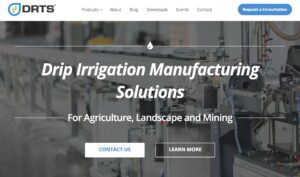
A learning center containing specialized guides can bridge the gap between the awareness and consideration stages. This will contain detailed information targeted at a specific issue or product/solution. Take a look at DRTS website for an example of a learning center.

Learning center manufacturer

4. Case Studies & White Papers

Case studies & white papers detail real stories, showcasing your products and offerings in real life applications. These are best suited for the advanced consideration stage, as they instill confidence to interested prospects. They can be published through a learning center or even as a part of the blog, as in this Quasar medical devices case study.

case study

5. Presentations & Demo Videos

Presentations & demo videos are usually targeted at buyers in the decision stage. They are the most visualized type of content, allowing technical companies to showcase their products in an appealing and easy to comprehend way. Here is a good example of a product demo video from Schneider Electric.

Conclusion

It is important to consider the buyer’s journey when building a content plan structure. It will provide a basis to facilitate the outlining of an effective content marketing plan. This way you will serve the proper content to all types of buyers, yielding better results.

Read more about our “Global Growth Methodology” here >>>


7 Best Strategic Marketing Ideas For Engineers and Industrial Professionals

Nowadays, strategic marketing for engineers and industrial professionals has changed dramatically. Engineers mostly use the internet for seeking information about technologies, products, or services, which is why industrial marketers increasingly turn to online and content marketing. And as GlobalSpec’s 2019 Smart Marketing for Engineers Survey demonstrates, the importance of digital marketing cannot be overstated. In this article, we take a look at the survey’s most effective strategies, show you exactly how engineers prefer to consume your marketing, and how to gain a competitive edge using this information.

Dive Deeper: The Global Growth Methodology for Industrial Companies

Best Ideas: Strategic Marketing for Engineers

1. Embrace Content Marketing

It is clear that engineers regularly seek to consume content, most of it in digital form. This runs the gamut from vendor websites to trade publications, newsletters and so much more. That’s why content marketing is an integral part of any successful industrial marketing strategy.

2. Use Alternative forms of Content

Datasheets, cast studies, product demos, and how-to videos are the most preferred content types for engineers. And it makes sense, knowing how engineers are bottom-line thinkers, always looking for informative, dense, to-the-point content.

3. Use Newsletters

When it comes to newsletters, the statistics are hard to argue with. Across all age groups, 86% of engineers are subscribed to 2 or more newsletters, 87% of which they browse through or fully read. So maintaining a regular newsletter and inviting engineers to subscribe, is an opportunity that is too good to pass up.

4. Keep an Up-to-date Website

The survey shows that engineers find supplier/vendor websites the most valuable source of information, outranking even search engines and technical trade publications. This is why companies must have a website with a professional look and feel, coupled with informative and original content. These factors are important in building trust with engineers and can highly influence their decision-making.

5. Strive for Brand Awareness

Maintaining a uniform brand presence throughout all media is very important. For uniform visuals, invest in your brand’s logo & visual guidelines. Equally important is to invest in having a content marketing style guide, to ensure uniformity of content as well. With those two combined, you are guaranteed to keep your message consistent. This will ultimately breed brand trust and familiarity with engineers and industrial professionals, to your benefit.

6. Reach Out to Prospects Fast

Engineers are constantly dealing with challenges requiring immediate solutions. Once an engineer shows interest in your product or service, reach out to him as soon as possible. The ideal response time is immediate and up to 8 hours, although not always possible in our connected world of different time zones. However, as a rule of thumb, it’s best to reply within 24 hours.

7. Engage With Them Regularly

A large portion of engineers are either decision makers themselves or influence the purchasing decisions of industrial companies, mainly influenced by online content. That’s why it’s important to regularly engage with engineers through valuable and informative content, mainly achieved through inbound marketing and publishing material such as articles, newsletters, blog posts and white papers.

Gain a Competitive Edge

Research clearly shows that targeting engineers and industrial professionals is a very effective strategic marketing method for b2b companies. However, companies are often hesitant to take a deeper dive into this area. After all, targeting highly technical audiences requires specialization and skill, which can be challenging to master.

Now is your chance to act on this information. Today more than ever, getting the attention of engineers from all over the world can be achieved easily and quickly, using customized inbound marketing methods. But at the same time, you need to act fast, while the market is still new to inbound marketing targeted to technical audiences. This will ensure you stay ahead of the competition, giving you a competitive edge.

Do you want to create a proven industrial marketing strategy?

Read more about our “Global Growth Methodology” here >>>


What Is The Role of Advertising in Industrial Marketing in 2019?

Advertising was never about just increasing sales. Increasing brand awareness, reaching a larger audience, and establishing trust, are just a few of the reasons organizations are traditionally advertising for.

In the context of modern industrial marketing, advertising occupies a similar space. But this is where the similarities end. The advent of technology makes a big difference in if, why, and how industries advertise today.

Should industrial companies consider advertising in their marketing budget? We think so. Read along to find out what we believe is the modern role of advertising in industrial marketing.

Dive Deeper: The Global Growth Methodology for Industrial Companies

5 Reasons to Advertise in Industrial Marketing

1. Increase Brand Awareness

advertising for industrial

Very few things guarantee brand persistence like remarketing campaigns. These are the repeatable ads you see following you around the web after you visit a certain page. They are a great tool to make your brand look big. A word of caution though: don’t overdo it with remarketing campaigns. They can sometimes be perceived as a pressing tactic and make it backfire.

2. Expand Audience Reach

Promoting your content on social media is a great tactic to enter a new market or expand your audience. And since it only requires to know how – and a bit of planning – it is a very cost effective method as well. Platforms like LinkedIn have made reaching out to new and targeted audiences easier than ever. You just need a solid social media strategy and great content that gets your message across.

3. Accelerate Sales

We’ve all been there. Standing on the fence, needing just a little push to help us make a purchasing decision. It’s the same with industrial companies decision makers. And strategic use of ads can greatly accelerate their buying decisions. To achieve just that, you must follow both new leads and existing sales opportunities. Showing them targeted case studies and branded content will greatly affect their purchasing decisions to your benefit.

4. Generate Hot Leads

It’s no accident that Google Ads have become the new advertising standard. Tools like AdWords and Analytics allow advertisers to target audiences with pinpoint accuracy. Coupled with the appropriate keywords for your field, these ads can generate hot and relevant leads. However, as simple as it may sound, defining the most appropriate keywords requires advertising to know how.

5. Test New Marketing

ads for manufacturers

Marketing and advertising can drain your budget as fast as you allow them to. You should direct resources only to marketing that is effective for your case. That’s why it’s important to be able to test before deploying a new marketing strategy. And this is a significant advantage of online advertising: it offers fast testing and measurable results. These are your tools to check which advertising strategy works and direct your resources to the one that yields the best results.

Targeting the Right Audience

In marketing, it is often said that “if you’re talking to everybody, you’re reaching nobody”. Meaning that a targeted approach is always effective. After all, advertising is yet another tactic to accelerate marketing results; and targeting the right audience is the best way to achieve just that.

But it can only work if you know who your audience is. So the first thing to do is define your customer persona. Following that you need to tailor a solid marketing strategy. Only based on this strategy can you lay down actionable marketing and advertising plan. This will be your guide to delivering content that creates value for both you and your potential customers; which is what will truly accelerate your business.

Do you want to create a solid industrial marketing strategy?

Read more about our “Global Growth Methodology” here >>>


Best Practices of Digital Marketing for Manufacturers: Build Authority and Attract Qualified Leads

Today’s industrial sector is well aware that digital marketing is an integral part of reaching and interacting with their target audience, prospects, and customers. And even though they are tasked with engaging in online and content marketing, the majority of manufacturers still fall short of demonstrating a positive return from their digital marketing activities.

In this article, we present the challenges that manufacturers face when it comes to digital marketing. We’ll also share our Industrial Marketing Methodology, a digital marketing strategy geared toward the needs of manufacturers.

The Challenges of Digital Marketing for Manufacturers

Even though manufacturers and B2B industrial companies recognize the value of engaging in digital marketing, they face several challenges in doing so:manufacturers marketing challenges

  • Many manufacturers lack a clear plan on how to implement online and content marketing activities. A clear, actionable plan is the basis of all marketing activities.
  • Manufacturers rarely take advantage of tracking and measuring tools and therefore can’t demonstrate their digital marketing activities ROI (or lack thereof). As the saying goes, “you can’t manage what you can’t measure.”
  • In some cases, manufacturers don’t have the necessary experience on how to target, reach, and appeal to technical audiences. This results in inadequate planning and budgeting, as well as slow corrective or pivoting actions when it comes to optimizing their online marketing.

Dive Deeper: The Global Growth Methodology for Industrial Companies [read more >>>]

Marketing Transformation for Manufacturers

GlobalSpec’s 2019 survey on manufacturing content marketing demonstrates how engineers and technical professionals primarily use the internet to research products and services, before reaching out to a company’s sales team. This points to a meaningful shift in marketing that manufacturers have to make.

customer_journeyDigital marketing has become vital in the technical customer’s journey. Where taking part in trade shows and running trade magazine ads used to suffice, manufacturers must now shift towards digital marketing to achieve results.


The StepUp Growth Wheel

StepUp Global Growth MethodologyWe at StepUp specialize in digital marketing for businesses, industries, and manufacturers that target highly technical audiences. In the last 4 years, our team has created a comprehensive Industrial Marketing Methodology, that guarantees company growth, generation of qualified leads, and building authority in the company’s corresponding industrial sector.

Here are the 7 steps of The StepUp Growth Wheel, chosen to help manufacturers dominate their market using digital marketing:

  1. Brand Positioning: A determining first step is to set the brand positioning strategy & statement, market research, and annual marketing plan.
  2. Infrastructure: Creation of clear visual and content guidelines, to maintain consistent messaging in all future marketing materials.
  3. Content Strategy: Defining a comprehensive content plan based on target audience characteristics, such as the buyer personas and mapping of the buyer’s journey.
  4. Media Distribution: Deciding on the most effective places and methods to publish and distribute content, in a way that resonates with your target audience.
  5. Lead Automation: Employing lead qualification and nurturing techniques, together with marketing automation tools, to ultimately convert leads into satisfied customers.
  6. Sales Enablement: The creation of seamless sales processes that guide prospects through your sales funnel and convert them into customers with minimal effort.
  7. ROI Tracking and Reporting: Setting up the necessary infrastructure to properly track and measure all marketing activities, in order to continuously optimize and achieve the best ROI.

While some manufacturers are having difficulties implementing digital marketing tactics, others are seeing exponential growth, building authority in their sector, and dominating their market. Contact us today to arrange a free 30-minute custom digital marketing session to find out how you can utilize automated digital marketing systems that will guarantee your success for years to come.

Read more about our “Global Growth Methodology” here >>>


5 Ways to Successfully Generate Industrial Sales Leads

Wouldn’t it be great if generating industrial sales leads was as simple as emailing or cold calling? However generating industrial sales leads successfully takes a lot of time, requires more specialization, and let’s face it – know how – than regular leads.

Industrial buyers aren’t your standard run-of-the-mill prospects. They are qualified professionals, highly informed on a subject before reaching a buying decision. Read on to see how this transforms the process of generating and converting industrial sales leads.

Learn more about our Inbound Marketing Methodology for B2B Industrial companies >>>

How To Generate Industrial Sales Leads?

1. Trade Shows

Trade shows are an excellent source of generating qualified industrial prospects. The best way to get the most out of the trade show is to plan ahead with Before, During, and After activities. Beforehand, you want to try to bring a team of people with sales skills and technical know-how. Also, you can prepare equipment and marketing materials fit for the trade show, as well as a set of qualifying questions to help with prospect identification.

During the show, avoid seeming pre-scripted or ‘salesy’ by building rapport and connecting with people before moving on to business. Present products & solutions fitting to their needs and seek a follow-up commitment for a call, appointment, or email, before saying goodbye.

After the show, establish trust and continued communication by promptly following up on leads and sending a thank you note along with any personalized materials discussed.

2. Website SEO & Organic Traffic

The importance of driving organic traffic to your website cannot be overstated. Practices like alternative image names and proper hierarchy structure are just a few items from a long list of SEO techniques required. Equally important is the content, requiring both keywords mastery and a well-written blog. The former means using suitable keywords, in the right places and in a strategic way. Regarding the latter, a blog with solid writing instills confidence and builds trust with your visitors, making them more prone to following a call to action and convert to sales leads.

3. Trade Magazines & PR

Trade magazines offer the option of both advertising and writing specialized pieces. When advertising, aim for a clean design that invites the reader to go through your ad. Increase ad engagement by prompting the reader to a call to action, such as contacting you. Publishing specialized pieces containing useful and original information is also effective. This way you come off as genuinely helpful, making your piece more credible and less like a sales pitch, gaining the reader’s trust.

4. Partner Newsletters

Effective partner newsletters employ professionally designed, aesthetically pleasing format with clear information hierarchy, that’s simple to browse through. Try framing the content based on your partner’s needs, while highlighting any promotional activities or calls to action. To optimize and focus on what works best, measure a newsletter’s performance in terms of audience reach and adapt accordingly.

5. Social Media (LinkedIn)

Social media platforms like LinkedIn are also a place where you may find and reach professionals. A paid strategy is direct advertising, which allows reaching prospective professionals in your industrial sector. An organic approach is posting updates regularly, which will be visible in all of your contacts feed. Similarly joining specialized groups allows you to share insights, demonstrate know-how, and expand your network. A key factor is keeping a steady rate of activity, appearing to your network’s feed regularly and building trust with your audience.

Converting Leads to Opportunities

You can benefit from the industrial sales leads generated, by converting them to sales opportunities through various techniques:

  • Lead Nurturing Emails: Customized email campaigns that deliver targeted messages and help prospects move forward with the buying process.
  • Social Media Branding by Remarketing: Remarketing is the practice of following your leads around the web with targeted ads, based on their history and browsing behavior. Combined with social media, it creates a strong brand presence, increasing brand credibility and awareness in the reader.
  • Content Strategy: Keep your audience educated, updating them on the newest trends and technologies. This way you develop a trustworthy company image, instill faith and make prospects more likely to convert to opportunities.
  • Direct Calling: Direct calling adds a personal touch in your communication. Especially for industrial leads, it can be beneficial as it can result in better understand your prospect’s needs.
  • CRM Platform: CRMs help make the whole sales process easy to record and access, resulting in increased conversions.

Now, What are You Going to Do?

Generating industrial sales leads is only a small part of company growth. At StepUp we specialize in inbound marketing for B2B companies for more than 10 years. Visit our methodology page to see how we can help you establish and maintain a clear marketing and sales strategy, producing predictable growth for your company.




Can Social Media Marketing Work for Your B2B Company?

Social media is not just for consumer-oriented companies targeting millennial customers. As a B2B company, you can use social media marketing to position your company as a thought leader, generate leads, and attract high-quality talent.

In fact, according to research, 79% of B2B marketing specialists rated social media as their most effective marketing channel, while 38% said that if they had extra budget for next year, they would spend it on social media.

If you think that your industry isn’t suited to social media marketing, then take a look at pharmaceutical company Novartis. Instagram might not seem like a natural channel for this type of business, but the company has built up a large following by sharing pictures of the humane side of their work.

In this article, we discuss the key ways that social media marketing benefits B2B companies and best practices for creating a strategy that wins customers.

Think quality, not quantity

If you have 10,000 followers on Twitter, you may think you’re doing social media marketing right, but who are those followers and how much are they interacting with your company? It’s important to build a following of potential customers, as well as attract attention from your customers’ customers. From there, you can start to build relationships with these companies by engaging with them in a more direct way. The more useful and relevant content they see, the more likely they are to reach out to you, or visit your website, and the better you’ll be able to generate leads.

Share content your customers care about

What works for B2C companies, and across social media in general, won’t necessarily work for your B2B organization. That’s why you need to work out exactly what your followers are looking for, and what matters to them. If you share content that isn’t relevant to your customers and followers then they will either unfollow or just not engage with your content. When you’re starting out, you may not know what kind of content this is, which is why you need to test posts, and measure your success. Make sure you’re tracking metrics beyond simple likes; it’s also important to track click through rate, shares, and engagement.  

Pick the right platform

Before you rule out Instagram and solely concentrate on LinkedIn, it’s important to take into account social media usage at a local, rather than global, level. For example, while most US B2B companies focus their marketing efforts on LinkedIn and Twitter, and leave Facebook for B2C companies, Facebook and YouTube are used professionally in countries such as India. Then take China, where Facebook and Twitter are blocked or use is limited but WeChat dominates. Make sure you research your markets first to ensure you’re using the right channel for your customer base.

Position yourself as a thought leader

Your company is unique, so you have unique and useful insight to share with your followers. Through social media marketing, you can harness this insight to position yourself as a thought leader. By posting on LinkedIn, you can give your customers actionable insight and information that helps them improve their business while showing off your expertise in your industry.

Attract high-quality talent

If you want to attract and recruit the best possible applicants, then it’s important to create a social media presence that portrays a positive company culture. To do this, you need to be sharing content that represents who you are, what your values are, and how this impacts your workers.

Let’s take the example of Novartis again. The company shares photos of the core values of its company, and the kind of activities their employees–who share these values–do. This makes it easier to attract the kind of people who would work best in their business.

Do you need help creating a social media strategy? Get in touch with us, and we can help tailor a plan for your business.

Request your free inbound marketing and sales consultation